 Matribhumi Samachar English


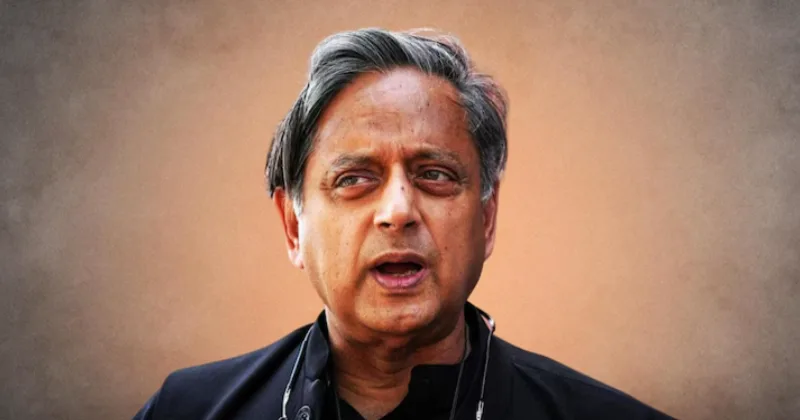
Senior Congress leader and MP Shashi Tharoor on Wednesday highlighted what he described as a fundamental contrast between public reactions in India and the deteriorating law-and-order situation in Bangladesh. Speaking in Thiruvananthapuram, Tharoor said that while protests in India over unrest in Bangladesh were inevitable, given reports of violence and attacks on minorities there, democratic dissent in India has remained peaceful.
“In our democracy, people have a right to protest,” Tharoor said, adding that such expressions of dissent have not crossed constitutional or legal boundaries.
Emphasising the difference in outcomes, Tharoor asserted that protests in India have not descended into mob violence. “There has been no violence, no lynching,” he said, noting that Indian authorities remain fully capable of intervening if any attempt is made to cross the line.
He underlined that maintaining law and order is a non-negotiable responsibility of the state and that Indian police forces would act decisively against any breach of peace.
“Certainly, any attempted violence will and should be clamped down upon by our police,” Tharoor said, reinforcing confidence in India’s institutional framework.
Contrasting the Indian situation with developments in Bangladesh, Tharoor expressed deep concern over incidents of mob violence reported there. Referring specifically to the lynching of a Hindu factory worker accused of blasphemy, he described the incident as “truly an outrage.”
He pointed out that the victim was in police custody at the time of the incident. “He should not have been handed over to the mob and lynched in this horrible way,” Tharoor said, arguing that such acts reflect a breakdown of state authority.
Tharoor maintained that expressions of regret or condemnation were insufficient when faced with unchecked street violence and lawlessness.
Tharoor also raised concerns about the feasibility of conducting free and fair elections in Bangladesh amid the prevailing atmosphere of fear and instability. With elections scheduled in the coming months, he questioned whether voters would feel safe enough to participate.
“How can you have an election in less than two months in an atmosphere of lawlessness and intimidation, where the voters may not even feel safe?” he asked.
He urged the Bangladeshi government to take immediate and concrete steps to restore calm and ensure public confidence.
Stressing that the responsibility lies squarely with the authorities in Bangladesh, Tharoor said the government must act decisively to rein in violence.
“They have to take action because controlling the violence on the streets is their obligation as a government,” he said, adding that stronger measures may be required if routine policing proves ineffective.
“If the police can’t do it, send the army, but stop this nonsense,” he said, signalling the urgency of the situation.
Addressing diplomatic tensions following protests outside Bangladeshi diplomatic missions in India, Tharoor played down concerns of escalation. He described the exchange of diplomatic protests as routine and manageable.
He noted that India had formally conveyed its concerns regarding attacks near its High Commission and Assistant High Commissions in Bangladesh, while Dhaka had responded by summoning India’s High Commissioner over protests held in India.
“This kind of diplomatic tit-for-tat is not something that should worry us unduly,” Tharoor said.
Tharoor also dismissed allegations linking India to political violence in Bangladesh, calling such claims “preposterous.” He warned that such rhetoric risks inflaming passions and could further endanger minority communities.
He argued that blaming external actors distracts from the urgent need to restore internal law and order.
Commenting on former Bangladeshi Prime Minister Sheikh Hasina, Tharoor said India had acted in a humanitarian and responsible manner. He noted that Hasina, a long-standing ally of India, had been allowed to remain in the country while legal and treaty obligations were examined.
“When we are being hospitable to a good friend, I think we should just allow her to remain safely until and unless the government has studied all those things in much more detail,” he said.
Credit : Organiser Weekly