 Matribhumi Samachar English


Mumbai. Friday, 12 June 2026
The global financial landscape has been undergoing an intense tug-of-war. Emerging-market currencies are facing severe pressures due to volatile crude oil prices, ongoing geopolitical standoffs, and rapid shifts in global capital allocations.
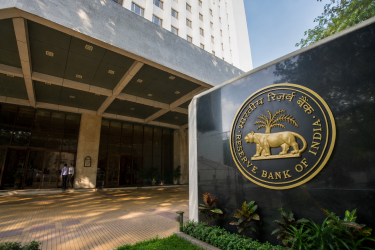
To maintain orderly market conditions, the Reserve Bank of India (RBI) has implemented a robust, multi-pronged stabilization strategy. Here is a friendly, detailed breakdown of how these interventions work, how they impact the economy, and the underlying data shaping India’s monetary policy.
The Mechanics of RBI’s Exchange Rate Intervention
The central bank’s approach is designed to tackle sudden, speculative runs on the Indian Rupee ($INR$) without setting a hard, artificial target for the currency’s value.
1. Spot Market Adjustments
When foreign portfolio investors pull funds out of domestic equities, the demand for U.S. Dollars ($USD$) spikes sharply. To counteract this imbalance, the RBI enters the spot market as a major seller of dollars from its substantial foreign exchange reserves. This temporary supply stabilizes sudden dips in the rupee’s valuation.
2. Dollar-Rupee Swap Facilities
Instead of permanently drawing down its liquid reserves, the central bank heavily relies on buy-sell swap lines. These operations inject short-term foreign currency liquidity into commercial banks, ensuring that local import-export financing doesn’t choke during periods of heightened global volatility.
Tweaking Incentives: The FCNR(B) Strategy
A critical cornerstone of the current policy framework involves capturing fresh foreign capital by sweetening the terms for Foreign Currency Non-Resident (Bank) [FCNR(B)] deposits. These specific accounts allow Non-Resident Indians (NRIs) to maintain foreign currency balances in Indian banks tax-free, entirely eliminating the risk of personal loss through exchange-rate depreciation.
To make these accounts highly competitive against Western sovereign assets, the RBI introduced two massive structural adjustments:
-
Reserve Requirement Relief: Fresh FCNR(B) terms ranging from 3 to 5 years have been exempted from standard Cash Reserve Ratio (CRR) and Statutory Liquidity Ratio (SLR) benchmarks. This policy alteration lets commercial banks immediately utilize 100% of incoming foreign funds for credit lines.
-
Subsidized Hedging Costs: The RBI helps offset or subsidize the steep premium banks pay to hedge currency exposure over multi-year terms. These structural savings are passed directly onto savers, letting Indian financial institutions offer yields up to 5.5% to 6.0%—well above traditional Western fixed-income baselines.
Projected Outcomes for India’s Balance of Payments
In macroeconomic accounting, the Balance of Payments (BoP) balances the money flowing out of a country against the money coming in. While India naturally carries a Current Account Deficit (CAD) due to its vast energy and crude oil imports, a strong surplus in the Capital Account (via investments and foreign deposits) keeps the overall economic engine balanced.
Analysts point out that these strategic adjustments radically shift the medium-term balance sheet. The structured table below illustrates the projected capital shifts following the implementation of these relief frameworks.
| Financial Indicator | Historical Baseline Projection | Post-Policy Projection (Estimates) |
| FCNR(B) Deposit Inflows | Flattening / Negative Trend | $40 to $45 Billion |
| External Commercial Borrowings (ECB) | Subdued Activity | $15 to $20 Billion |
| Total Targeted Foreign Inflows | Standard Capital Trajectory | $55 to $65 Billion |
| Overall Balance of Payments (BoP) | Deep Deficit Risks ($65B – $70B) | $5B to $10 Billion Surplus |
Reality Check on Global Valuations
It is crucial to correct a common misconception: The RBI is not trying to trigger an aggressive appreciation of the rupee. Trying to force a currency to strengthen artificially against major global trading partners hurts domestic exporters and disrupts manufacturing data.
Instead, the central bank uses its robust reserves to establish a stable plateau, minimizing rapid, disorderly swings. This ensures India remains a highly predictable, appealing destination for long-term direct foreign investment.
For further reading on how changing global market dynamics, corporate movements, and emerging tech landscapes are influencing the Indian financial ecosystem, explore the latest market breakdowns at Matribhumi Samachar English.