 Matribhumi Samachar English


New Delhi. Thursday, 2 July 2026
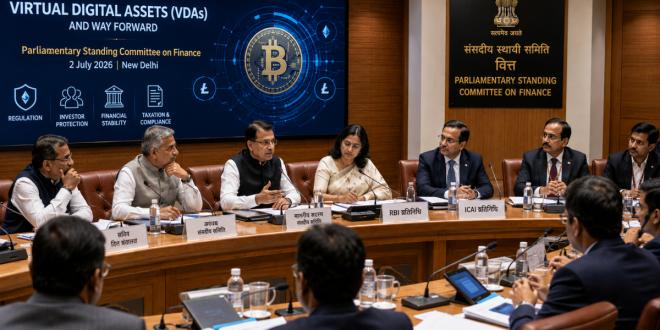
The conversations around cryptocurrency in India are taking a highly structured and constructive turn. The Parliamentary Standing Committee on Finance recently convened an essential, high-level consultative meeting focusing entirely on a study titled “Virtual Digital Assets (VDAs) and the Way Forward.”
Rather than signaling an overnight policy shift, this briefing acts as a critical foundation for India’s long-term legislative framework. By bringing key stakeholders like the Reserve Bank of India (RBI) and the Institute of Chartered Accountants of India (ICAI) to the table, lawmakers are aiming to balance financial system stability with technological innovation.
The Central Bank’s Stance: Security Over Speculation
The Reserve Bank of India (RBI) has historically maintained a cautious posture toward privately issued digital currencies. During the panel discussions, central bank representatives reiterated how uncontrolled, widespread crypto adoption poses direct risks to monetary policy transmission, capital flow safety, and economic stability.
However, the RBI’s approach isn’t purely restrictive. The central bank continues to champion domestic fintech developments through the expansion of the Digital Rupee—India’s official Central Bank Digital Currency (CBDC). The sovereign digital currency represents a secure, legally backed alternative to private tokens, providing a modern payment infrastructure without the volatility associated with private digital markets.
Corporate Transparency: ICAI’s Accounting Blueprint
A comprehensive regulatory framework requires clear rules on accounting, auditing, and corporate transparency. This is where the Institute of Chartered Accountants of India (ICAI) steps in. As businesses and institutional players increasingly interact with Virtual Digital Assets, standardizing financial reporting has become a necessity.
The ICAI’s contributions to the ongoing policy discussions center on establishing robust protocols for:
-
Asset Valuation: Defining exactly how businesses calculate the fair market value of volatile crypto holdings.
-
Auditing Procedures: Outlining verification methods for auditors dealing with decentralized cryptographic ledgers.
-
Corporate Disclosures: Designing standardized disclosure rules to protect stakeholders and ensure clear tax compliance under India’s existing fiscal guidelines.
What This Means for Everyday Retail Investors
If you are a retail investor trading digital assets in India, the primary takeaway from these parliamentary briefings is the steady march toward regulatory clarity.
                       Current Landscape
                               │
               ┌───────────────┴───────────────┐
               ▼                               ▼
       Existing Measures               Future Objectives
    ┌─────────────────────┐         ┌─────────────────────┐
    │  30% Tax on Gains   │         │ Investor Confidence │
    │  1% TDS Framework   │  ────►  │ Exchange Oversight  │
    │  FIU-IND Monitoring │         │ Operational Safety  │
    └─────────────────────┘         └─────────────────────┘
While India already levies a 30% tax on digital asset gains and a 1% Tax Deducted at Source (TDS), the country currently lacks an all-encompassing, statutory framework defining exchange accountability or formal consumer custody rules. The ongoing consultations seek to patch these gaps, laying the groundwork for improved exchange oversight, robust anti-money laundering (AML) compliance, and stronger fraud prevention safeguards.
Because parliamentary standing committee sessions are purely consultative, any formal recommendations will face further review by the Union Government before manifesting as written law. For continuous updates on India’s developing economic and financial policy landscape, you can track structural updates directly on the Matribhumi Samachar India Portal.
FAQ: Understanding India’s Crypto Progress
Is cryptocurrency legal in India right now?
Yes, trading and owning digital assets is legal. However, they are classified as Virtual Digital Assets (VDAs) rather than legal tender. They operate within a defined tax framework but lack a comprehensive, dedicated regulatory oversight law.
What is the RBI’s main concern regarding private crypto?
The RBI is primarily concerned that private cryptocurrencies can complicate capital flight management, weaken traditional monetary policy controls, and expose retail investors to high operational risks or illicit financial activities.
How does the Digital Rupee differ from private cryptocurrencies?
The Digital Rupee is a Central Bank Digital Currency (CBDC) issued and fully backed by the Reserve Bank of India. Unlike private cryptocurrencies, it holds sovereign status, is non-volatile, and functions strictly as a digital version of the physical Indian Rupee.
Disclaimer: The information provided in this article is for informational and educational purposes only. It does not constitute financial, legal, or investment advice. Cryptocurrency and Virtual Digital Asset investments carry inherent market risks. Readers should perform their own due diligence or consult a certified financial advisor before making financial decisions.