 Matribhumi Samachar English


New Delhi. Wednesday, 22 April 2026
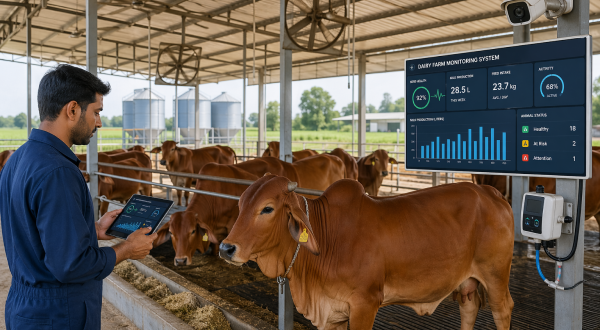
Starting a dairy farm in India is transitioning from a traditional lifestyle to a high-tech, data-driven enterprise. By 2026, the landscape has shifted significantly due to digital mandates and expanded financial support.
1. Mandatory Digital Compliance: The “AgriStack” Era
As of May 2026, the Digital Farmer ID (Kisan Pehchan Patra) has become mandatory for all dairy farmers seeking government benefits. This ID, integrated under the national AgriStack initiative, acts as a “Farmer Aadhaar.”
-
Why it matters: Without this ID, you cannot access subsidized fertilizers, MSP for fodder crops, or livestock insurance subsidies.
-
Action Step: Register your farm via the state agriculture portal to link your land records and livestock health certificates to your Digital ID.
2. Enhanced Financial Support & Subsidies
The 2025-26 Union Budget brought a massive boost to animal husbandry liquidity.
-
KCC for Dairy: The loan limit for the Kisan Credit Card (KCC) in the dairy sector has been raised to ₹5 Lakh (up from the previous ₹3 lakh cap). This includes a modified interest subvention to keep borrowing costs low.
-
AHIDF Extension: The Animal Husbandry Infrastructure Development Fund (AHIDF) has been extended with an outlay of ₹29,610.25 crore. It offers a 3% interest subvention for 8 years on loans covering up to 90% of your investment in dairy processing or breed multiplication farms.
-
The Nand Baba Mission (UP Focus): In North India, this mission is the gold standard for startups.
-
Mukhyamantri Swadeshi Gau-Samvardhan: Provides heavy subsidies for purchasing two indigenous cows (like Gir or Sahiwal).
-
Mini Nandini Scheme: Offers a 50% subsidy for setting up small dairy units.
-
3. Choosing Climate-Resilient & High-Yield Breeds
With 2026 seeing intensified heatwaves, the choice of breed is now a survival decision, not just a financial one.
-
Indigenous (Desi) Focus: Breeds like Gir, Sahiwal, and Tharparkar are increasingly preferred for their natural heat tolerance and the high market premium for A2 Milk.
-
Exotic Crossbreeds: Holstein Friesians (HF) and Jerseys remain the leaders for sheer volume (25L–40L per day), but they now require “Smart Sheds” equipped with automated misting systems and high-velocity fans to maintain yield during summer.
4. Feed Management: From Waste to Wealth
Feed remains the highest recurring cost (approx. 70%). Successful 2026 farms are using:
-
Hydroponic Fodder: Growing green maize or barley in nutrient-rich water to save land.
-
Waste-to-Wealth: Integrating Biogas units to convert dung into cooking gas and electricity, and Vermicompost units to sell organic manure. This often adds a 15–20% “bonus” to the farm’s monthly net income.
🔍 Note
-
Loan Limits: Many older guides still quote ₹3 Lakh for KCC. As per the 2025-26 policy updates, the limit is now ₹5 Lakh for eligible dairy entrepreneurs.
-
GST Updates: Under the GST 2.0 framework (late 2025), basic dairy items like UHT milk and Paneer are now exempt from GST, which has boosted local consumption and profit margins for small processors.
🔗 Relevant Links for Further Reading
Disclaimer
The information provided in this report is for general informational purposes only. While we strive to provide the most accurate and up-to-date news, Matribhumi Samachar does not guarantee the completeness or reliability of the data. Readers are advised to verify government schemes and loan policies with official sources or a professional advisor before making financial decisions.