 Matribhumi Samachar English


New Delhi. Thursday, 30 April 2026
The PM Surya Ghar Muft Bijli Yojana has evolved into a cornerstone of India’s energy transition. As of April 2026, the scheme has moved beyond its initial pilot phase into a massive nationwide movement, empowering millions of households to transition from being passive consumers to active “prosumers” of electricity.
☀️ The Shift to Residential Solar
Rising temperatures and increased electronic usage have pushed domestic power demands to record highs. The PM Surya Ghar scheme addresses this by offering a financial cushion that reduces the “payback period” of solar investments to less than four years.
💰 Updated Subsidy and Financial Framework (2026)
While the core subsidy remains robust, the government has streamlined the Direct Benefit Transfer (DBT) process. The subsidy is now typically credited within 30 days of the inspection report being uploaded to the portal.
| System Capacity | Subsidy Amount | Ideal For |
| 1 kW | ₹30,000 | Small homes (Lights, Fans, TV) |
| 2 kW | ₹60,000 | Mid-sized homes (1 Air Conditioner) |
| 3 kW & Above | ₹78,000 (Capped) | Large homes (Multiple ACs, EV Charging) |
Note: A common misconception is that the subsidy increases indefinitely with system size. In reality, the financial support is capped at ₹78,000 even if you install a 5 kW or 10 kW system.
🛠️ The Technical Installation Workflow
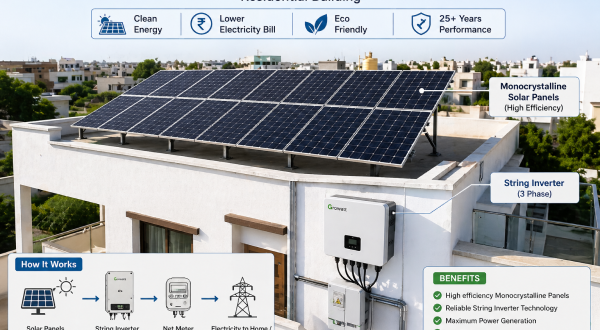
The process is designed to be “vendor-driven,” meaning the registered vendor handles the heavy lifting once you initiate the application.
-
Feasibility Study: The vendor assesses your roof’s structural integrity and shadow patterns. A 3 kW system generally requires 250–300 sq. ft. of shadow-free area.
-
Mounting Structures: In 2026, many states have mandated “High-Rise” structures to allow for continued use of the rooftop space underneath the panels.
-
The Net Metering Crucial Step: Your local DISCOM replaces your existing meter with a bi-directional one. This is the most critical phase for receiving “free” electricity, as it allows you to bank units with the grid during the day and withdraw them at night.
📝 Application Checklist
Before logging into the [suspicious link removed], ensure you have the following digitized:
-
Electricity Bill: Must be in the name of the applicant.
-
Property Documents/Tax Receipt: To prove ownership.
-
Bank Passbook/Cancelled Cheque: For the DBT subsidy transfer.
-
Photograph: A clear photo of the rooftop where panels will be installed.
⚖️ Fact-Checking Common Solar Myths
-
Myth: Solar panels don’t work during the monsoon.
-
Fact: Panels work on light intensity, not heat. While generation drops on cloudy days, they still produce power. In a year-long cycle, the high summer output compensates for the lower monsoon yield.
-
-
Myth: You can go completely “Off-Grid” with this scheme.
-
Fact: The PM Surya Ghar scheme is primarily On-Grid. You remain connected to the utility company. For a completely off-grid system (with batteries), the costs are significantly higher and usually not covered by the standard subsidy.
-
🔗 Official News Articles (Matribhumi Samachar)
Disclaimer
This guide does not constitute financial, legal, or professional advice. Solar installation involves technical assessments and long-term financial commitments. Readers are encouraged to conduct their own due diligence and consult with certified solar engineers or registered vendors before making any investment.