 Matribhumi Samachar English


Mumbai. Friday, 22 May 2026
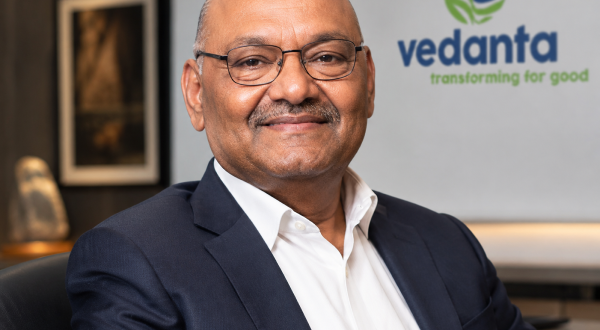
Billionaire businessman Anil Agarwal-led Vedanta Resources is executing one of its largest financial overhauls to date. The London-headquartered parent holding company is consolidating and refinancing its entire holding-level debt of nearly $5.5 billion (approximately ₹45,000 crore).
The underlying strategy is clear: resolve structural liquidity pressures by moving away from volatile “bullet repayments” toward a predictable, long-term amortizing structure that aligns perfectly with cash generated from its core industrial operations.
This macro-refinancing exercise occurs in tandem with Vedanta Limited’s historic corporate restructuring, which formally split the conglomerate into five independently listed entities.
The Refinancing Framework: Bonds and Loans
To manage the $5.5 billion debt pile, Vedanta has stretched its debt maturity curve through a carefully balanced combination of long-term international bonds and bank credit lines. By expanding its loan maturity profile from a tight 1.3 years up to an average of 4.5 years, the company has insulated itself from immediate credit risks.
| Funding Mechanism | Target Allocation | Maturity Timeline |
| Long-Term Bonds | $3.5 Billion – $3.7 Billion | 10-Year Maturity |
| Syndicated Bank Loans | $1.5 Billion – $1.7 Billion | 5-Year Maturity |
To coordinate this multi-billion dollar package, Vedanta engaged in structured discussions with eight tier-one global financial institutions, including Citibank, JPMorgan Chase, Barclays, Standard Chartered, Deutsche Bank, Mashreq Bank, First Abu Dhabi Bank, and Sumitomo Mitsui Banking Corporation.
Dismantling the “Bullet Repayment” Threat
Historically, Vedanta’s largest financial vulnerability was its reliance on “bullet repayments”—massive, one-time principal payments due on single dates. When these cliffs coincided with cyclical downturns in global commodity markets (such as temporary drops in aluminum, zinc, or oil prices), the group faced acute liquidity stress.
The 2026 restructuring completely discards this model in favor of an amortizing debt schedule, distributing principal repayments systematically across the upcoming fiscal years:
-
FY27 to FY29: ~$500–600 million paid out incrementally each year.
-
FY30: A larger, structured repayment milestone of ~$1.25 billion.
Synergizing Debt Service with the 5-Way Demerger
The timeline of this refinancing aligns with the monumental execution of Vedanta Limited’s 5-way split. The composite scheme of arrangement split the diversified conglomerate into five distinct, sector-focused listed companies to eliminate the historical “conglomerate discount” and allow direct equity tracking.
The resulting pure-play entities include:
-
Vedanta Limited (The residual listed core, primarily housing the high-margin zinc, silver, and copper business)
-
Vedanta Aluminium Metal Ltd.
-
Vedanta Power Ltd. (Formerly Talwandi Sabo Power)
-
Vedanta Oil & Gas Ltd. (Formerly Malco Energy / Cairn operations)
-
Vedanta Iron & Steel Ltd.
Upward Cash-Flow Mechanics
Because parent holding companies rely entirely on subsidiary operational entities to generate liquidity, Vedanta designed a bulletproof legal framework to ensure cash continues flowing upward to service the restructured debt.
-
Brand Royalties: Even after spinning off into independent entities, all newly created units are contractually obligated to pay 3% of their total turnover as brand fees to the parent company through FY29. This guarantees an insulated baseline of approximately $350 million annually.
-
Operational Dividends: The parent company taps directly into the subsidiaries’ strong earnings—evidenced by a phenomenal Q4 FY26 performance where consolidated net profits surged 89% year-on-year to ₹9,352 crore—to pull up an additional $600–700 million annually in dividend equity.
Credit Rating Upgrades and Investor Outlook
Global credit rating institutions have reacted strongly to this proactive financial discipline. S&P Global and Fitch Ratings upgraded Vedanta Resources’ credit profiles, highlighting robust projected earnings before interest, taxes, depreciation, and amortization (EBITDA) of roughly $7 billion across FY27 and FY28.
S&P projects that the company will aggressively scale down gross leverage, stripping out roughly $500 million of debt in FY27 and an additional $1 billion in FY28. For market participants and global investors, this restructuring successfully converts an imminent maturity crisis into a thoroughly manageable corporate cash-flow exercise, clearing the runway for Vedanta’s newly independent sectors to chase growth on their own terms.
Alternative Perspectives
While company documentation and initial announcements expressed deep confidence that the demerger would immediately double market capitalization by offering “pure-play” options to investors, historical asset splits in highly cyclical mining fields indicate a more calculated reality.
Market analysts emphasize that institutional portfolio realignments and commodity price volatility will likely trigger short-term price discovery friction. Rather than experiencing an instant, uniform valuation surge across all five shares, independent entities like Vedanta Power and Vedanta Iron & Steel will face individual sector benchmarking, which may temporarily expose weaker margins once isolated from the highly profitable zinc-silver ecosystem of the residual entity.
References
For more insights into current financial developments, market tracking, and background reporting across Indian corporate ecosystems, readers can explore external coverage available at Matribhumi Samachar.