

New Delhi. Tuesday, 26 May 2026
A dangerous fraudulent email campaign is aggressively targeting internet users across India. The messages falsely claim to be officially issued by the Reserve Bank of India (RBI), attempting to trap citizens with lucrative promises of massive money transfers, lottery compensation payments, inheritance funds, and a fictitious “Donation Program 2026” benefit.
National cyber safety experts and law enforcement authorities have issued an urgent advisory warning the public not to interact with these malicious communications. The email campaign is a textbook phishing scam designed strictly to drain bank accounts and harvest confidential personal data.
The Anatomy of the “Donation Program 2026” Scam
Cybercriminals are leveraging sophisticated psychological triggers—primarily greed mixed with an intense sense of urgency—to deceive their targets.
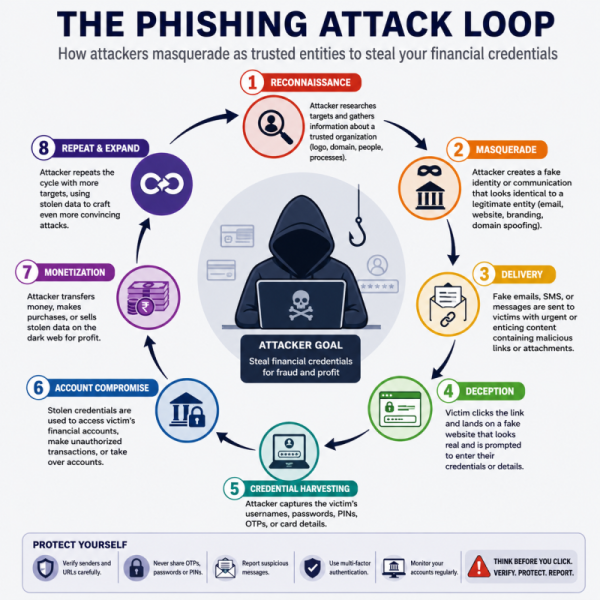
As illustrated in the threat diagram above, the attack pattern follows a distinct lifecycle:
The Initial Bait: You receive an unexpected email informing you that you have been uniquely selected to receive a large payout from an official RBI compensation or goodwill fund.
Visual Manipulation: To bypass your natural suspicion, the email prominently features stolen or forged RBI logos, fake serial numbers, and counterfeit signatures of high-ranking banking officials.
The Advance-Fee Trap: Here is where the trap snaps shut. The fraudsters state that before this massive windfall can be transferred into your bank account, you must first pay a minor, mandatory “crediting fee,” processing charge, or tax verification amount.
Data Exploitation: Alongside the money, the malicious links inside the email direct users to spoofed forms requesting internet banking credentials, Aadhaar/PAN details, and One-Time Passwords (OTPs).
Fact Check: The RBI’s Absolute Stance on Public Funds
The central bank has reiterating its structural operating guidelines to correct widespread misconceptions.
Important Correction: The Reserve Bank of India does not maintain individual deposits, commercial bank accounts, or personal portfolios for members of the public. Consequently, the RBI never matches lottery winnings, facilitates inheritance transfers, or manages public donation programs. Any email claiming otherwise is fundamentally fraudulent.
Immediate Steps to Defend Against Cyber Fraud
To minimize the impact of these surging online phishing attacks, individuals should actively adopt these safety protocols:
| Hazard Indicator | Scam Tactic | Preventive Action |
| Upfront Payment Requests | Demanding processing fees to clear larger prizes. | Never send money to receive a prize or financial reward. |
| Masked Public Senders | Using lookalike or generic domains (e.g., @gmail.com or [email protected]). | Check the header carefully; official Indian government communications end strictly in .gov.in or .nic.in. |
| Aggressive Deadlines | Threatening the forfeiture of funds if you do not act within 24–48 hours. | Pause and independently verify. Real institutions do not pressure consumers over email. |
If you encounter or have accidentally interacted with the Fake RBI Donation Program Email Scam, immediately secure your online banking profiles, freeze compromised credit instruments, and report the event to local cyber police or log a formal complaint at the central government’s national cybercrime reporting portal.
External References & Resources
To stay updated with regional alerts, investigative press coverage, and emerging localized internet safety notices across India, check the latest reports online via Matribhumi Samachar English.
