

New Delhi. Friday, 29 May 2026
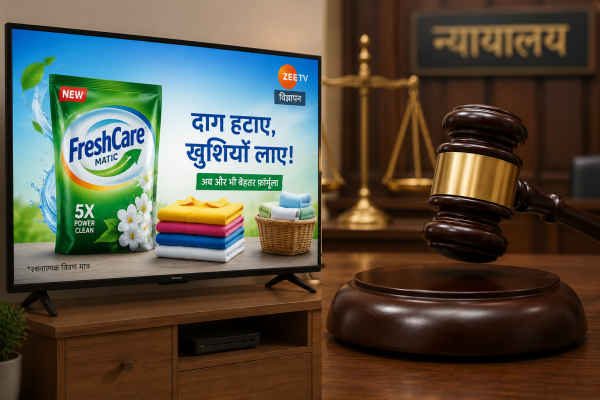
In a sweeping legal development that will fundamentally redefine the economics of Indian television, the Delhi High Court has officially upheld the Telecom Regulatory Authority of India’s (TRAI) strict regulation limiting television advertisements to a maximum of 12 minutes per clock hour.
A division bench comprising Justice Anil Kshetrapal and Justice Amit Mahajan dismissed all 17 long-standing petitions filed by independent news broadcasters, regional networks, and general entertainment channels. The ruling effectively ends an aggressive 13-year legal stalemate that began back in 2013, removing the interim protections that previously barred TRAI from enforcing commercial limits.
Deconstructing the 12-Minute Rule: Commercial vs. Self-Promo Time
The root of this regulatory enforcement is anchored within Rule 7(11) of the Cable Television Networks Rules, 1994. Under this mandate, broadcasters are restricted from stretching ad breaks to maximize profit margins at the expense of consumer convenience.
The 12-minute threshold is strictly divided as follows:
Commercial Advertisements (Max 10 Minutes per hour): This encompasses all traditional paid third-party brand commercials, sponsored spots, and standard market advertisements.
Self-Promotional Content (Max 2 Minutes per hour): This is allocated cleanly for internal network trailers, upcoming show promos, or sibling channel marketing.
Previously, due to an interim stay order granted by the Delhi High Court in December 2013, channels operated under self-regulated limits, frequently exposing audiences to upwards of 20 to 25 minutes of advertising during high-traffic prime-time slots.
The Legal Logic: Why Free Speech Claims Failed
The broadcasting lobby argued fiercely that limiting ad volume directly compromises their commercial viability, violating their constitutional right to free speech and expression under Article 19(1)(a). Free-to-Air (FTA) networks claimed that without uninhibited ad inventories, their very survival was at stake.
The High Court firmly rejected these arguments, anchoring its judgment on two structural pillars:
1. The Public Trust Doctrine
The court observed that electromagnetic spectrum and airwaves are physically scarce public resources. Because these frequencies are held by the state in trust for the public, they can never be utilized entirely for unbridled commercial profit maximization.
2. Captive Viewers and Quality of Service
Unlike modern digital streaming setups where users can easily click away or bypass interruptions, traditional television viewers do not possess an integrated mechanism to skip advertisements. The bench noted that overwhelming blocks of commercials directly erode the user experience and lower the baseline quality of service.
Court’s Clear Distinction: The court clarified that the regulation does not interfere with editorial discretion, news reporting, or creative content. Because it strictly regulates the timeline of commercial operations, it is classified as a reasonable restriction on trade under Article 19(1)(g) rather than a restriction on free speech.
Market Realities: Who Bears the Revenue Brunt?
+-------------------------------------------------------------------+
|               ESTIMATED IMPACT ACROSS TV NETWORKS                 |
+-------------------------------------------------------------------+
|  GENERAL ENTERTAINMENT (GECs)  |  FREE-TO-AIR & 24-HOUR NEWS     |
+--------------------------------+----------------------------------+
|  • Balanced revenue split      |  • Over 90% reliance on ads      |
|  • Strong subscription base    |  • Heavy reliance on prime-time  |
|  • Higher buffer to adapt      |  • Immediate inventory crunch    |
+-------------------------------------------------------------------+
While top-tier entertainment networks lean on hybrid revenue splits (combining subscription payouts with advertising), 24-hour news networks and Free-to-Air channels face an immediate structural challenge. News broadcasters regularly rely on ad revenue for nearly 90% of their total cash flow.
With total available ad inventory shrinking instantly by 30% to 50% during peak windows, the industry will likely see:
Surging Ad Rates: A sharp increase in ad slot pricing during prime-time slots as demand outpaces the newly constrained supply.
Structural Pivot to Digital: Broadcasters accelerating their migration toward unregulated digital platforms and streaming applications.
Alignment with TRAI’s Consumer-Centric Mandate
This judgment lands during a broader push by telecom and digital regulators to clean up user ecosystems across India. TRAI has consistently targeted systemic consumer pain points through multi-sector policies.
For instance, this structural cleanup mirrors the regulator’s persistent efforts to combat consumer exploitation on other communication layers, such as TRAI’s strict meetings with access providers to eliminate unsolicited spam calls.
Furthermore, as traditional frameworks tighten, the regulatory landscape is rapidly shifting toward flexible, modern testing grounds. TRAI’s recent push toward launching innovative regulatory sandboxes in the digital communication sector highlights a dual approach: maintaining strict public trust over traditional resources like airwaves while encouraging tech-driven business alternatives to evolve naturally.
Broadcasters now face an immediate choice: completely rewrite their classic advertising strategies, or prepare for an intricate, final appeal process before the Supreme Court of India.
