

New Delhi. Monday, 8 June 2026
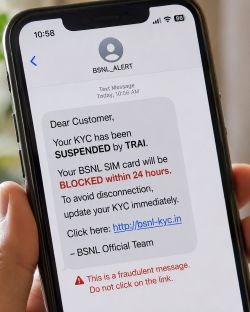
In recent weeks, mobile phone users across India have reported a sharp increase in alarming text messages and WhatsApp notifications. These alerts claim that your mobile connection is marked for immediate suspension due to an incomplete or failed Know Your Customer (KYC) verification.
The messages typically warn that your SIM card will be permanently deactivated within 24 hours unless you take immediate action.
However, regulatory authorities and cybersecurity experts have confirmed a critical fact: These messages are entirely fraudulent. They are engineered by cybercriminals using sophisticated psychological tactics to siphon off your personal data and financial credentials.
Anatomy of the Fake TRAI SIM Block Scam
The scam operates by exploiting two powerful psychological triggers: authority and urgency. By pretending to represent an official regulatory body and imposing a strict, ticking clock, scammers attempt to induce a state of panic that causes targets to bypass standard security precautions.
1. Impersonation of Legitimate Authorities
The fraudulent messages heavily feature the names of trusted entities, specifically the Telecom Regulatory Authority of India (TRAI), or major Telecom Service Providers (TSPs) like BSNL, Jio, and Airtel.
2. The Deceptive Call to Action
To “resolve” the urgent suspension, victims are directed to take one of three hazardous steps:
Clicking an embedded link that directs to a phishing portal designed to mirror an official telecom page.
Calling an unverified mobile number provided within the body of the text.
Downloading a malicious third-party app disguised as a quick-fix verification tool.
3. High-Value Data Extraction
Once communication is established, the fraudsters attempt to extract highly sensitive personal data. This includes bank account routing information, debit/credit card digits, one-time passwords (OTPs), and foundational identity papers such as your digital credential numbers.
Direct Clarifications from Telecom Authorities
Official bodies have issued clear directives to help consumers distinguish between legitimate administrative updates and targeted phishing campaigns:
TRAI’s Operational Scope: The Telecom Regulatory Authority of India is a regulatory body. TRAI does not communicate with individual consumers regarding personal mobile connections, nor does it issue deactivation warnings or manage individual customer KYC records.
Official Communication Standards: Legitimate TSPs, such as BSNL, utilize certified alpha-numeric sender IDs (e.g., BR-BSNLKYC) for transactional alerts. They never issue standard 10-digit mobile phone numbers to send administrative alerts.
Credential Shielding: No authentic service provider will ever demand your banking passwords, card details, or transaction OTPs under the guise of an identity verification update.
The Step-by-Step Defense Protocol
If an unexpected message threatening SIM deactivation arrives on your device, implement this defense protocol immediately:
Key Security Takeaways for Daily Mobile Use
The Golden Rule of Mobile Safety: Legitimate service operators will never threaten to terminate a connection within a tight 24-hour window via an unverified text message. Real administrative discrepancies are handled through structured, multi-week notifications or face-to-face verification at authorized retail outlets.
Audit Your Outbound Links: Always inspect URLs carefully. Phishing links often use slight modifications of official domain names (e.g., using
.netor.org-verificationinstead of.comor.in).Utilize National Reporting Channels: The Ministry of Home Affairs operates a dedicated national cybercrime helpline available by dialing 1930 or by visiting
cybercrime.gov.in.
External References and Verification Links
To learn more about local safety announcements and related current affairs updates, browse the latest dispatches on Matribhumi Samachar.
To report telecommunications fraud directly to the government, utilize the Sanchar Saathi Portal.
