

Brussels. Wednesday, 10 June 2026
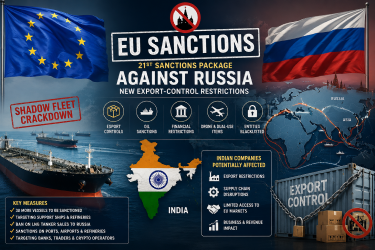
The European Union (EU) is preparing its 21st sanctions package against Russia, targeting a network of companies and entities accused of helping Moscow circumvent existing restrictions imposed over the Ukraine conflict. According to a European diplomat, the proposed measures include new export-control restrictions on around 50 companies, including several based in India.
The sanctions package forms part of the EU’s broader strategy to tighten pressure on Russia’s military-industrial complex and disrupt supply chains that allegedly support the country’s war efforts. However, the package must still receive unanimous approval from all EU member states before it can take effect.
Companies Across Multiple Countries Under Scrutiny
According to EU High Representative for Foreign Affairs and Security Policy Kaja Kallas, the new sanctions package includes export-control measures targeting companies located in several countries that are believed to be facilitating trade linked to Russia.
The affected countries include:
- India
- China
- Türkiye
- Kyrgyzstan
- Kazakhstan
- United Arab Emirates (UAE)
In addition, the EU plans to add more than 30 new listings connected to Russia’s drone manufacturing sector, further expanding restrictions on industries supporting Moscow’s military capabilities.
Crackdown on Russia’s Shadow Fleet
One of the key features of the proposed sanctions package is a tougher crackdown on Russia’s so-called “shadow fleet”—a network of vessels used to transport Russian oil while avoiding international sanctions.
The proposed measures include:
- Adding 30 more vessels to the list of sanctioned ships, on top of the 632 already designated.
- Targeting ships that provide support services, including refueling, to Russia’s shadow fleet.
- Imposing restrictions on ports, airports, and refineries involved in Russian oil trade or processing.
- Banning the sale of Liquefied Natural Gas (LNG) tankers to Russia.
EU officials believe these steps could significantly reduce Russia’s ability to generate revenue from energy exports.
Potential Impact on India
India has emerged as one of the largest buyers of discounted Russian crude oil since Western sanctions were imposed following the Ukraine war. Along with China, India has played a major role in maintaining demand for Russian energy exports.
If the EU’s new restrictions affect shipping networks or logistics linked to Russian oil, India could face several challenges:
- Reduced availability of Russian crude shipments.
- Increased transportation costs for oil imports.
- Potential volatility in domestic fuel prices.
- Higher energy import bills affecting economic growth.
However, analysts note that India has diversified its energy sourcing strategy in recent years and may be able to mitigate some of the risks associated with any disruption.
Financial Institutions and Crypto Operators Also Targeted
The proposed sanctions package goes beyond energy and shipping sectors. It also includes measures aimed at financial institutions and intermediaries that the EU believes help Russia evade sanctions and generate revenue.
Potential targets include:
- Banks operating in third countries.
- Arms manufacturers.
- Oil traders.
- Refinery operators.
- Cryptocurrency service providers.
The EU’s objective is to close loopholes that allow Russia to access international markets and financial networks despite existing sanctions.
No Immediate Action Against Indian Firms Yet
At present, the EU has not publicly disclosed the names of the Indian companies that could be included in the sanctions package. Moreover, the proposal remains subject to approval by all member states before becoming law.
Industry experts suggest that if the restrictions are adopted, affected companies could face limitations on access to European technology, exports, financing, and business partnerships.
Conclusion
The EU’s proposed 21st sanctions package represents one of the most comprehensive efforts yet to increase economic pressure on Russia. By extending restrictions to companies and institutions in third countries, including India, the bloc aims to tighten enforcement and reduce opportunities for sanctions evasion. As discussions continue among EU member states, global markets and energy-importing nations will be closely watching the outcome and its potential impact on international trade and energy security.
