

New Delhi. Saturday, 13 June 2026
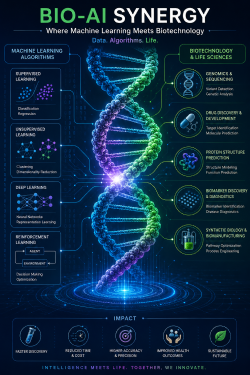
The boundaries of what is possible in scientific discovery are fundamentally shifting. We are moving away from traditional, slow-paced laboratory experiments and entering a data-driven era where biology is decoded at lightning speed. At the heart of this global shift is the Bio-AI Innovation Initiative—a highly strategic movement championed by governments, research institutions, and technology firms worldwide to integrate advanced computational power directly into the life sciences.
By feeding massive biological datasets into machine learning algorithms, researchers are uncovering complex patterns that were previously impossible to spot. This unique combination has the potential to compress research timelines that normally take years down to mere months.
How Bio-AI is Transforming Key Industries
The convergence of biotechnology and artificial intelligence is not just a theoretical concept; it is actively restructuring several critical sectors:
1. Accelerating Drug Discovery
Traditional pharmaceutical R&D is notoriously expensive and slow, often requiring billions of dollars and over a decade of testing before a single molecule makes it to market. AI-powered systems change the math by simulating molecular structures and predicting therapeutic effectiveness beforehand.
Context Note: While AI significantly reduces the early-stage pipeline (identifying targets and designing candidates in months rather than years), human clinical trials still require time to ensure patient safety. Thus, Bio-AI slashes the discovery timeline, while regulatory clinical tracking remains vital.
2. Advancing Precision Medicine
Instead of relying on a “one-size-fits-all” approach to healthcare, precision medicine uses machine learning to tailor treatments to an individual’s unique genetic profile. By analyzing complex genomic data, healthcare systems will be able to manage chronic conditions, rare genetic disorders, and aggressive cancers with highly customized therapies over the coming decade.
3. Securing Agriculture and Food Supplies
With volatile climate patterns threatening global food production, scientists are deploying AI-driven biological models to map out climate-resilient crops. These models help develop seeds that thrive in harsh environmental conditions while simultaneously lowering a farmer’s reliance on chemical fertilizers and pesticides.
4. Optimizing Sustainable Biomanufacturing
Biomanufacturing uses living systems—like engineered bacteria or yeast cells—to produce essential chemicals, plastics, biofuels, and medications. AI algorithms optimize these cellular production lines, drastically reducing the carbon footprint and lowering operational overhead for domestic industries.
Strategic Growth: India’s Role in the Tech Landscape
As nations compete to build robust innovation ecosystems, India is establishing itself as a vital player. Backed by a dense digital infrastructure and a highly capable IT workforce, the country is actively marrying its software strengths with deep biotech research.
This growing ecosystem focuses heavily on genomics, agricultural biotechnology, and healthcare analytics, ensuring that local startups and academic institutions stay connected to global tech supply chains.
Critical Challenges: Balancing Speed with Ethical Governance
Despite the incredible breakthroughs, the integration of artificial intelligence and biotechnology brings up massive societal hurdles that cannot be ignored.
Data Privacy: Training accurate AI algorithms requires accessing highly personal human genomic data, creating severe privacy risks if security frameworks fail.
Algorithmic Transparency: For a doctor to trust an AI’s diagnosis, the algorithm cannot operate as a closed “black box.” The reasoning behind medical suggestions must be clear and auditable.
Regulatory Oversight: Regulatory bodies are traditionally designed to evaluate static, unchanging products. Modern AI systems continuously learn and adapt, requiring a brand-new approach to public safety and policy approval.
As the Bio-AI Innovation Initiative expands, creating a balance between rapid scientific breakthroughs and strict ethical governance will remain the most important task for international policymakers and industry leaders alike.
Relevant Industry Links & Context
To understand how these emerging technologies connect to macroeconomics, digital supply chains, and engineering shifts, explore these related insights from Matribhumi Samachar English:
Global Supply Chains & Innovation Ecosystems: Learn how international tech partnerships are shifting the balance of power in Pax Silica Alliance: India Plugs Into the Elite Global Chip and AI Supply Chain.
The Next Stage of Machine Intelligence: Discover how computational tools are evolving past simple generative text into deeper physical design spaces in Beyond Chatbots: The Rise of Engineering-Focused AI Systems.
