

Mumbai. Saturday, 20 June 2026
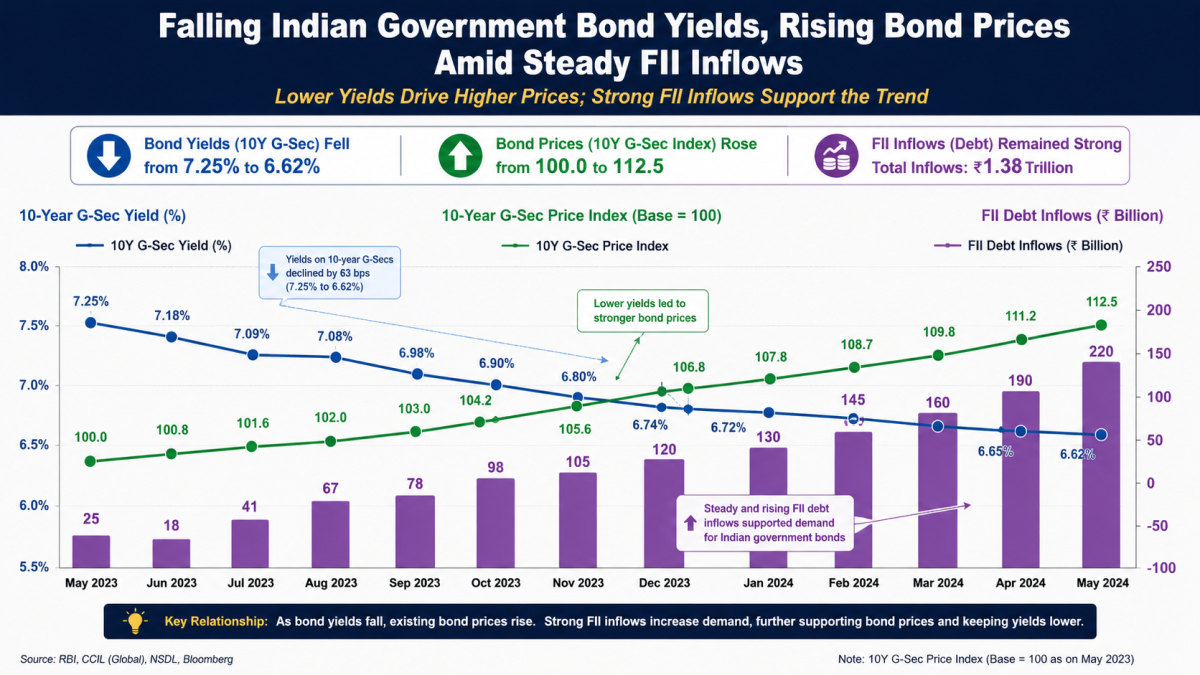
India’s financial ecosystem is capturing significant global attention. A rare alignment of easing domestic inflation, reliable economic growth patterns, and large foreign capital inflows has placed both the Indian Rupee (INR) and the government bond market into a prolonged structural rally.
For international and domestic investors alike, understanding the mechanisms behind this Indian financial market resilience is essential for navigating the broader emerging market landscape.
1. Why the Indian Rupee Benefits from Strong Capital Inflows
The core driver of the rupee’s current stability stems from the aggressive repositioning of Foreign Institutional Investors (FIIs) and global macro funds. As mature economies navigate growth deceleration, India has decoupled due to its robust economic fundamentals and highly predictable political climate.
A significant structural pivot occurred with the official inclusion of Indian sovereign debt into benchmark global bond indices (such as the JPMorgan GBI-EM index). This single policy catalyst has forced passive fund managers worldwide to increase their baseline weight allocations to Indian debt assets, continuously feeding demand for the INR.
2. Falling Inflation and Sovereign Bond Yield Mechanics
Inflation management remains the foundation of investor trust. The Reserve Bank of India (RBI) has successfully anchored consumer price inflation well within its target range. This structural drop in inflation alters market dynamics in two primary ways:
Yield Compression: When future inflation expectations fall, investors demand less risk premium. This drives government bond yields lower.
Capital Gains: Because bond yields and bond prices move in opposite directions, falling yields automatically trigger a rise in the value of existing government securities.
Bond Market Fundamental: When inflation stays under control, long-term fixed-income securities become highly attractive, locking in strong real yields before prices climb further.
3. The RBI’s Balanced Monetary Policy Approach
The RBI has earned high credibility through its transparent, predictable, and balanced monetary policy approach. By managing banking system liquidity tightly while keeping benchmark interest rates stable, the central bank has minimized market volatility. Predictable policies remove the “surprise factor,” allowing institutional investors to accurately model out their long-term infrastructure and capital allocations.
4. A Deep Macroeconomic Safety Net
India’s external balance sheet has strengthened dramatically over the past several fiscal quarters. A combination of structural factors shields the domestic market from sudden global capital flight:
| Economic Indicator | Market Impact |
| Forex Reserves | Provides a massive buffer for the RBI to defend the currency against external shocks. |
| Current Account Deficit | Maintained at highly manageable levels due to surging service exports. |
| Fiscal Deficit Targets | Strict government adherence to deficit reduction goals builds sovereign trust. |
| Tax Collections | Double-digit growth in direct and indirect taxes gives the state robust spending power. |
What This Means for Individual Portfolios
A highly resilient domestic currency reduces the risk of imported inflation—meaning critical dollar-denominated commodities like crude oil become cheaper to import, keeping domestic corporate margins healthy. Concurrently, rising bond prices deliver direct mark-to-market gains to investors holding fixed-income portfolios, debt mutual funds, and long-duration government bonds.
However, asset allocation must remain dynamic. While India’s internal fundamentals are exceptionally strong, external vulnerabilities—such as sudden U.S. Federal Reserve policy shifts, sudden changes in global oil prices, or sudden shifts in global liquidity—can spark temporary market volatility.
Frequently Asked Questions (FAQ)
How does global index inclusion affect ordinary retail investors in India?
Global index inclusion brings billions of dollars of foreign capital directly into government securities. This lowers the government’s overall borrowing costs, which indirectly helps stabilize interest rates across the commercial banking system, benefiting home and corporate borrowers.
Why do bond prices rise when yields fall?
This is a standard fixed-income mechanism. If you hold an older bond paying a higher fixed interest rate, and newly issued bonds start paying lower rates because inflation has dropped, your older bond becomes highly valuable. Buyers will pay a premium to purchase your higher-paying bond, driving its market price up.
What are the main risks to India’s financial market resilience?
The primary risks are external. Since India imports a vast portion of its crude oil, any geopolitical escalation that spikes energy prices can strain the current account deficit. Additionally, aggressive interest rate hikes by the U.S. Federal Reserve can occasionally prompt foreign funds to pull back capital from emerging markets.
Disclaimer
This article is provided for informational and educational purposes only. It does not constitute formal financial, investment, or legal advice. Investors are urged to consult certified financial professionals and conduct independent research before allocating capital to equities, debt mutual funds, or foreign exchange markets.
Related Regional News & External Coverage
For further background reading on regional trade, infrastructure developments, and local economic impact assessments, explore the ongoing coverage provided by local bureaus:
Discover detailed analysis on regional financial shifts and market report updates directly via Matribhumi Samachar English.
