 Matribhumi Samachar English


Mumbai. Friday, 3 July 2026
The month of July 2026 brings critical regulatory shifts, banking reforms, and financial deadlines directly impacting millions of Indian citizens. Whether you are a salaried employee rushing to file your taxes, a credit card enthusiast tracking your reward points, or a frequent railway traveler, these updates will alter your monthly budget and routines.
Staying proactive about these compliance deadlines and altered policy frameworks will help you avoid steep penalties, maximize your banking perks, and manage your money smoothly. Here is a detailed, consumer-friendly breakdown of the seven major updates shifting the Indian economic landscape this month.
1. The Clock is Ticking: Income Tax Return (ITR) Deadline Apporaches
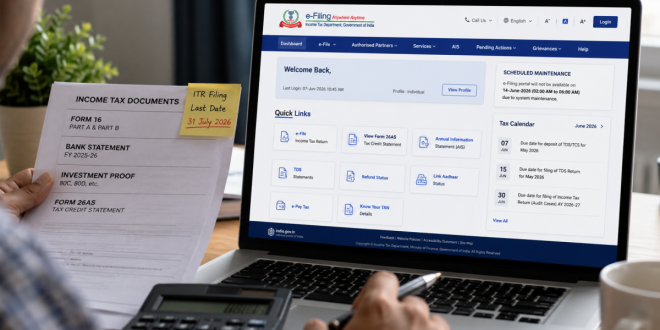
For individual taxpayers, salaried employees, and pensioners filing ITR-1 and ITR-2 forms, the definitive deadline for the Financial Year (FY) 2025–26 (Assessment Year 2026–27) is July 31, 2026.
Filing your tax return before the final week of July is highly recommended to protect your finances from unnecessary stress:
-
Avoid Penalties: Missing the deadline attracts mandatory late filing fees under Section 234F, alongside heavy interest on any unpaid tax liabilities.
-
Faster Refunds: Early bird filings are processed quicker by the Income Tax Department’s centralized network, ensuring your refund drops into your bank account without long delays.
-
Financial Record Integrity: Seamlessly processed ITRs serve as essential legal income proof when you apply for home loans, vehicle financing, or international travel visas.
Action Step: Log into the official e-filing portal early. Make it a priority to cross-verify your pre-filled details against your updated Annual Information Statement (AIS), Form 26AS, and the Form 16 provided by your employer to eliminate discrepancies.
2. Digital Upgrades: Free Aadhaar Email Updates Launched
In a major push to improve digital security, the Unique Identification Authority of India (UIDAI) has introduced a new facility allowing citizens to update or link their registered email addresses completely free of cost. This fee waiver kicked off on July 1, 2026, and will remain valid until December 31, 2026.
Linking an active email profile ensures an added layer of security alongside your mobile number. It guarantees uninterrupted delivery of digital OTP authentications, provides instant alerts regarding account changes, and streamlines the digital Know Your Customer (KYC) verifications required by modern banking apps and investment platforms. You can complete this update easily online via the official self-service update portal or by visiting a nearby authorized center.
3. Fair Banking: RBI Tightens Grip on Product Mis-selling
To foster healthier financial environments, the Reserve Bank of India (RBI) has enacted a much stricter regulatory framework targeting the mis-selling of financial products. This directive forces commercial banks, non-banking financial companies (NBFCs), and digital lending partners to prioritize consumer safety over aggressive sales targets.
Under these protective guidelines, institutional entities must ensure that complex investments, insurance wrappers, or credit lines are strictly aligned with a client’s verified risk appetite and actual financial needs. Hidden transaction costs, structural risks, and complex termination clauses must be laid out in transparent, easy-to-understand product disclosure sheets. Furthermore, institutions are required to set up accelerated grievance redressal mechanisms to resolve customer complaints swiftly.
4. Rewriting the Perks: SBI Card Modifies Reward Point Systems
SBI Card has officially rolled out major structural changes to its reward point accrual system across several credit card variants, including highly popular co-branded retail cards.
If you frequently optimize your monthly spending to maximize cashbacks or points, note that certain merchant categories—such as routine utility bill payments, insurance premiums, or institutional education fees—have been excluded from standard reward calculations or have had their earning rates reduced. Additionally, revised monthly caps are now active, capping the maximum points you can accumulate in specific high-velocity spending brackets.
5. High Flyers: HDFC Bank Revises Airport Lounge Access Rules
If you carry premium or co-branded HDFC Bank credit cards to enjoy free airport lounge visits, your travel strategy requires a quick modification. HDFC Bank has implemented a spend-based qualification system to regulate complimentary domestic lounge access.
To unlock complimentary lounge visits for the upcoming calendar quarter, cardholders are now required to spend a minimum of ₹60,000 within the previous calendar quarter. This rolling target means your expenditures during April, May, and June directly dictate your lounge access validity for July, August, and September. Frequent travelers must monitor their transaction milestones closely to avoid surprise declines at the airport reception desks.
6. International Travel: Passport Service Fee Structures Revised
The Ministry of External Affairs has updated its structural service fees for international travel documentation. The updated pricing tier affects all categories of passport operations processed through the network of Passport Seva Kendras (PSKs) and Post Office Passport Seva Kendras (POPSKs).
The revised fee structure applies directly to:
-
Brand new passport booklet booklets (both 36-page and 60-page options).
-
Formal renewals due to validity expirations.
-
Urgent Tatkaal service tracks.
-
Specialized correction requests and passport replacements for lost or physically damaged documents.
If you are currently scheduling international vacations or job migrations, ensure you review the exact category-wise pricing breakdown on the official passport portal before authorizing online payments.
7. Enforcing Discipline: Indian Railways Increases Fines
To promote passenger safety and structural cleanliness across the national transport network, Indian Railways has officially implemented stiffer monetary penalties for various infractions under revised provisions of the Railway Act.
Station authorities and ticket checking staff are actively enforcing higher spot-fines for recurring travel violations, including:
-
Traveling without a valid physical or digital ticket.
-
Entering reserved coaches without corresponding seat assignments (e.g., general ticket holders entering sleeper or AC compartments).
-
Men traveling inside dedicated ladies’ compartments.
-
Damaging public railway property or littering on platforms.
-
Boarding trains with hazardous or prohibited materials.
Frequently Asked Questions (FAQs)
What is the final date to file my Income Tax Return for FY 2025–26?
The strict deadline to file your ITR-1 and ITR-2 forms for the Assessment Year 2026–27 is July 31, 2026. Filing past this window will result in monetary penalties and accumulated interest charges on outstanding tax.
How long will the Aadhaar email update stay free of cost?
The service charge waiver for updating or registering your email address is available from July 1, 2026, through December 31, 2026.
How does the new HDFC lounge policy calculate eligibility?
Eligibility is calculated on a rolling quarterly basis. You must spend at least ₹60,000 on your card during the preceding calendar quarter to enjoy complimentary domestic lounge access during the subsequent quarter.
What happens if I am caught traveling in a reserved train coach without the right ticket?
Under the revised Railway Act guidelines active from July 2026, you will face significantly higher spot fines and potential legal eviction at the next upcoming railway station.
Disclaimer
This article is curated for general informational purposes only. Regulatory policies, tax laws, fee structures, and banking terms are subject to modifications by the respective authorities (Income Tax Department, UIDAI, RBI, MEA, and individual banking boards). Readers are strongly advised to check official notices and terms before making major financial decisions.
Related Regional Updates & Announcements
For deep-dive journalistic reporting, verified hyper-local announcements, and community-centric economic developments covering these changes across India, explore the official English regional editions online at Matribhumi Samachar English.