

New Delhi | Thursday, 16 July 2026
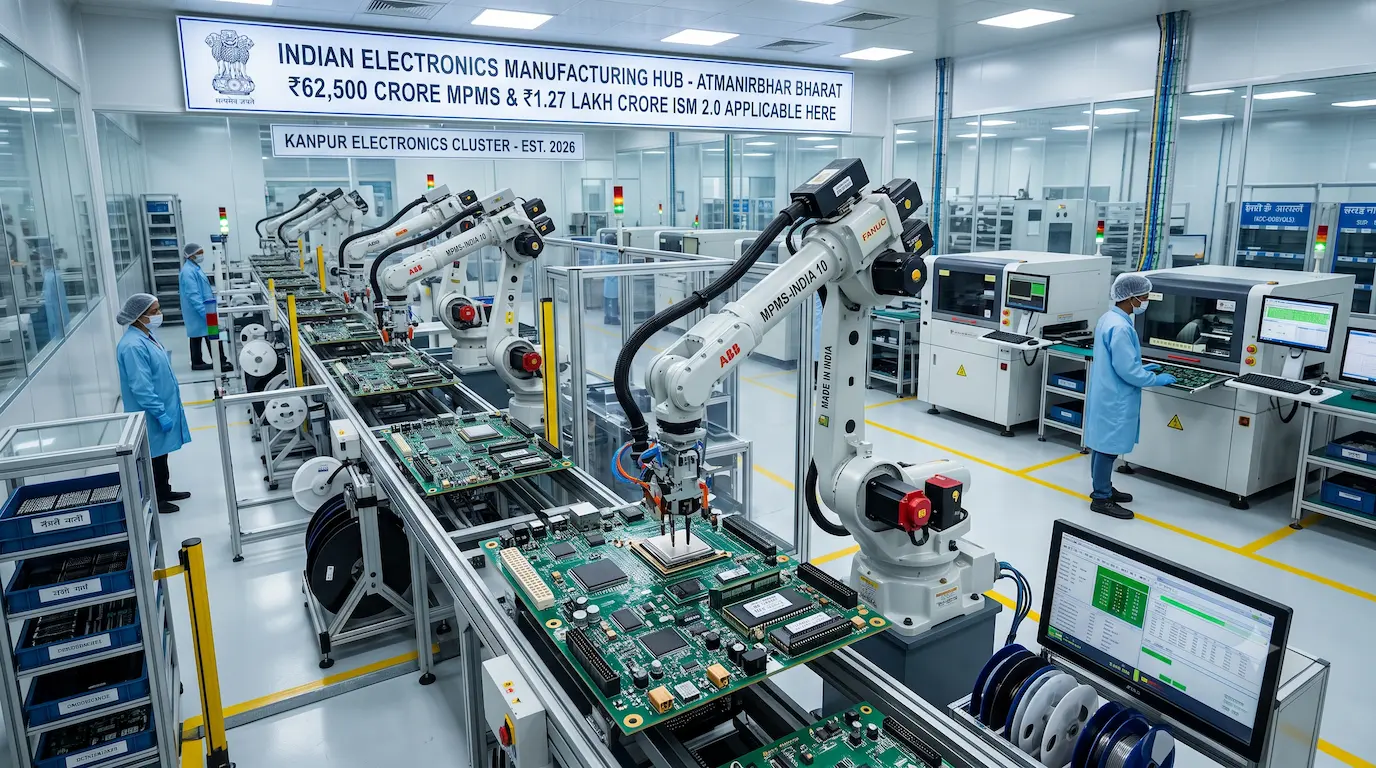
In a landmark decision aimed at shifting India from a regional assembly floor to a dominant global electronics powerhouse, the Union Cabinet, chaired by Prime Minister Narendra Modi, has approved the Mobile Phone Manufacturing Scheme (MPMS) with a massive financial outlay of ₹62,500 crore.
This strategic policy succeeds the highly successful Production Linked Incentive Scheme for Large Scale Electronics Manufacturing (PLI-LSEM), which concluded its tenure on March 31, 2026. The newly minted MPMS will span a five-year period, operating from FY 2026-27 through FY 2030-31.
Deepening Domestic Value Addition: The New Strategy
While the previous PLI framework laid the groundwork for making India the world’s second-largest mobile manufacturer by volume, it focused heavily on final assembly. The MPMS pivots toward localizing high-value components, electronic modules, and printed circuit boards (PCBs).
The scheme structure introduces a tiered financial incentive matrix based on eligible sales:
Base Production Incentives: Differentiated incentive rates ranging from 2.25% to 5% on eligible local sales.
Localization Bonus: An additional incentive of up to 1.5% for companies that actively source key components and sub-assemblies from within domestic borders.
Homegrown Brand & R&D Push: A special 3% additional incentive specifically for Indian brands investing heavily in indigenous product design, research, development, and patent creation.
[Downstream Assembly: MPMS] ─── Sourced Locally ───► [Upstream Fab: ISM 2.0]
 (Incentives: 2.25% - 5%)                           (Budget: ₹1.27 Lakh Cr)
Convergence with India Semiconductor Mission 2.0
The MPMS does not act in isolation. It is systematically paired with the recently approved ₹1.27 lakh crore India Semiconductor Mission 2.0 (ISM 2.0).
While ISM 2.0 addresses upstream capabilities—focusing on semiconductor fabrication, advanced packaging, chip design, and raw materials—the MPMS secures massive downstream demand. Together, they represent an integrated framework designed to build end-to-end manufacturing self-reliance, drastically minimizing reliance on foreign components.
Massive Projections: Production, Exports, and Jobs
According to Union Electronics and IT Minister Ashwini Vaishnaw, smartphones have dramatically risen from being India’s 153rd largest export item in FY 2014-15 to the single largest exported product category by value in recent years, outperforming traditional pillars like cut diamonds and diesel fuel.
Official targets under the five-year MPMS lifecycle include:
Cumulative Production: Projected to reach a historic ₹39 lakh crore.
Export Target: Projected to scale to ₹15 lakh crore—double the ₹7.5 lakh crore exported during the previous scheme.
Direct Employment: Expected to directly add over 60,000 high-skill jobs, primarily benefiting youth across emerging electronics manufacturing hubs.
Frequently Asked Questions (FAQ)
Q1: How does the MPMS differ from the previous PLI electronics scheme?
A: While the original PLI scheme focused on increasing production volume, the new MPMS specifically incentivizes localization. It offers bonus payouts for sourcing sub-assemblies domestically and awards an extra 3% to Indian brands focusing on R&D and design patents rather than just assembly.
Q2: When does the Mobile Phone Manufacturing Scheme come into effect?
A: The scheme has a fixed five-year timeline starting from the financial year 2026-27 and running until the end of the financial year 2030-31.
Q3: Will the MPMS make smartphones cheaper for everyday consumers right away?
A: Not immediately. However, over the long term, reducing dependency on imported components and strengthening local supply chains will drop logistics and production costs for manufacturers, potentially leading to more competitive retail pricing and better regional after-sales support.
Disclaimer
The information compiled in this article is based on the official Union Cabinet briefing and statements issued by the Ministry of Electronics and Information Technology (MeitY). While the policy layout has been approved, exact guidelines, eligibility portals, and brand shortlists are subject to forthcoming government gazette notifications.
Relevant Links
For more updates on national policies, regional news, and economic updates, explore Matribhumi Samachar English Portal.
Read more about related economic initiatives: matribhumisamachar.com/en/business
Stay up to date with the latest policy approvals: matribhumisamachar.com/en/national
