

Mumbai. Sunday, 19 July 2026
India’s startup landscape is undergoes a fundamental architectural shift. The era dominated purely by consumer internet marketplaces, food delivery apps, and hyper-local fintech platforms is making room for a highly sophisticated, research-driven counterpart. Driven by robust sovereign policies, institutional funding, and an urgent demand for indigenous technologies, the India deep-tech startup ecosystem 2026 has firmly entered a mature growth phase.
Unlike traditional digital businesses, deep-tech ventures do not simply build user interfaces over existing frameworks. They develop breakthrough products rooted in advanced scientific research, intellectual property (IP), and laboratory engineering. This means longer product development cycles and heavier upfront capital investments, but it also establishes incredibly high barriers to entry and massive global export potential.
What Defines the Deep-Tech Sector?
At its core, deep-tech refers to companies building proprietary, patent-heavy technologies designed to solve complex industrial, ecological, or scientific problems. These innovations require years of intensive R&D, structural validation, and rigorous patenting before they ever see commercial monetization.
The Fastest-Growing Segments in India
The momentum within the Indian ecosystem is heavily concentrated across a few specialized frontier fields:
Artificial Intelligence & Machine Learning: Moving rapidly from superficial software applications to foundational AI infrastructure, enterprise-grade generative systems, and specialized AI chips.
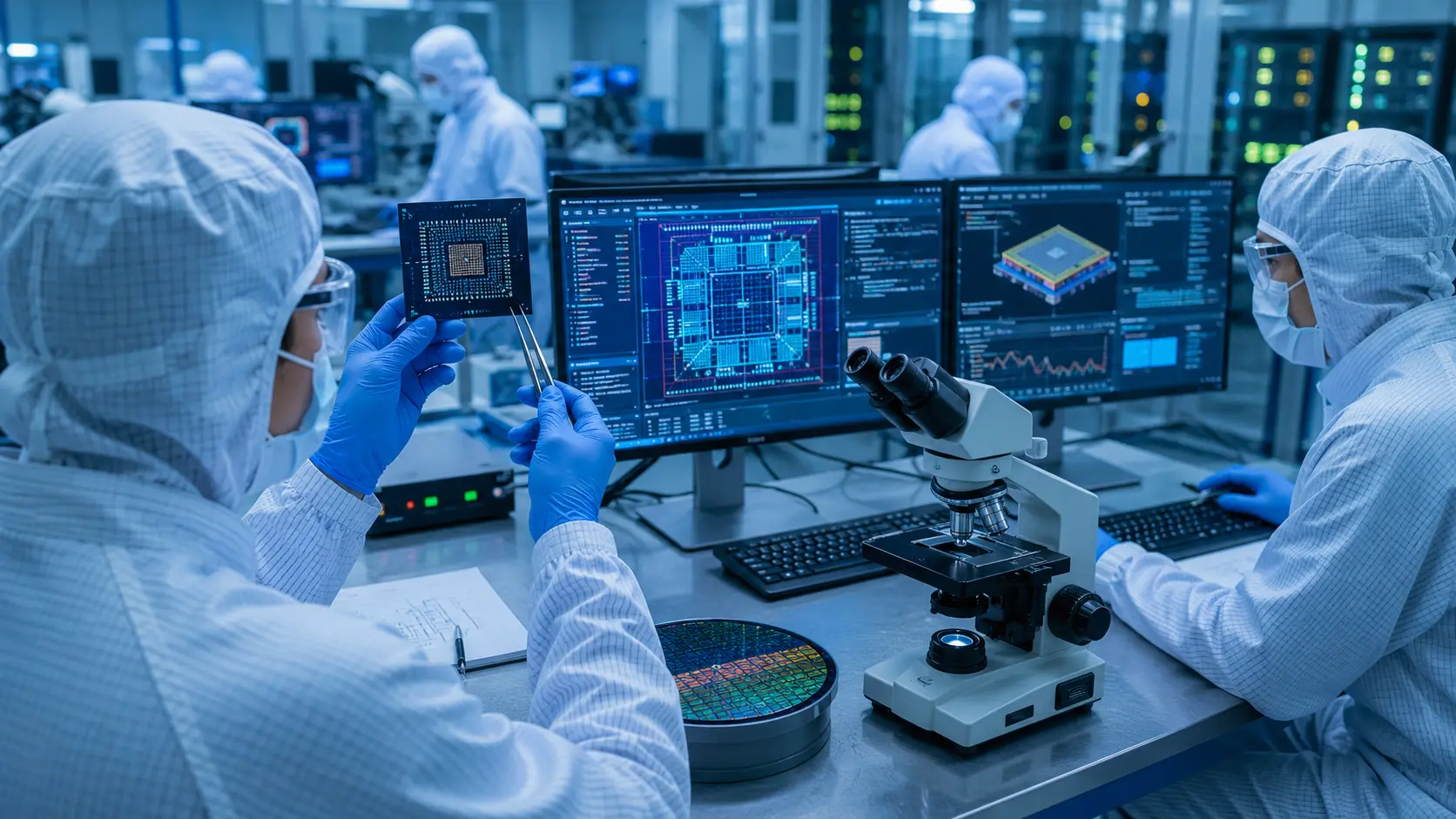
Semiconductor Design & Manufacturing: Accelerating across chip architecture, Electronic Design Automation (EDA), advanced testing, and validation protocols.
Space Technology: Transitioning from state-run monopolies to private launch vehicle manufacturing, custom satellite constellations, and commercial space communications.
Defence Tech: Spearheaded by domestic modernization initiatives, driving investments into battlefield AI, secure tactical communications, and autonomous drone swarms.
Biotechnology & Clean Energy: Exploring the intersection of AI with synthetic biology, precision medicine, gene editing, and green hydrogen infrastructure.
Shift in Indian Venture Capital Dynamics
The macroeconomic environment for deep-tech funding has evolved remarkably following the market corrections of recent years. Investors are no longer chasing cosmetic metrics like daily active users (DAUs); instead, they are looking for defensible IP.
+------------------------------------------------------------+
|                EVOLVING INVESTMENT METRICS                 |
+------------------------------------------------------------+
|    OLD INTERNET PARADIGM      |     NEW DEEP-TECH MANDATE   |
| ----------------------------- | ---------------------------|
| • Rapid User Acquisition      | • Patent Defensibility     |
| • Low Capital Barriers        | • TRL Progression Speed    |
| • Burn-to-Scale Software      | • Scientific Validation    |
| • Local Market Aggregation    | • Global Export Potential  |
+------------------------------------------------------------+
This structural realignment is visible across three major funding trends:
Quality over Quantity: While the net number of individual deal rounds has experienced a consolidation, the average ticket size per investment has scaled up. Investors are concentrating deep pools of capital into heavily vetted, technically sound enterprises.
Focus on Commercialization Paths: Venture funds are prioritizing startups that demonstrate clear progression through Technology Readiness Levels (TRLs)—specifically moving from lab validation (TRL 4) to operational environments (TRL 7).
The State as a Sovereign Co-Investor: Moving far beyond basic non-dilutive grant mechanisms, the Indian government has actively stepped up as an equity participant and foundational customer in highly sensitive strategic domains.
Key Pillars of Government Support
A primary driver behind this science-first transition is the introduction of powerful legislative policy updates. The Department for Promotion of Industry and Internal Trade (DPIIT) and the Union Cabinet have fundamentally altered the structural support given to research-intensive businesses.
Extended Startup Windows: Recognizing that a semiconductor or quantum computing startup cannot scale at the same pace as a mobile application, the formal recognition period for certified deep-tech entities has been doubled from 10 to 20 years, with the operational turnover ceiling raised significantly to accommodate deep hardware cycles.
Patient Capital Corpora: Initiatives like the Research, Development, and Innovation (RDI) Fund act as long-tenor, low-interest funding cushions designed specifically to absorb the heavy financial burdens of early-stage scientific experimentation.
Sovereign Infrastructure Compute: Programs nested under the IndiaAI Mission are actively lowering operational barriers by offering local startups computational infrastructure, cloud GPU allocations, and structural data frameworks necessary to train localized foundation models without prohibitive capital expenditure.
Balancing the Risks: Structural Bottlenecks Ahead
While the long-term outlook remains incredibly strong, deep-tech founders and their backing institutions still face unique operational head-winds that differ sharply from traditional SaaS or consumer tech ventures:
Extended Gestation Timelines: The journey from foundational laboratory discovery to market-ready product validation can easily take five to seven years, putting immense pressure on traditional VC fund lifecycles.
Capital Intensity: Hardware iteration, advanced cleanroom manufacturing, and specialized materials testing require high capital expenditure long before the first commercial invoice is generated.
Infrastructure Access: Securing consistent, affordable access to advanced testing infrastructure, sophisticated wind tunnels, specialized fabs, and bio-foundries remains a challenge that public-private partnerships are still rushing to address.
Despite these hurdles, the strategic advantages—including unmatched patent-based competitive edges, defense self-reliance, and global technical export potential—make deep-tech an increasingly preferred destination for forward-looking capital. As public-private ecosystems align, these startups will serve as critical structural pillars driving long-term economic resilience.
Frequently Asked Questions (FAQ)
How does a deep-tech startup differ from a standard internet startup?
A standard internet startup typically builds its business model around digital platforms, aggregators, or marketplaces using existing software technologies. A deep-tech startup builds its value proposition on new, proprietary scientific or engineering breakthroughs that require intense research and intellectual property creation.
Why is government participation so critical in this sector?
Because deep-tech developments feature prolonged timelines and high failure risks during early research phases, traditional venture capital can sometimes be hesitant to enter early. Government intervention via patient capital, extended regulatory lifecycles, and state-backed infrastructure provides the necessary safety net for these innovations to reach commercial viability.
What are the top sectors attracting capital in India right now?
Artificial Intelligence infrastructure, chip design, space launch services, autonomous defense systems, and synthetic biotechnology are currently attracting the highest volumes of technical investment.
Disclaimer
This article is for informational and educational purposes only. It does not constitute financial, investment, or legal advice. Readers are encouraged to consult certified professional advisors before making any commercial investment decisions regarding early-stage deep-tech companies.
Related Resource Links
For further context on industrial innovation, structural startup acceleration, and technology deployments across the region, explore the official coverage from Matribhumi Samachar:
- Read about cutting-edge implementations of IoT and technical mesh networks: Wi-SUN Challenge Concludes with Smart Infrastructure Innovations.
Review sovereign clean energy agendas impacting the deep-tech map: India’s Green Hydrogen Leadership and Startup Initiatives.
See examples of homegrown AI solutions built for public scale: C-DOT Secures UN WSIS Award for Indigenous Emergency Platforms and AI Startups.
