

New Delhi. 14 September 2026
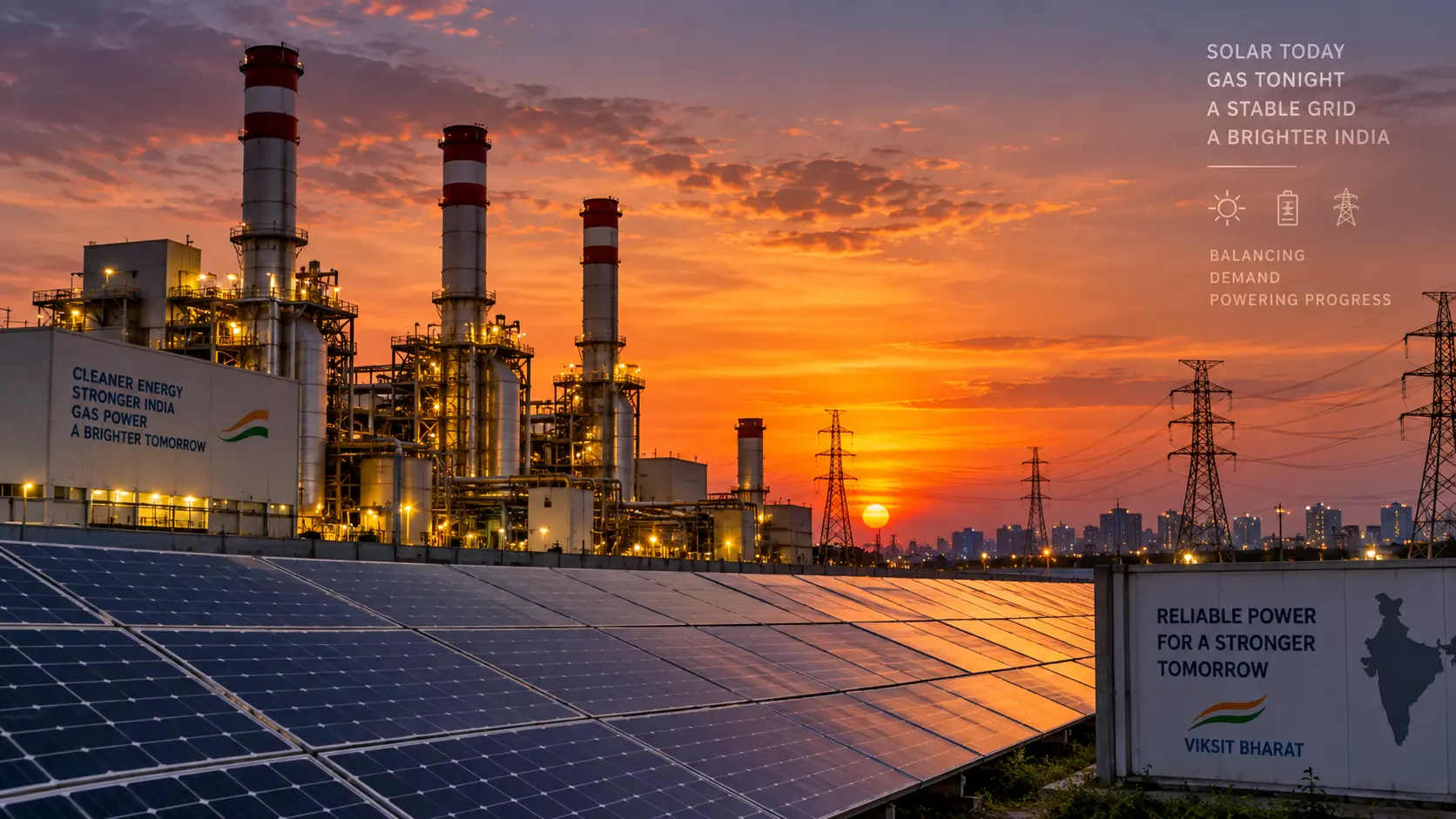
India’s power sector is navigating a major structural shift as its grid faces unprecedented evening demand pressures. In early September 2026, electricity demand crossed 260 GW—reaching a near-record 269 GW peak on September 10—defying traditional post-summer cooling patterns. While daytime solar energy comfortably meets afternoon peaks, the period immediately following sunset has emerged as the country’s most critical operational challenge.
To bridge this post-sunset gap, power grid operators have increasingly relied on gas-fired thermal plants. Known for their fast startup and flexible ramping capabilities, gas power stations provide immediate balancing power when solar generation rapidly declines.
The Evening “Duck Curve” and Climate Pressures
The primary force driving this reliance on natural gas is the growing divergence between daytime supply and evening consumption:
- Solar Cliff at Sunset: Massive solar capacity additions allow India to run cleanly during sunlight hours. However, as solar output drops sharply around dusk, air conditioning and industrial loads remain elevated.
- Monsoon Deficits and Reduced Hydropower: Weak late-season monsoon rainfall (down ~15% from long-period averages) has depleted hydro reservoirs, reducing hydropower output by nearly 11% year-on-year.
- Agricultural Pumping Surge: Dry weather forces farmers to run electric groundwater pumps for irrigation, swelling night-time consumption.
Economic Balancing: Gas Power as a Premium Peaker
Although gas-fired power generation provides vital flexibility, it comes at a steep economic price. Unlike coal—which remains the baseline workhorse of India’s electricity grid—gas power relies heavily on global liquefied natural gas (LNG) markets.
Spot power prices on the Indian Energy Exchange (IEX) spiked during evening peak hours in early September 2026, with real-time market clearing prices averaging over ₹7.48–₹7.97 per kWh, and several 15-minute blocks hitting the upper price cap of ₹10 per unit. Consequently, utilities view gas generation as a short-term balancing tool rather than a low-cost replacement for baseload power.
Beyond Gas: Building India’s Long-Term Storage Architecture
The September spike underscores that India’s clean energy transition is moving into a new phase: grid integration and flexible dispatch. To avoid long-term dependence on expensive gas, India is accelerating multi-technology solutions:
- Battery Energy Storage Systems (BESS): Fast-responding utility-scale batteries to capture afternoon solar surplus and discharge it post-sunset.
- Pumped Storage Hydropower (PSH): Long-duration water cycling projects designed for evening balancing.
- Time-of-Day (ToD) Tariffs: Incentivizing commercial and industrial consumers to shift power-intensive tasks to cheap, daytime solar hours.
Frequently Asked Questions (FAQ)
Q1: Why did India’s electricity demand rise so sharply in September 2026?
Demand rose due to persistent late-season heat waves, below-normal monsoon rainfall driving agricultural irrigation pumping, and sustained industrial activity.
Q2: Why is solar power insufficient for evening peak demand?
Solar plants stop generating electricity when the sun sets, which coincides exactly with the daily period when residential air conditioning and household electricity use reach their highest levels.
Q3: Is gas power intended to replace coal in India?
No. Gas power is utilized primarily as a flexible, fast-ramping peaker source during sudden grid shortfalls due to the higher cost of natural gas compared to coal.
Disclaimer
This article is for informational purposes only and does not constitute financial, investment, or policy advice. Power generation statistics and market clearing rates are based on published grid system reports as of September 2026.
Related Coverage & Analysis
- For ongoing coverage on India’s energy transition, infrastructure policy, and macroeconomic trends, explore the latest English reports at Matribhumi Samachar (English Edition).
