
New Delhi.
India is expanding its footprint in global energy diplomacy by offering its indigenous civilian nuclear technology, technical expertise, and capacity-building frameworks to international partners. As nations seek continuous, low-carbon baseload electricity to support industrial growth, rising data center demand, and climate goals, India’s long-term experience across the full nuclear value chain presents an accessible blueprint for emerging economies.
Core Areas of Offered International Cooperation
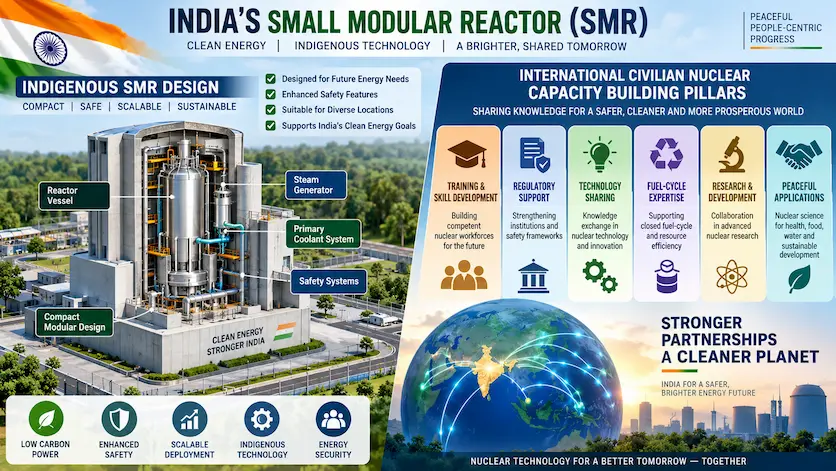
India’s civilian nuclear initiative emphasizes technology transfer, human resource development, and operational best practices rather than military applications:
- Capacity Building & Workforce Training: Technical training for reactor operators, engineering specialists, and safety regulators in developing nations.
- Indigenous Small Modular Reactors (SMRs): Sharing compact, flexible reactor technologies like the Bharat Small Modular Reactor (BSMR) suited for smaller grids.
- Closed Fuel-Cycle Expertise: Technical insights on fuel reprocessing and fast-breeder reactor operations to optimize fuel usage and manage high-level waste efficiently.
- Peaceful Applications: Utilizing nuclear science for agriculture (mutation breeding for high-yield crops), healthcare (radioisotope production), and industrial applications.
- Institutional & Regulatory Support: Assisting partner countries in building independent nuclear regulatory bodies, safety auditing protocols, and compliance structures.
Why India’s Nuclear Model Matters for Emerging Nations
For developing countries, deploying nuclear energy requires significant financial and institutional investment. India’s indigenous nuclear program offers distinct advantages for Global South partners:
- Cost-Effective Engineering: Indian Pressurized Heavy Water Reactors (PHWRs) and SMR designs offer lower capital costs per megawatt compared to traditional Western designs.
- Proven Self-Reliance: India’s history of developing domestic manufacturing supply chains provides practical insights for nations aiming to localize nuclear infrastructure.
- Complements Renewable Grids: Nuclear power provides reliable, 24/7 baseload power that complements intermittent solar and wind generation.
Safety Frameworks and Non-Proliferation Compliance
India’s international civilian nuclear outreach operates strictly within established global norms. Cooperation is conducted under:
- International Atomic Energy Agency (IAEA) safety standards and safeguards.
- Bilateral intergovernmental civil nuclear agreements.
- Applicable national export controls and non-proliferation protocols.
Frequently Asked Questions (FAQ)
Q1: Is India offering military nuclear technology to other countries?
No. India’s proposed international cooperation is strictly limited to peaceful, civilian applications, including power generation, agriculture, healthcare, and safety research.
Q2: What are Small Modular Reactors (SMRs), and why are they central to India’s strategy?
SMRs are advanced nuclear reactors producing up to 300 MWe per unit. They require smaller land footprints, lower initial capital investment, and are easier to integrate into existing power grids compared to large traditional reactors.
Q3: How does India ensure nuclear safety during technical exchanges?
All cooperation adheres strictly to IAEA guidelines and bilateral oversight mechanisms to ensure robust physical security, operational safety, and environmental protection.
Disclaimer:
This article is for informational and educational purposes only. International nuclear cooperation programs, technology transfers, and bilateral agreements remain subject to sovereign government policy, regulatory approvals, and international safeguard compliance.
Related Coverage & External Resources:
For updates on health research and national scientific policy initiatives, visit Matribhumi Samachar English.
