

NEW DELHI, INDIA: Following the Union Cabinet’s approval of the ₹84,084 crore “Samudra Manthan” National Offshore Exploration Scheme, industry experts are advising that state subsidies alone will not mitigate the extraordinary risks of deepwater drilling. While the scheme marks a decisive step toward energy self-reliance, relying solely on legacy seismic technology leaves operators vulnerable to costly trial-and-error exploration.
India currently imports approximately 89 percent of its crude oil, while domestic fields face a natural annual production decline of 6 to 7 percent. With over 99 percent of the nation’s Exclusive Economic Zone (EEZ) now cleared of legacy defense restrictions, unlocking an estimated 600 million metric tonnes of oil equivalent (MMTOE) in subsea reserves is a strategic imperative. The Samudra Manthan scheme provides a massive financial backbone, subsidizing up to 50 percent of exploratory well costs, which can easily exceed $150 million each in complex subsea terrains.
However, Dr. Ravi Kumar, Co-Founder and Chief Technology Officer of Atomionics, cautions that opening marine acreage and subsidizing rigs without modernizing the subsurface sensing stack remains an extraordinary gamble. Dr. Kumar, who holds a Ph.D. in Physics with extensive expertise in cold-atom systems, leads Atomionics in building high-precision cold-atom quantum gravimeters designed to map the Earth’s subsurface in 3D for resource exploration and GPS-denied navigation.
“For decades, offshore exploration has relied almost exclusively on reflection seismology,” Dr. Kumar explained. “By bouncing sound waves through kilometers of seawater and rock, seismic surveys excel at mapping subsurface geometry. However, seismic waves struggle with fluid composition. They cannot reliably distinguish whether a structural trap is filled with light crude, natural gas, saline brine, or nothing at all. Conflating geometric structure with hydrocarbon presence is precisely how exploration budgets are consumed by empty ‘wildcat’ wells.”
In deepwater operations, where logistical delays cost hundreds of thousands of dollars per day, relying solely on structural imaging forces operators into a costly trial-and-error cycle. The fundamental issue, Dr. Kumar notes, is the lack of high-fidelity subsurface data before mobilizing a rig.
To bridge this gap, exploration teams must measure a different physical parameter entirely: density. Because gravitational forces respond directly to subsurface mass, precision gravimetry can complement seismic geometry by revealing a trap’s density signature, distinguishing genuine reservoir-quality rock from dense salt or compacted sediment that seismic technology alone often misreads.
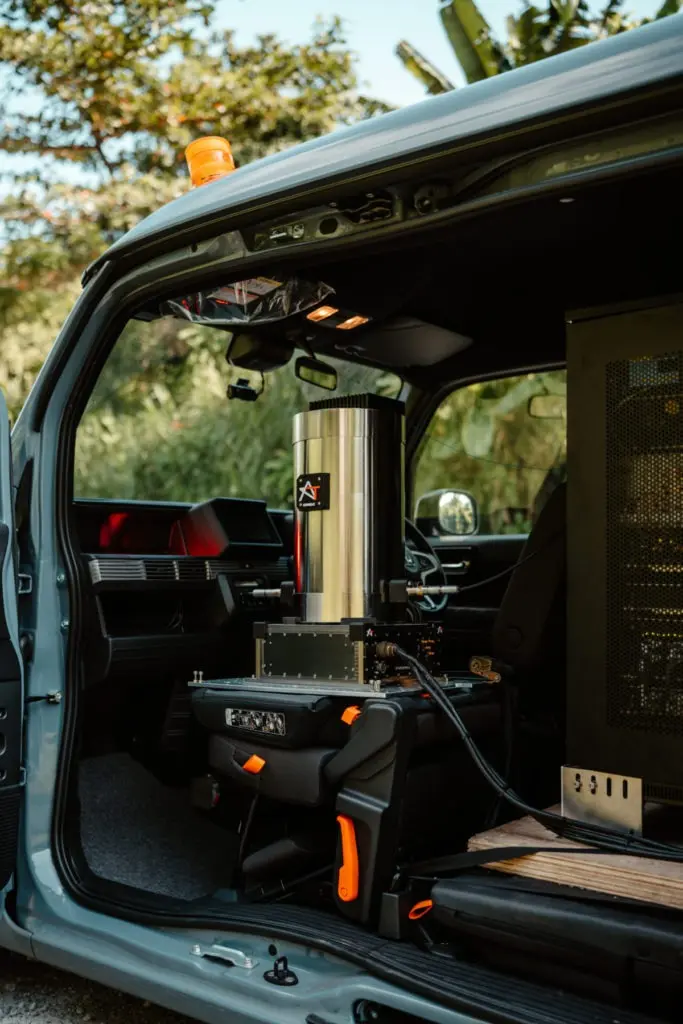
This is where next-generation quantum sensing alters the risk equation. Providing non-invasive, rapid, and highly accurate sensing platforms, Atomionics is dramatically accelerating the discovery of critical minerals and hydrocarbons globally. The company’s GRAVIO sensor utilises laser-cooled neutral atoms as absolute reference test masses, overcoming the mechanical drift and wear-and-tear that have historically hampered classical marine gravimetry. Layering these high-resolution quantum density maps over 3D seismic volumes allows operators to rule out geologically unpromising traps early.
The GRAVIO sensor is set to arrive in India for its first major exploration project at the Mangampeta mines in Andhra Pradesh, a belt rich in Barytes, in a move that Dr Kumar describes as the ‘beginning of the era of smarter exploration.’
“Samudra Manthan provides the financial backbone India needs to target its vast offshore potential,” Dr. Kumar added. “However, subsidising rigs without modernising the subsurface sensing stack only accelerates drilling; it does not inherently improve success rates. To turn policy ambition into commercial production, India’s exploration workflow must address uncertainty at its cheapest point: prior to spudding a well. Energy sovereignty will ultimately be decided not just by how much capital New Delhi deploys, but by how precisely that capital is targeted.”
Featured Article
