

New Delhi.
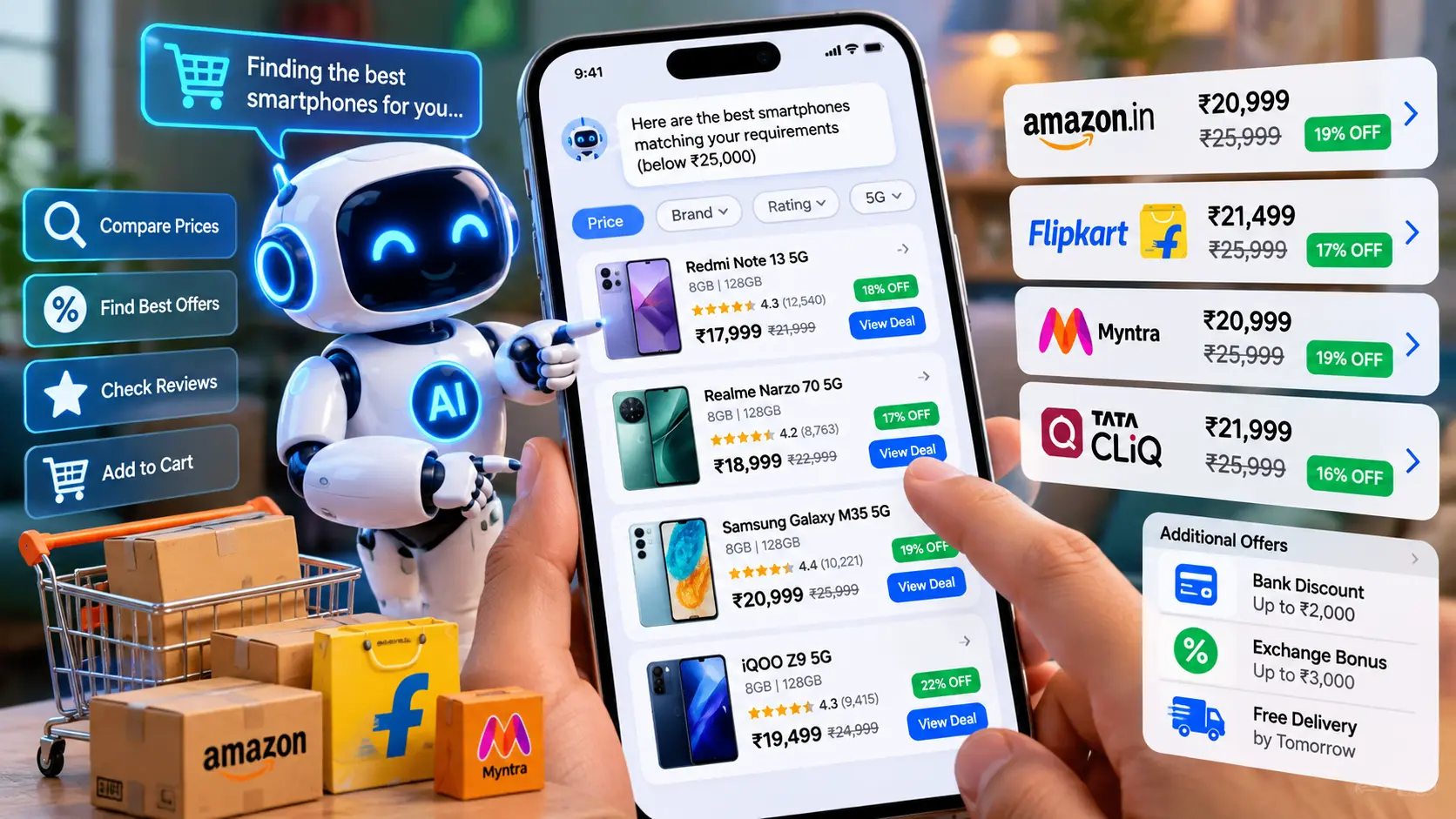
India’s digital commerce ecosystem is stepping into an unprecedented evolutionary phase as artificial intelligence transitions from passive recommendation engines and basic chatbots into fully autonomous AI shopping agents. Known broadly as agentic commerce, this paradigm shift allows software agents to independently research products, run multi-platform price comparisons, evaluate consumer reviews, and execute purchases with minimal human intervention.
For an e-commerce market projected to exceed $300 billion, driven by rapid mobile penetration and digital payment infrastructure, agentic commerce presents both incredible growth opportunities and structural challenges for consumers, retailers, and payment providers alike.
What Is Agentic Commerce?
Agentic commerce refers to an automated online shopping model where goal-driven AI agents perform end-to-end tasks across the purchasing lifecycle on behalf of a user.
Rather than manually opening multiple shopping apps, applying search filters, and reading dozens of user reviews, a consumer simply communicates their intent, budget, and specific preferences to an AI assistant using everyday language.
[ CONSUMER INTENT ]
“Find a smartphone under ₹25,000 with good battery life & bank offer”
│
▼
[ AI SHOPPING AGENT ]
┌──────────────────────────────────┼──────────────────────────────────┐
│ │ │
▼ ▼ ▼
[ Cross-Platform Search ] [ Spec & Review Synthesis ] [ Real-Time Discount Engine ]
Scans Flipkart, Amazon, Filters listings for Evaluates credit card offers,
Ajio, and D2C storefronts. authentic rating trends. UPI cashbacks, & delivery speed.
│ │ │
└──────────────────────────────────┼──────────────────────────────────┘
│
▼
[ AUTOMATED UPI CHECKOUT ]
Executes order within pre-approved limit.
Unlike traditional chatbots that merely output links or text answers, AI shopping agents possess action-oriented agency. They interact directly with web APIs, manage carts, apply coupon codes, and interface with secure payment rails.
Consumer Adoption Landscape in Metro India
Recent industry data underscores a massive willingness among Indian shoppers to delegate product research to AI tools. According to NielsenIQ’s Agentic Commerce India 2026 report, based on an August 2026 study of urban shoppers across India’s eight major metropolitan areas:
- 92% of surveyed metro consumers have utilized AI-powered tools while shopping online.
- 96% expressed openness to using fully autonomous AI shopping assistants.
- 79% reported actively using OpenAI’s ChatGPT for research and discovery.
- 72% reported leveraging Google Gemini during their purchase journeys.
While urban consumers actively trust AI to surface hidden deals and condense complex technical specifications, delegating actual payment authorization to an autonomous agent represents the next major boundary to cross.
UPI and NPCI: Building the Financial Rails for AI Payments
India’s payment ecosystem is key to scaling agentic commerce. The National Payments Corporation of India (NPCI) has been developing an Agentic Payments Framework alongside a dedicated registry to authenticate AI agents operating over the Unified Payments Interface (UPI).
┌─────────────────────────────────────────────────────────┐
│ AGENTIC PAYMENT PROTOCOL │
├──────────────────────────┬──────────────────────────────┤
│ AUTHENTICATION │ SAFEGUARDS │
├──────────────────────────┼──────────────────────────────┤
│ • Verified Agent Registry│ • Pre-Approved Spending Caps │
│ • Cryptographic Tokens │ • Instant Revocation Controls│
│ • Multi-Factor Mandates │ • Real-time SMS Audit Trails │
└──────────────────────────┴──────────────────────────────┘
By establishing cryptographic identities for AI shopping tools, NPCI ensures that transactions initiated by an agent follow strict user-set parameters—such as setting a maximum transaction threshold (e.g., auto-purchasing routine groceries under ₹2,000) while requiring manual biometric authorization for high-value purchases.
What Agentic Commerce Means for E-Commerce Platforms
The shift to autonomous buying will fundamentally alter how marketplaces like Flipkart, Amazon India, Ajio, BigBasket, and FirstCry compete for digital market share.
| Strategic Domain | Traditional E-Commerce | Agentic E-Commerce Era |
| Product Discovery | App banners, category browsing, and keyword search ads | Conversational queries and direct API catalog feeds |
| Merchant Advertising | Pay-per-click sponsored listings on search result pages | Machine-readable structured product data & programmatic bid incentives |
| Pricing Strategy | Dynamic pricing targeting human behavior | Real-time, transparent price matching across competing platforms |
| Customer Retention | Loyalty points, push notifications, and UI gamification | Saved user preferences within the personal AI assistant |
Early market entrants—such as Gurugram-based CurveAi’s DealSpy suite—already offer real-time deal scouting and price prediction across categories like consumer electronics. D2C brands that provide clean, structured data (via schema markups and open endpoints) stand to gain instant visibility when AI tools crawl the web for precise product matches.
Key Challenges: Security, Bias, and Merchant Control
Despite its potential, autonomous shopping introduces critical operational and privacy risks:
- Unintended Executions: An agent misinterpreting context could order the wrong variant or fail to apply an optimal return policy.
- Merchant Bias: Algorithmic choices could favor specific retailers based on undisclosed commercial partnerships or restricted catalog access.
- Data Security & Leakage: Agents processing purchasing histories, home addresses, and bank tokens require robust security architecture.
- Dispute Resolution: Platforms and payment providers must establish clear liability rules when an AI agent completes an incorrect or damaged shipment purchase.
FAQ
Q1: Will AI shopping agents completely replace e-commerce mobile apps?
No. While AI agents will handle routine, spec-driven purchases (like electronics, groceries, and household essentials), consumers still enjoy visual browsing, live stream shopping, and manual discovery for fashion, home decor, and luxury goods.
Q2: How can small businesses in India prepare for agentic commerce?
Small merchants should focus on Product Data Optimization (PDO). This means publishing accurate specifications, stock availability, return policies, and structured schema data that AI search agents can easily parse and verify.
Q3: Is it safe to let an AI agent spend money on my behalf?
With upcoming NPCI security registries and UPI pre-authorization controls, users retain absolute oversight—setting financial caps, restricting category permissions, and requiring OTP/PIN approvals above designated transaction limits.
Relevant Links for Further Reading
- CurveAi Launches DealSpy: India’s First AI Shopping Agent Suite for Online Shoppers
- Upskilling for 2026: Why Data Analytics is the Most In-Demand Skill
- Subham Expands Operational Footprint with New Warehouse in Pondicherry
Disclaimer
This article is published for educational and informational purposes only. Market statistics cited reflect survey results from NielsenIQ’s study of eight major metropolitan areas in India. Implementation timelines for payment frameworks, NPCI registries, and platform API policies remain subject to evolving regulatory guidelines and enterprise rollouts.
