
New Delhi.
Cricket in India is far more than a sporting event; it functions as a primary cultural driver, unifying over a billion people across diverse regions. Over the course of three centuries, the game evolved from a localized leisure activity for British colonizers into the financial and competitive epicenter of the international game.
Early Beginnings and Regional Spread (1721–1890s)
The roots of Indian cricket trace back to the early 18th century. British sailors, troops, and merchants engaged in casual matches in port cities such as Calcutta (now Kolkata), Bombay (now Mumbai), and Madras (now Chennai).
- 1721: The first recorded cricket match on Indian soil was played by British sailors in Cambay (Khambhat).
- 1792: The establishment of the Calcutta Cricket Club formed one of the oldest cricket institutions outside the British Isles.
- 1848: The Parsi community in Bombay established the Oriental Cricket Club, becoming the first native group to embrace the sport formally.
Cricket soon crossed communal lines, leading to organized competitions between various religious and social groups in urban centers.
Establishing Governance and Test Status (1928–1952)
As domestic interest grew, central governance became necessary to organize competitive fixtures and manage international relations.
- Formation of the BCCI (1928): The Board of Control for Cricket in India was established to regulate domestic structures and seek official recognition from the Imperial Cricket Conference.
- First Official Test (1932): Led by C.K. Nayudu, India played its maiden Test match against England at Lord’s on June 25, 1932.
- Introduction of Ranji Trophy (1934): Named after Prince Ranjitsinhji, this domestic tournament established a multi-day format that remains the foundation for Indian domestic talent.
- First Test Victory (1952): India secured its first international Test win against England in Madras, proving its ability to compete at the highest level.
The World Cup Breakthrough and Modern Commercial Era
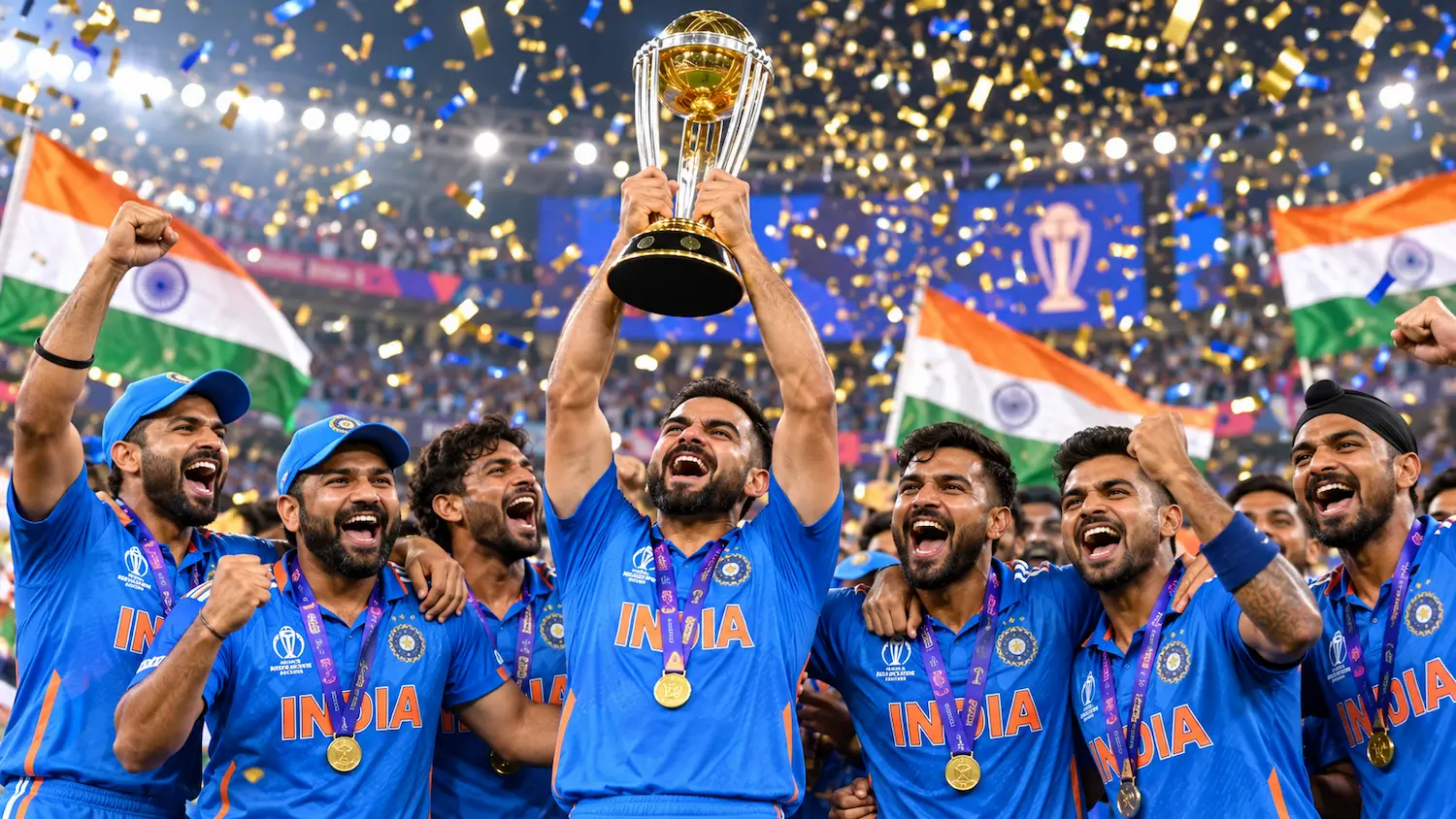
The defining moment for Indian sports culture arrived during the 1983 World Cup. Under the leadership of Kapil Dev, India defeated two-time champions West Indies at Lord’s, sparking widespread public interest and inspiring subsequent generations of players, including Sachin Tendulkar.
In 2007, India won the inaugural ICC World Twenty20 in South Africa under MS Dhoni. This success catalyzed the creation of the Indian Premier League (IPL) in 2008, combining franchise-based sports, global broadcast rights, and elite international talent.
India subsequently won its second 50-over World Cup in 2011 on home soil and captured the 2024 ICC Men’s T20 World Cup, confirming its long-term dominance across formats.
Major Milestones in Indian Cricket History
| Year | Historical Milestone |
| 1721 | First recorded cricket match played in India (Cambay) |
| 1792 | Calcutta Cricket Club founded |
| 1928 | Board of Control for Cricket in India (BCCI) formed |
| 1932 | India plays inaugural Test match against England at Lord’s |
| 1952 | First Test victory recorded against England in Madras |
| 1973 | Women’s Cricket Association of India established |
| 1983 | India wins first ICC ODI World Cup under Kapil Dev |
| 2007 | India wins inaugural ICC T20 World Cup in South Africa |
| 2008 | Launch of the Indian Premier League (IPL) |
| 2011 | India wins second ICC ODI World Cup in Mumbai |
| 2023 | Women’s Premier League (WPL) launched; India hosts Men’s ODI World Cup |
| 2024 | India wins ICC Men’s T20 World Cup |
Evolution of Women’s Cricket in India
Women’s cricket began gaining formal structure with the formation of the Women’s Cricket Association of India in 1973. The national team played its inaugural Test series in 1976 against the West Indies. Pioneers like Diana Edulji, Shantha Rangaswamy, Mithali Raj, and Jhulan Goswami established India as a competitive nation.
Today, players like Harmanpreet Kaur and Smriti Mandhana lead the side, supported by the launch of the Women’s Premier League (WPL) in 2023.
Frequently Asked Questions (FAQ)
When was cricket first played in India?
The earliest recorded cricket match in India took place in 1721, played by British sailors in Cambay (present-day Khambhat, Gujarat).
Who was India’s first Test captain?
C.K. Nayudu captained the Indian cricket team in its debut Test match against England at Lord’s in June 1932.
How many ODI World Cups has India won?
India has won two ICC Men’s One Day International (ODI) World Cups: first in 1983 under Kapil Dev and second in 2011 under MS Dhoni.
What is the significance of the Ranji Trophy?
Introduced in 1934, the Ranji Trophy is India’s premier domestic first-class cricket competition. It serves as the primary gateway for regional players to reach the national team.
External References & Related Reading
- For updates, visit Matribhumi Samachar.
Disclaimer
This article is compiled for informational and educational purposes based on historical cricket records and documented sports archives. Logos, trademarks, and team references belong to their respective governing bodies including the Board of Control for Cricket in India (BCCI) and the International Cricket Council (ICC).
