 Matribhumi Samachar English


New Delhi. Tuesday, 5 May 2026
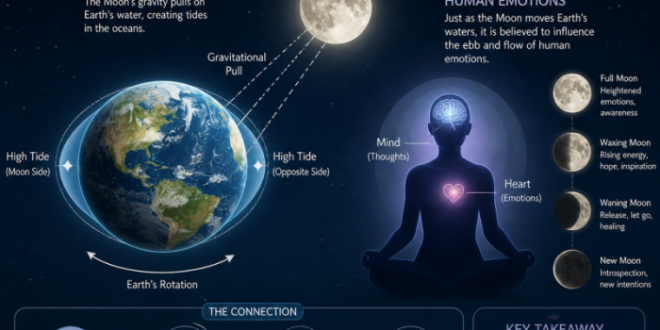
The full moon, or Purnima, represents the culmination of the lunar cycle—a moment of peak illumination where the moon reflects the sun’s light in its entirety. In Indian philosophy, this is not merely an astronomical event but a significant energetic shift that influences the human subconscious, biological rhythms, and spiritual receptivity.
The Lunar Influence on the Human Mind (Manas)
In Vedic literature, the Moon is the governor of the mind. The Rig Veda states, “Chandrama Manaso Jataha” (The moon was born from the mind of the cosmic being). Because the human body is composed of approximately 70% water, the same gravitational forces that create oceanic tides are believed to create “emotional tides” within us.
Why the “Lunacy” Myth is a Spiritual Opportunity
The term “lunacy” stems from the Latin Luna, reflecting the age-old observation that human behavior becomes more intense during a full moon. However, spiritual traditions offer a correction to this “madness” narrative: the moon doesn’t create chaos; it amplifies what is already present.
-
Restlessness is amplified into anxiety.
-
Peace is amplified into ecstasy.
-
Devotion is amplified into enlightenment.
Core Rituals and Their Practical Benefits
| Ritual | Spiritual Intent | Psychological/Physical Impact |
| Satyanarayan Puja | Alignment with “Truth” (Satya) | Promotes community bonding and gratitude. |
| Chandra Arghya | Cooling the solar ego | Reduces “Pitta” (heat) and emotional irritability. |
| Purnima Vrat | Sensory withdrawal (Pratyahara) | Detoxifies the digestive system and clears mental fog. |
| Deepa Dana | Invoking inner light | Combats seasonal affective disorder and lethargy. |
1. The Science of Chandra Arghya (Moon Offerings)
Offering water or milk to the moon is a grounding practice. By focusing on the cool, silver light reflected in the water, the practitioner engages in a form of Trataka (focused gazing), which stabilizes the optic nerve and calms the nervous system.
2. Moonlight Meditation and the Pineal Gland
Ancient seers suggested meditating under the full moon to absorb Soma—the nectar of immortality. Modern holistic health advocates suggest that exposure to natural light cycles helps regulate the circadian rhythm and the production of melatonin, leading to better sleep patterns and hormonal balance.
Modern Context: A Monthly Mental Health Audit
In our fast-paced digital era, Purnima serves as a natural Temporal Landmark. While we use calendars to track productivity, the lunar cycle tracks our vitality.
-
Digital Detox: Use the night of Purnima to turn off blue-light devices.
-
Charity (Dana): Modern psychology highlights that “prosocial behavior” (acts of kindness) significantly boosts serotonin and long-term life satisfaction.
-
Sattvic Diet: Consuming light, water-rich foods on this day prevents the physical heaviness that can lead to lethargy during the lunar peak.
Latest Cultural and Astronomical Updates
As we move through 2026, the intersection of traditional festivals and astronomical precision is becoming more accessible through digital platforms. Whether it is the Sharad Purnima (the night of healing) or Buddha Purnima (the night of enlightenment), each month offers a specific “flavor” of energy.
Relevant Links for Further Reading
To stay updated on upcoming Purnima dates, specific Vrat Vidhis (fasting procedures), and the cultural impact of lunar festivals across India, visit:
Disclaimer
The practices mentioned—including Satyanarayan Puja, Chandra Arghya, and Mauna—are rooted in ancient traditions and cultural heritage. The “benefits” described (such as emotional healing or the “Soma” effect) are based on spiritual belief systems and historical texts. Individual experiences with these rituals may vary significantly.