 Matribhumi Samachar English


New Delhi. Thursday, 14 May 2026
Rice farming remains the backbone of Indian agriculture, yet many farmers struggle with the “scissors effect”—where the cost of inputs (seeds, fuel, labor) rises faster than the market price of the grain. To remain profitable, the shift must move from maximizing yield at any cost to optimizing cost for maximum profit.
By adopting resource-efficient techniques like Direct Seeded Rice (DSR) and Alternate Wetting and Drying (AWD), farmers can reduce production expenses by nearly 25–30% without sacrificing the quality of the harvest.
1. Direct Seeded Rice (DSR): The “No-Nursery” Revolution
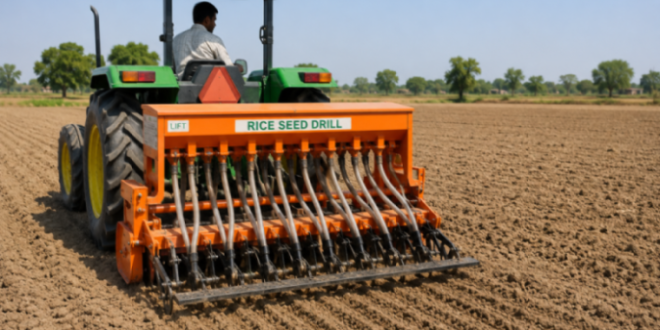
Traditional transplanting requires massive labor to uproot seedlings and re-plant them in flooded fields. DSR allows seeds to be sown directly into the soil using a seed drill.
-
Financial Impact: Saves approximately ₹5,000–₹7,000 per acre in labor costs.
-
Water Management: DSR requires significantly less water during the first 30 days because there is no need for “puddling” (keeping the field in a muddy, flooded state).
2. The AWD Method: Smart Water Savings
Rice does not need to be submerged in water throughout its entire growth cycle. Alternate Wetting and Drying (AWD) is a method where the field is allowed to dry until the water table drops to about 15 cm below the surface before re-irrigating.
-
How it Works: A simple perforated plastic pipe (AWD pipe) is placed in the field. When the water inside the pipe disappears, it’s time to pump more water.
-
Cost Benefit: Reduces diesel and electricity consumption by 20–30%.
-
Soil Health: Prevents the soil from becoming anaerobic for too long, which improves root oxygenation.
3. Precision Fertilizer & Soil Health
Over-fertilizing is a common mistake that leads to “luxury consumption” by the plant—meaning the plant grows more leaves but not more grain.
-
Soil Testing: Knowing exactly what your soil lacks prevents the waste of expensive urea or DAP.
-
Leaf Color Charts (LCC): By comparing the color of the rice leaf to a standard green chart, farmers can decide if the plant actually needs a nitrogen top-up.
-
Green Manuring: Sowing Dhaincha or Sunnhemp before the paddy season can provide up to 25% of the required nitrogen for free.
4. Integrated Pest Management (IPM)
Instead of expensive chemical sprays as a first resort, IPM uses nature to fight pests.
-
Pheromone Traps: These attract male insects, disrupting the breeding cycle and acting as an early warning system.
-
Encouraging Predators: Installing bird perches in the field encourages birds to eat stem borers and leaf folders, reducing the need for chemical pesticides.
5. Community Machinery and Custom Hiring Centers (CHCs)
Small and marginal farmers often cannot afford to buy harvesters or DSR machines.
-
The Solution: Using Government-backed Custom Hiring Centers or forming Farmer Producer Organizations (FPOs) allows farmers to rent high-tech machinery at a fraction of the ownership cost. This reduces the time taken for harvest and minimizes post-harvest losses.
Relevant Resources & Latest Updates
For more detailed insights on government schemes, regional agricultural news, and farmer success stories, visit:
Final Thoughts
Transitioning to cost-effective rice farming is not just about saving money—it is about climate resilience. Methods like AWD and DSR significantly reduce methane emissions, making your farm more sustainable for the next generation. By combining traditional wisdom with modern scientific tools, Indian farmers can ensure that paddy cultivation remains a profitable and proud profession.
Disclaimer
Agricultural techniques mentioned (DSR, AWD, IPM) should be adapted to local conditions. Matribhumi Samachar is not responsible for any loss resulting from the use of this information. Please consult a certified crop advisor for site-specific guidance.