 Matribhumi Samachar English


New Delhi. Saturday, 23 May 2026
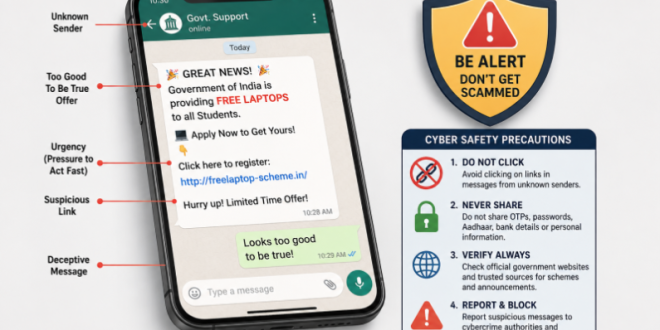
A misleading message claiming that the Central Government is distributing free laptops to students has gone viral across social media and messaging platforms like WhatsApp and Telegram. Authorities have officially stepped in to confirm that this message is completely fake, urging citizens to stay alert against a growing wave of online scams.
According to cybersecurity officials, the viral message contains malicious links specifically designed to trap unsuspecting users. Clicking these links can expose you to identity theft, financial fraud, or malware installation.
The Anatomy of the Free Laptop Scam
Cybercrime experts note that scammers frequently exploit the financial pressures faced by students and parents. By promising high-value rewards—such as free educational devices, exclusive scholarships, or immediate financial assistance—they convince targets to drop their guard.
The fraud typically operates in a few calculated steps:
-
The Tempting Bait: A message arrives in a group chat or via direct message, boasting a nationwide “Free Laptop Scheme” to support education.
-
The Phishing Trap: The text contains a link pointing to a fraudulent website. These sites are often masterfully designed to mimic official government portals, using official logos, colors, and deceptive domain names.
-
The Data Harvest: To “claim” the device, users are prompted to fill out registration forms requiring sensitive personal details, bank account numbers, or identification data.
-
The Forced Viral Loop: Many of these scams require the victim to forward the link to 5 to 10 friends or groups to “verify” their entry, which is why the misinformation spreads so rapidly.
Official Clarification from PIB Fact Check
The Press Information Bureau’s (PIB) dedicated fact-checking unit has explicitly clarified that the Government of India has not launched any such nationwide free laptop distribution initiative via social media links.
The public is strongly advised to verify any government-related announcement directly through verified channels. Official Central Government websites will always utilize secure domains ending strictly in .gov.in or .nic.in.
4 Vital Safety Precautions to Protect Your Digital Footprint
To safeguard your digital and financial identity, security authorities recommend incorporating these practices into your daily internet usage:
-
Inspect Before You Click: Avoid clicking on unexpected or hyperlinked text sent by unknown numbers. If an offer sounds remarkably generous, manually search for the official program online rather than trusting a shared link.
-
Keep Sensitive Identifiers Private: Never input or share confidential credentials online based on a text prompt. This includes passwords, One-Time Passwords (OTPs), net banking pins, or government identification details.
-
Halt the Chain: Refuse to forward unverified promotional messages, even if they come from trusted family members or friends who may have already been misled.
-
Report Suspicious Activity: If you encounter a fraudulent scheme or fall victim to an online trap, immediately report the incident to local cybercrime authorities or submit the message directly to the PIB Fact Check team for official verification.
Staying informed and exercising a healthy dose of skepticism online remains the absolute best defense against modern social engineering tactics.
Related Digital Resources
While navigating the web safely, it is equally important to understand how modern web infrastructure functions to protect your data. For a deeper look at the secure servers and digital frameworks that power official networks, explore the Comprehensive Guide for Beginners on Cloud Computing at Matribhumi Samachar. Understanding how data is stored securely in the cloud can help you better identify when a fraudulent website is trying to compromise your local system.