
Mumbai. Wednesday, 15 April 2026
In the wake of a sophisticated wave of digital fraud, protecting your bank account in 2026 requires more than just a strong password. As of April 1, 2026, the Reserve Bank of India (RBI) has enforced a revolutionary authentication framework designed to move beyond the vulnerable SMS-based OTP system. Whether you use UPI, credit cards, or mobile wallets, the rules of digital safety have officially changed.
🛡️ The New RBI Framework: Beyond the OTP
For years, hackers bypassed security through SIM-swapping—stealing your phone number to intercept OTPs. To counter this, the RBI’s 2026 mandate introduces Dynamic 2FA (Two-Factor Authentication).
-
Risk-Based Authentication: Your bank now uses “invisible” security. If you make a small payment from your usual home Wi-Fi, the transaction is seamless. However, a high-value transfer from a new city or device will trigger “Additional Factors of Authentication” (AFA), such as biometric scans or in-app encrypted prompts.
-
The 1-Hour “Safety Buffer”: A new proposal (active April 2026) suggests a one-hour processing delay for first-time transfers exceeding ₹10,000 between accounts. This gives victims a critical window to cancel fraudulent transactions before the money is moved.
-
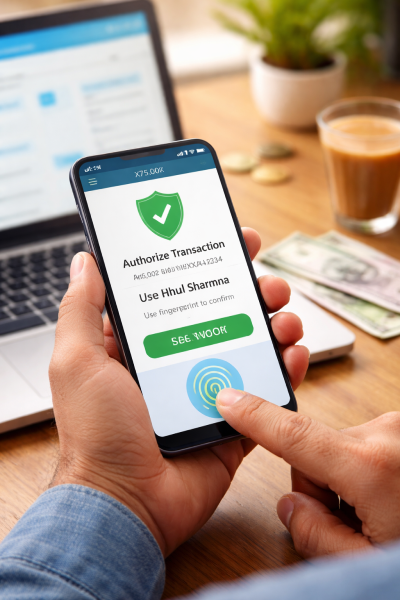
Biometric Mandate: Banks are increasingly replacing SMS codes with In-App Verification (fingerprint or face ID) to ensure that the person authorizing the payment is physically holding the registered device.
Step-by-Step Guide to Filing a Cyber Complaint Online
🚨 Alert: Top Scams Circulating in April 2026
Cybercriminals have adapted to these new rules with “Social Engineering” tactics. Stay alert to these specific threats:
-
The SBI YONO Aadhaar Scam: A viral fake message claims your YONO app will be blocked unless you update Aadhaar details via a provided APK file. Correction: The PIB (Press Information Bureau) has confirmed this is 100% fake. Banks never ask you to download files or update Aadhaar via SMS links.
-
QR Code Hijacking: Fraudsters are pasting their own QR codes over original merchant stickers in physical stores. Always verify the merchant’s name on your screen before hitting ‘Pay’.
-
The “Senior Citizen” Target: Scammers are specifically targeting users over 70 with fake “Verification Support” calls to bypass the new, stricter security layers for elderly citizens.
How to Secure Your Digital Identity in India
🔑 Your 2026 Cyber Hygiene Checklist
-
Audit Your UPI Links: Under new rules, you can no longer link more than 25 bank accounts to a single UPI app in a day. Keep your digital footprint lean.
-
Limit Balance Checks: To prevent bot attacks, the RBI now limits users to 50 balance checks per app per day.
-
Use Official Channels: Always report fraud within the “Golden Hour” (first 2 hours) by calling 1930 or visiting the official portal.
Latest Updates on RBI Monetary Policy & Consumer Safety
Disclaimer
The information provided in this article, including details regarding RBI guidelines and cyber security practices, is for educational and informational purposes only. While we strive to provide the most accurate and up-to-date information as of April 2026, cyber threats and banking regulations evolve rapidly.