

New Delhi. Updated : Wednesday, 3 June 2026
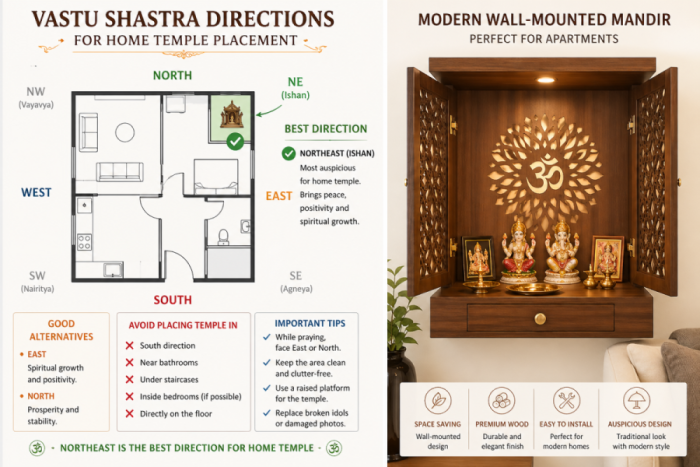
Setting up a home temple (Mandir) in contemporary urban settings requires balancing ancient spiritual wisdom with modern space constraints. According to Vastu Shastra—the traditional Indian science of architecture—the home temple acts as the epicenter of Prana (vital life force energy). When aligned correctly with Earth’s geomagnetic and solar fields, it converts your living space into a powerhouse of health, prosperity, and peace.
Whether you live in a sprawling multi-story house or a compact metro studio apartment, this updated guide outlines the exact layout rules, essential corrections, and material choices for your sacred space.
🧭 The Energetic Blueprint: Best Directions for Your Home Temple
The primary objective of Vastu Shastra home temple placement is to ensure positive cosmic energy flows uninterrupted throughout the structure. Different directions amplify distinct planetary and spiritual energies:
1. The Northeast (Ishan Kona) – The Absolute Zenith
The Ruling Forces: Governed by Lord Shiva and the planet Jupiter (Guru). This is conceptually where the head of the Vastu Purusha (the metaphysical soul of the building) lies.
The Scientific Edge: The northeast corner receives the early morning rays of the sun. This sunlight is rich in beneficial ultraviolet light, offering natural disinfecting properties that purify the household air.
Grounding Tip: If you reside in a multi-story house, position the temple on the ground floor. Keeping it on the foundational level ensures the home remains spiritually grounded.
2. The East – The Gateway to Enlightenment
The Ruling Forces: Regulated by Lord Indra and the Sun.
Best Used For: When the northeast corner is blocked or unavailable in compact flats. This orientation promotes career advancement, public recognition, and deep mental clarity. It is highly recommended for students and corporate professionals seeking intellectual “illumination.”
3. The North – The Threshold of Abundance
The Ruling Forces: Governed by Lord Kubera, the custodian of wealth and cosmic opportunities.
Spatial Care: To ensure financial energies flow without restriction, keep a northern temple light, minimalist, and entirely clutter-free.
4. The West – An Acceptable Alternative
While far less preferred than the Northeast, East, or North, a West-facing temple setup remains a permissible alternative in compact metro homes if structural constraints eliminate other options.
🧘 The Devotee’s Posture: Regardless of where the structure sits, the person praying should ideally face East or North to maximize concentration, receptive focus, and internal peace.
🚫 Vastu Dosha: Critical Placement Mistakes to Avoid
Urban architecture often forces compromises. However, certain structural overlapping creates severe Vastu Dosha (architectural and energetic defects) that can trigger mental stress and disharmony. Ensure your home layout eliminates these issues:
Sharing a Bathroom Wall: Never place a mandir against a wall containing an active plumbing line or backing a toilet. This leads to an immediate clash between Shuddha (pure) and Ashuddha (impure) environmental energies.
Underneath a Staircase: In duplex apartments or independent houses, avoid building a prayer space under the stairs. Staircases physically and metaphorically represent heavy, downward heavy pressure and heavy foot traffic. Walking over a deity alters the calm sanctuary of worship.
The Bedroom Conflict: Traditional Vastu strictly discourages placing a temple inside a resting zone. For studio apartments or single-room homes where this is unavoidable, always use a solid wooden partition or a thick, opaque silk curtain to enclose the mandir when it is not actively in use.
Direct Floor Placement: Divinity must always be revered through elevation. Position idols or spiritual frames on a raised platform or pedestal. At a resting posture, the devotee’s eyes should align seamlessly with the deity’s feet.
🪵 Materials, Light, and Elements: Crafting the Vibrational Core
The “how” of your home temple construction dictates how well it retains positive spiritual resonance.
Ideal Structural Materials
Choosing the right raw materials is crucial for conducting and reflecting subtle energy:
| Material | Vastu Properties & Best Uses |
| Natural Wood (Teak, Sheesham, Mango) | Highly Recommended. The top natural conductor of positive energetic vibrations. Adds natural warmth to urban spaces. |
| White Marble | Highly Recommended. Symbolizes ultimate purity, simplifies visual clutter, and provides lifetime structural durability. |
| Engineered Wood / MDF | Acceptable Fallback. Highly practical and lightweight for budget-conscious homeowners deploying wall-mounted units. |
Materials to avoid: Minimize heavy stone assemblies (which cause structural weight load issues in high-rises) and avoid modern synthetic structures like solid acrylic or thick glass for the primary unit framework.
Balancing the Elements
The Agni Kona (Fire Zone): Always keep your Diya (oil/ghee lamp) or lighting element burning in the Southeast corner of your mandir. This micro-region governs the fire element within the house; maintaining a gentle flame here balances the home’s vitality.
Illumination Quality: Reject cold, blinding fluorescent white lights. Instead, opt for soft, warm amber or yellow lighting options to nurture a calm, meditative state.
Idol Sanctity: Frequently audit your sacred items. Never keep chipped, cracked, or broken idols. In Vastu metaphysics, fractured objects disperse Bhinn (fragmented, distorted) energy waves, which can trigger subtle household friction. Keep your setup minimal, choosing a few sacred items over heavy, overcrowded displays.
🏢 Modern Apartment-Friendly Mandir Designs
Living in a compact metropolitan hub doesn’t mean compromising on spiritual alignment. Modern interior design offers sleek, space-saving alternatives that fit traditional Vastu frameworks perfectly:
Wall-Mounted Wooden Mandirs: These elevate your prayer space off the floor entirely, leaving valuable floor estate open while fulfilling the elevation rule.
Enclosed Floating Shelves: Sleek, minimalist floating shelves equipped with integrated cabinet doors allow you to close the space when needed, especially in multi-functional rooms.
Corner Prayer Units: Custom triangular wooden or marble niches that slide right into an open Northeast corner turn dead space into a functional sanctuary.
Foldable Temple Cabinets: Full-length, shallow cabinets that feature folding screens can mask the temple during non-worship hours, blending seamlessly into modern living room decor.
🔗 Deepen Your Spiritual Knowledge
To further expand your understanding of home rituals, traditional sacred arts, and Vedic wisdom, explore these complete guides and resources from Matribhumi Samachar:
Learn how to structure your space for morning energetic alignment in Simple Morning Hindu Rituals for Busy Professionals: A 2026 Guide to Prosperity.
- Understand the physics and energetic resonance behind common worship items by reading Why Do Hindus Ring Temple Bells? Spiritual Significance Explained.
