
New Delhi. Sunday, 26 April 2026
Monday, or Somvar, holds a profound spiritual significance in Hinduism. Dedicated to Lord Shiva, the “Mahadeva,” it is believed that the Moon (Soma) performed penance to worship Shiva on this day to regain his luster. For devotees, a Monday puja is a bridge to mental clarity, emotional stability, and spiritual grounding.
While grand temples perform elaborate Rudra Abhishek, you can invite the same divine energy into your home with a simple, heart-centered ritual.
Essential Items for Shiva Puja
To perform a complete ritual, gather these “Sattvic” (pure) offerings:
Panchamrit: A mixture of milk, curd, honey, ghee, and sugar.
Gangajal: Or clean filtered water.
Bilva (Bel) Leaves: Preferably a trifoliate leaf representing the three Gunas.
White Flowers: Dhatura, Kaner, or Jasmine (Shiva’s favorites).
Bhasma (Sacred Ash): Representing the ultimate reality of life.
Sandalwood Paste: For its cooling properties.
Akshata: Whole, unbroken grains of rice.
Step-by-Step Ritual (Vidhi)
1. Preparation and Sankalpa
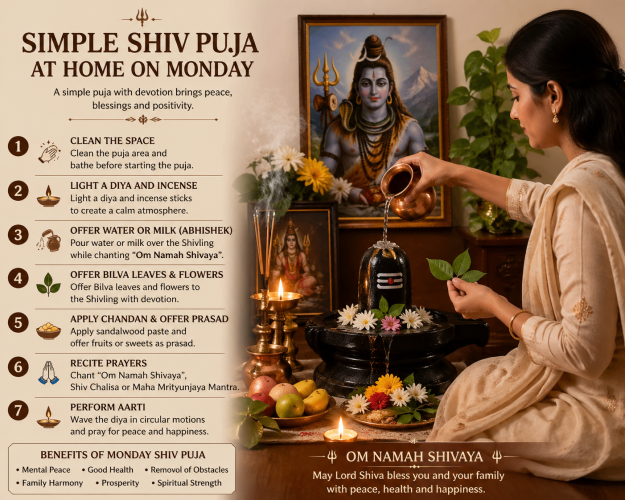
Wake up during Brahma Muhurta (early morning) if possible. After bathing, wear clean clothes (preferably white or light colors). Sit in a quiet corner facing North or East. Take a little water in your palm and make a Sankalpa (intention)—mentally tell Lord Shiva why you are performing this puja (for peace, health, or gratitude).
2. The Abhishek (Sacred Bath)
Place the Shivling in a brass or copper plate. Slowly pour water or milk over it.
Why? Shiva is Ashutosh (easily pleased) but also has a “fiery” energy. The continuous pouring of water symbolizes the cooling of the mind and the washing away of ego.
3. The Triple Offering (Bel Patra)
Offer at least three Bilva leaves. Ensure the smooth side of the leaf touches the Shivling. While offering, chant:
“Tridalam Trigunakaram Trinetram Cha Triyayudham; Trijanma Papa Samharam Eka Bilvam Shivarpanam.”
4. Decorative Offerings
Apply Tripundra (three horizontal lines) with sandalwood paste or Bhasma on the Shivling. This represents the destruction of the three bondages: Ego, Karma, and Illusion. Offer the flowers and Akshata.
5. Lighting the Flame
Light a Ghee diya. The flame represents the soul’s yearning for the light of knowledge. Wave the incense sticks in a clockwise direction to purify the air.
6. Chanting and Meditation
This is the most critical part. Silence the outer world and focus on the inner vibration.
Panchakshari Mantra: Om Namah Shivaya (108 times).
Maha Mrityunjaya Mantra: For protection and vitality.
Om Tryambakam Yajamahe Sugandhim Pushti-VardhanamUrvarukamiva Bandhanan Mrityor Mukshiya Maamritat
7. Arati and Prasad
Perform the Shivanand Arati. Offer fruits or sweets (Prasad) to the deity, which can later be shared with family members.
Crucial Corrections & Traditional Etiquette
The Turmeric Taboo: Unlike other deities, Turmeric (Haldi) is generally not offered to the Shivling because the Shivling represents the masculine principle, and Haldi is considered a feminine cosmetic.
The Ketaki Myth: Avoid using Ketaki flowers. Legend says this flower gave false witness for Lord Brahma, leading Shiva to banish it from his worship.
Circumambulation (Parikrama): If you are in a temple, never cross the Jaladhari (the outlet where water flows from the Shivling). You must turn back and complete the half-circle.
Benefits of Monday Worship
Emotional Balance: Since Monday is ruled by the Moon, worshiping Shiva helps stabilize fluctuating emotions and reduces anxiety.
Harmonious Relationships: Young men and women often pray for a compatible life partner, drawing inspiration from the divine union of Shiva and Parvati.
Removal of Negativity: The vibrations of the “Om” mantra act as a shield against negative external influences.
Explore More on Matribhumi Samachar
For deeper insights into Vedic traditions, festivals, and spiritual news, visit:
Disclaimer
The content regarding the benefits of worship—such as mental peace, health improvements, or the removal of obstacles—is based on faith and spiritual conviction. It should not be treated as a substitute for professional medical, psychological, or legal advice. Always seek the guidance of a qualified professional for any health-related or mental well-being concerns.
