

New Delhi. Updated on : Sunday, 9 August 2026
The Kailash Mansarovar Yatra 2026 is not just a pilgrimage; it is a profound spiritual odyssey. Entering the Year of the Horse—an auspicious astrological cycle occurring once every 12 years—the spiritual merit earned from undertaking this sacred journey is believed to multiply thirteen-fold. Whether you are a first-time seeker or a seasoned devotee, staying updated with the latest government protocols, route options, and medical preparation guidelines is essential.
📅 Key Dates & Online Registration Details
The Ministry of External Affairs (MEA) has streamlined the application process for the 2026 season. Given the heavy volume of applications expected during the “Horse Year,” early registration on the official portal is strongly advised.
- Official Portal: kmy.gov.in
- Registration Start Date: April 30, 2026
- Application Deadline: May 19, 2026
- Yatra Window: June to August 2026
- Selection Process: Fair, computerized draw of lots with gender-balanced allocation. Selected yatris receive alerts via SMS and registered email.
Pro Tip for Applicants: Prepare digital copies of all mandatory documents in advance. Ensure your JPEG photograph is under 300KB and your passport copy in PDF format is under 500KB before the portal opens.
🗺️ Route Options: India vs. Nepal
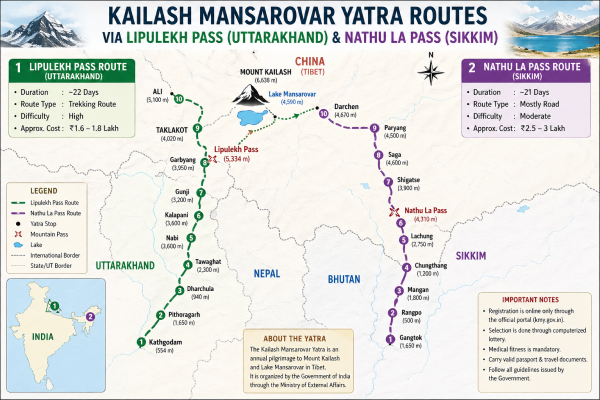
Devotees can choose from two government-managed routes operated by the MEA or explore private operator arrangements via Nepal.
| Route Option | Terrain & Experience | Duration | Estimated Cost | Ideal For |
| Lipulekh Pass (Uttarakhand) | Traditional trekking route; rugged and physically demanding | ~24 Days | ₹1.6 Lakh – ₹1.8 Lakh | Physically fit pilgrims preferring the classical trek experience |
| Nathu La Pass (Sikkim) | Primarily motorable road connectivity; smoother terrain | ~21 Days | ₹2.5 Lakh – ₹3.0 Lakh | Senior citizens and those seeking a less strenuous journey |
| Nepal Route (Private Operators) | Flight/Helicopter to Hilsa via Simikot or overland via Kerung | 9 to 14 Days | ₹2.5 Lakh – ₹5.5 Lakh | Pilgrims seeking flexible dates or bypass of the MEA draw |
🏥 Eligibility & Mandatory Medical Preparation
The trek around Mount Kailash reaches extreme elevations, crossing the Dolma La Pass at 19,500 ft, where Acute Mountain Sickness (AMS) poses genuine risks.
- Age Limit: 18 to 70 years (as of January 1, 2026).
- Passport Requirement: Ordinary Indian passport valid until at least September 1, 2026.
- Medical Screening: A strict two-stage medical check (first in Delhi, then at high-altitude base camps). Conditions like BMI exceeding 25, high blood pressure, diabetes, or respiratory ailments can result in disqualification.
- Physical Conditioning: Begin aerobic exercises (brisk walking, jogging, or cycling) at least 3 months prior. Practice daily Pranayama (deep breathing exercises) to optimize oxygen absorption capacity.
🔍 Essential Facts & Subsidies
- State Government Grants: While the Central Government operates the Yatra on a self-financing basis, states such as Uttar Pradesh, Gujarat, Karnataka, and Rajasthan offer financial grants of up to ₹1 Lakh to eligible residents post-completion.
- Visa & Travel Permits: For MEA routes, the Indian government manages group visas for the Tibet Autonomous Region (China). Private operators handle the Tibet Travel Permit for Nepal route travelers.
🔗 Relevant Spiritual Resources
For further reading on sacred circuits and updated travel logistics, explore these related guides from Matribhumi Samachar English:
- 12 Jyotirlingas in India: Pilgrimage Guide & Latest Updates – Explore the divine connection between Lord Shiva and Mount Kailash.
- The Spiritual Heart of India: Why Visiting Kashi Vishwanath is Auspicious – Understand karma purification prior to high-altitude yatras.
- Ayodhya Festival Calendar and Travel Logistics – Essential planning tips for combining Himalayan pilgrimages with central Indian hubs.
- Amarnath Yatra: Security Audit & Strategic Planning – Vital safety protocol updates for high-altitude Himalayan yatras.
❓ Frequently Asked Questions (FAQ)
1. Why is the “Horse Year” so significant for Kailash Mansarovar Yatra?
According to Tibetan Buddhist and Hindu traditions, circumambulating Mount Kailash during the Year of the Horse multiplies the spiritual merit of the Parikrama by 13 times, making it a once-in-a-decade spiritual event.
2. Can I apply for both MEA routes simultaneously?
Yes, the MEA application portal at
kmy.gov.in allows applicants to state their preference between the Lipulekh Pass and Nathu La Pass routes during online registration.3. What happens if I fail the high-altitude medical test?
Passing both Delhi and base-camp medical checks is compulsory. If a yatri exhibits symptoms of AMS or fails blood pressure/lung capacity thresholds at high-altitude base camps, they are deemed medically unfit and turned back for safety.
⚠️ Medical Disclaimer
The Kailash Mansarovar Yatra involves trekking at high altitudes exceeding 19,500 feet, where atmospheric pressure and oxygen levels drop significantly. High-altitude sickness (AMS) can be life-threatening. Participation is strictly subject to clearance by official medical boards. Consult a qualified medical practitioner prior to starting high-intensity physical training or booking the pilgrimage.
