
New Delhi. Friday, 1 May 2026
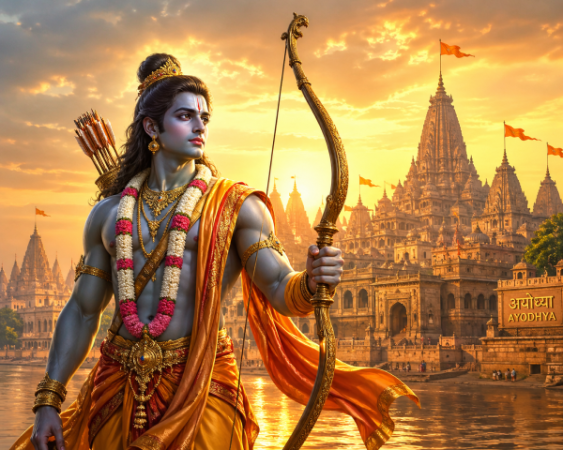
In an era of relentless digital noise, rapid career shifts, and social fragmentation, the figure of Lord Rama—revered as Maryada Purushottam (the Supreme Man of Virtue)—serves as more than a religious icon. He represents a psychological and ethical framework for navigating chaos with grace. While the Ramayana is an ancient epic, its core tenets offer pragmatic solutions to the “modern-day burnout” and the ethical dilemmas of the 21st century.
1. Duty Above Personal Desire (Dharma)
At the heart of Rama’s journey is the concept of Dharma—not merely as “religion,” but as “righteous duty.” His transition from a prince awaiting coronation to an exile entering the forest was seamless because his identity was rooted in his responsibilities, not his status.
The Modern Parallel: We live in the “Age of Entitlement,” where personal “rights” often overshadow collective “duties.”
The Lesson: Success is sustainable only when built on the fulfillment of our roles—as professionals, family members, and citizens. Prioritizing the “Greater Good” over immediate ego gratification leads to a legacy of respect rather than just a bank balance of wealth.
2. Integrity: The Power of the Unwavering Word
Rama is famously associated with the phrase “Raghukul Reet Sada Chali Aayi, Pran Jaye Par Vachan Na Jayi” (The lineage of Raghu has always followed the rule: life may depart, but a promise must never be broken). He upheld his father’s vow to Kaikeyi, despite the personal injustice of it.
The Modern Parallel: In a world of “situational ethics” and fine-print contracts, reliability has become a rare currency.
The Lesson: Radical integrity builds Social Capital. Whether in a corporate boardroom or a personal relationship, being a person of your word creates a foundation of trust that no marketing campaign can buy.
3. Radical Equality and Meaningful Alliances
Lord Rama’s leadership style was remarkably inclusive. He didn’t just lead an army; he built a brotherhood. From embracing the boatman Guha to accepting the tasted berries of the elderly Shabari, and forming a strategic alliance with Sugriva, Rama looked past social hierarchies to value the soul and the intent.
The Modern Parallel: Modern networking is often transactional and elitist.
The Lesson: True leadership involves empathy. Recognizing the dignity of every individual, regardless of their “rank,” fosters a culture of loyalty. Rama teaches us that a diverse team, bound by a shared cause, can defeat even the most formidable “Ravana” (challenges).
4. Equanimity: Calmness in Adversity
The most striking trait of Rama was his Sthitaprajna (stable intellect). He received the news of his exile with the same serene smile with which he would have accepted the crown. He faced the loss of his wife, Sita, and the grueling battle of Lanka with a focused, calm mind.
The Modern Parallel: Stress and “reactivity” are the hallmarks of modern life. We often make permanent decisions based on temporary emotions.
The Lesson: Emotional intelligence (EQ) is the ability to remain “calm under fire.” By practicing detachment from immediate outcomes, we gain the clarity needed for strategic problem-solving.
5. Ethical Victory: The “How” Matters
The war against Ravana was not just a clash of weapons, but a clash of ideologies. Even when facing a foe who used illusions and deceit, Rama never abandoned the code of war. After defeating Ravana, he sent his brother Lakshmana to learn statesmanship from the dying king, acknowledging Ravana’s vast knowledge despite his sins.
The Modern Parallel: The “Win at all costs” mentality often leads to corporate scandals and personal isolation.
The Lesson: A victory achieved through unethical means is a temporary gain. True success is Dharmic Success—where the process is as clean as the result.
Relevant Links from Matribhumi Samachar
To dive deeper into the cultural and spiritual essence of these teachings, explore the following resources:
Disclaimer
This article is a cultural analysis intended to highlight the universal values found in the life of Lord Rama. The “Modern Shifts” discussed are interpretive and intended to foster positive social and ethical dialogue. Matribhumi Samachar respects all faiths and perspectives; this content is curated for the purpose of heritage awareness and personal development.
