

New Delhi. Friday, 8 May 2026
The Government of India has intensified the digital transformation of the Public Distribution System (PDS) in 2026. To ensure that subsidized food grains under the Pradhan Mantri Garib Kalyan Anna Yojana (PMGKAY) and the National Food Security Act (NFSA) reach the intended beneficiaries, the e-KYC process has been streamlined through advanced Point of Sale (PoS) technology.
What is Ration Card e-KYC?
e-KYC (Electronic Know Your Customer) is a digital authentication process that links a beneficiary’s Aadhaar data with their Ration Card records. By 2026, this has shifted from a one-time setup to a periodic verification to eliminate “ghost” beneficiaries and duplicate cards.
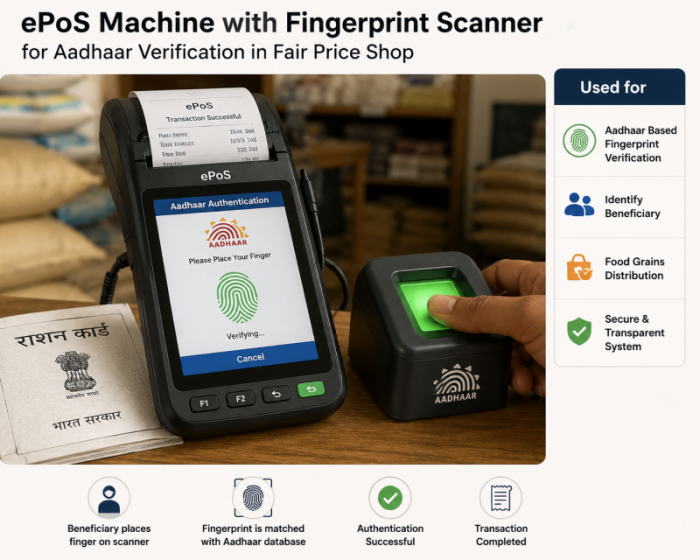
The process uses Aadhaar-based Biometric Authentication (ABBA). When a beneficiary places their finger on a PoS scanner, the machine generates an encrypted PID (Personal Identity Data) block and sends it to the CIDR (Central Identities Data Repository) for instant matching.
The Technical Workflow on PoS Machines
In 2026, PoS machines have been upgraded with L1-level biometric sensors, which offer higher security than previous models. Here is the technical breakdown of the verification:
Dealer Authentication: The Fair Price Shop (FPS) owner initiates the session using their own biometric or IRIS scan.
Data Fetching: The ration card number is entered, and the PoS machine fetches the member list from the State Food Portals.
The Biometric Handshake:
The beneficiary provides a fingerprint scan.
The machine performs Local Matching (to ensure a live finger is present) followed by Server-Side Matching via a secure 5G or broadband link.
Instant Ledger Update: Once “Success” is received from the server, the e-KYC status is updated in real-time across the National Portability cluster.
Why Fingerprint Verification is Essential in 2026
The transition to mandatory biometric verification addresses several legacy issues in the food distribution chain:
Elimination of Leakage: It prevents the illegal diversion of food grains to the open market by ensuring the physical presence of the beneficiary.
One Nation One Ration Card (ONORC): Successful e-KYC allows a laborer from Bihar to claim their ration in Karnataka or Maharashtra seamlessly.
Data Integrity: It ensures that the database reflects deceased members or those who have migrated permanently, freeing up resources for new eligible families.
Troubleshooting: Common Solutions
Despite the advanced technology, technical hurdles can occur. Here is how to navigate them:
1. Biometric Failure (Authentication Error)
Cause: Worn-out ridges (common in manual laborers) or dry skin.
Note: Use a damp cloth to clean the finger or apply a small amount of oil/moisturizer. If fingerprints consistently fail, request the dealer to use the IRIS Scanner or Aadhaar FaceRD (Face Authentication) which are now standard alternatives on 2026 PoS devices.
2. Aadhaar-Ration Card Mismatch
Cause: Name spelling differences between the two documents.
Correction: Visit a local Jan Seva Kendra or CSC (Common Service Centre) to update the name on the Ration Card portal to match the Aadhaar record exactly.
3. “Member Not Found” Error
Cause: The member’s Aadhaar was never seeded (linked) initially.
Correction: Submit a physical copy of the Aadhaar and Ration Card to the District Supply Office (DSO) for manual seeding.
Important Instructions for 2026 Beneficiaries
Mandatory Presence: Every member listed on the ration card must complete their individual e-KYC; it is no longer sufficient for just the Head of the Family (HoF) to do so.
Mobile Seeding: Ensure your Aadhaar is linked to an active mobile number to receive the OTP in cases where biometrics fail.
Deadline Awareness: Most states have set rolling deadlines for e-KYC. Failure to comply may lead to the temporary suspension of the “Free Ration” component of your benefits.
Conclusion:
Ration Card e-KYC is the backbone of a transparent welfare state in 2026. By understanding the PoS verification process and addressing biometric issues early, beneficiaries can ensure uninterrupted access to essential food security.
Relevant Resources and External Links
To stay updated with the latest government notifications and regional news regarding PDS reforms, visit:
Disclaimer
The information provided in this article regarding Ration Card e-KYC and PoS fingerprint verification is for general educational and awareness purposes only. While every effort has been made to ensure the accuracy and timeliness of the content based on current 2026 guidelines, government policies, deadlines, and technical procedures are subject to change without prior notice.
