

New Delhi. Sunday, 17 May 2026
As summer temperatures regularly cross extreme thresholds across the subcontinent, managing the health of domestic animals has shifted from a routine farm task to an absolute economic and ethical necessity. For livestock owners, the season brings a steep spike in the risks of dehydration, physiological stress, and systemic health complications among cows, buffaloes, goats, and sheep.
When ambient temperatures exceed the thermoneutral zone of these animals, it triggers a cascade of negative physiological changes. These direct impacts do not merely compromise animal welfare; they lead to sharp declines in milk yields, lower reproductive rates, and severe drops in overall farm productivity.
Implementing a robust, evidence-based strategy for summer animal care is essential to protect your herd and maintain steady agricultural outcomes.
The Biological Toll of Heat Stress on Livestock
Animals experience heat stress when the combined metabolic heat generated by their bodies and the environmental heat absorbed from their surroundings exceeds their capacity to dissipate warmth. Unlike humans, many domestic animals have highly restricted cooling mechanisms.
Species-Specific Vulnerabilities
Buffaloes (Bubalus\ bubalis): Possess dark skin pigmentation and roughly one-third of the sweat glands found in cattle (Bos taurus or Bos indicus). This makes them exceptionally prone to absorbing solar radiation while struggling to cool down via evaporation.
Crossbred Dairy Cattle: Highly susceptible to thermal stress compared to indigenous breeds. Their higher baseline metabolic rates, driven by high milk production, generate substantial internal heat.
Goats and Sheep: While generally more resilient to arid conditions, they suffer heavily under high humidity combined with high temperatures, leading to severe respiratory distress.
5 Essential Pillars of Summer Livestock Management
1. Advanced Hydration Protocols
During extreme heat, an animal’s fluid turnover accelerates rapidly. Water consumption in lactating dairy cows can scale upwards by 50% to 100% as they attempt to dissipate heat through respiration and urine production.
Constant Volumetric Access: Ensure clean, fresh drinking water is accessible 24 hours a day. A lactating cow may require more than 150 to 200 liters of water daily during peak summer.
Thermal Protection for Water: Storage tanks and supply pipelines must be insulated, painted white, or kept shaded. Animals will drastically reduce their water intake if the water temperature exceeds 30°C, compounding the risk of dehydration.
Microbial Management: High temperatures catalyze rapid bacterial and algal proliferation in water troughs. Troughs must be scrubbed clean at least twice a week to avoid gastrointestinal infections and waterborne pathogens.
2. Microclimate Modification inside Shelters
Altering the immediate environment within the animal shed is the most effective defense against ambient thermal loads.
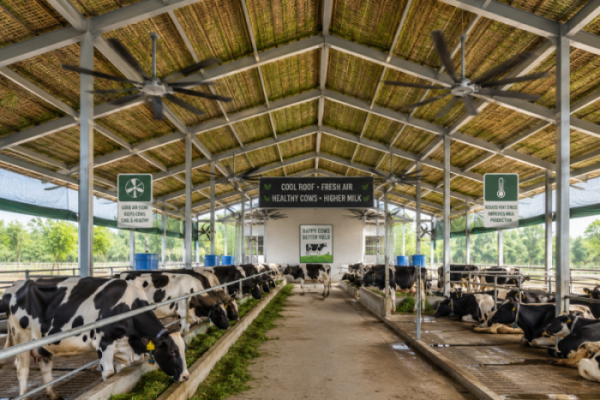
Roofing Modifications: Thatch, bamboo, and straw work as excellent natural insulators when added over tin or asbestos roofs. Painting existing metal roofs with reflective white elastomeric paint can reduce internal shed temperatures by up to 5°C.
Active Mechanical Cooling: Ceiling fans should be angled to create air movement directly over the animals at a velocity of approximately 1.5 to 2.0 meters per second.
Misting and Fogging Systems: In low-humidity zones, micro-mist systems or foggers line-operated with fans can reduce air temperatures significantly through evaporative cooling. However, avoid running these systems if relative humidity is above 70%, as trapped moisture will worsen heat stress.
3. Chronological Adjustments to Grazing and Exercise
Subjecting livestock to mid-afternoon solar radiation forces their bodies to choose between maintaining dynamic body temperature and processing nutrients.
Twilight Pasturing: Restrict all open-field grazing to early morning hours (before 9:00 AM) and late evening hours (after 5:00 PM).
Midday Confinement: Between 10:00 AM and 4:00 PM, keep all stock under high-roofed, open-sided shelters that block radiant heat from the sky while allowing cross-ventilation.
4. Precision Summer Nutrition and Feed Management
An animal’s natural response to heat stress is a voluntary reduction in Dry Matter Intake (DMI), which causes an energy deficit and a drop in milk production. Livestock owners must adjust the diet formulation to keep animals healthy.
| Diet Component | Optimization Strategy | Purpose |
| Green Fodder | Increase ratios of high-quality, succulent green fodder | Enhances palatability, provides organic water, and improves overall nutrient intake. |
| Concentrate Feeding | Shift feeding schedules to cooler parts of the day (dawn/dusk) | Prevents the peak heat of digestion from coinciding with peak environmental heat. |
| Mineral Supplements | Boost Potassium (K), Sodium (Na), and Magnesium (Mg) | Replenishes vital electrolytes lost via sweating and heavy panting. |
| Fodder Quality Check | Strictly inspect and discard moldy or damp residual feed | High humidity and heat rapidly accelerate fungal growth and harmful mycotoxin production. |
5. Tactical Hydrotherapy (Bathing and Wetting)
Direct applications of water to the animal’s skin use the physics of evaporation to pull heat away from the core body.
Wetting Frequency: Wash or sprinkle cows and buffaloes at least two to three times daily during peak heat hours. Focus water application on the back and flanks of the animal.
Wallowing for Buffaloes: If a clean, managed village pond is accessible, allow buffaloes to wallow for 1 to 2 hours during the afternoon. Ensure the water source is free from stagnant toxins and heavy chemical runoff.
Early Recognition Matrix: Signs of Heat Stress
Preventing severe heat exhaustion requires early intervention. Monitor your livestock closely for these progressing clinical signs:
[MILD STRESS: Elevated Respiratory Rate -> Reduced Feeding]
                        │
                        ▼
[MODERATE STRESS: Open-mouth Panting -> Excessive Drooling/Salivating]
                        │
                        ▼
[SEVERE CRISIS: Lethargy, Inability to Stand -> Sharp Drop in Milk Yield]
⚠️ Emergency Action Protocol: If an animal displays open-mouth breathing with an extended neck, heavy salivation, or complete lethargy, move it immediately to a well-ventilated, shaded area. Sponge its entire body with cool (not ice-cold) water, provide cool drinking water, and contact a certified veterinarian immediately.
Global and National Context of Animal Welfare
Maintaining exceptional conditions for domestic farm settings aligns seamlessly with broader national and international initiatives emphasizing humane treatment. There is an urgent, growing call for responsible, humane treatment across both wildlife and farm systems.
With escalating climate variance causing extended periods of drought and high heat indexes, taking defensive measures to secure livestock comfort directly preserves ecological stability and protects rural farming livelihoods from sudden climate shocks.
Summary for Livestock Owners
Protecting livestock from summer heat stress is achieved through proactive planning, reliable access to cool water, well-ventilated housing, and carefully timed feeding schedules. Minimizing thermal loads keeps your animals comfortable, maintains their natural immune systems, protects milk yields, and ensures steady, predictable farm revenue throughout the hot summer months.
For farmers looking into how to start a dairy farming business in India
Disclaimer
While every effort has been made to ensure the accuracy and reliability of the seasonal care tips, animal health requirements can vary significantly based on regional climate differences, specific breeds, age, and pre-existing medical conditions.
