
New Delhi. Friday, 5 June 2026
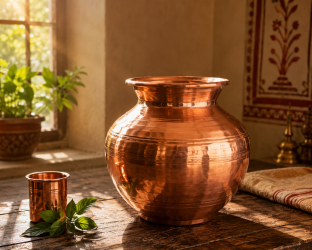
For centuries, households across India stored their daily drinking water in shining copper containers, viewing the practice as a cornerstone of health and daily well-being. While mid-20th-century modernization swapped these traditional metals for lighter plastics and easy-to-clean stainless steel, the tide is turning.
Today, researchers, materials scientists, and public health experts are looking backward to move forward. The intersection of ancient Ayurvedic wisdom and modern molecular biology reveals that storing water in copper—a practice historically known as Tamra Jal—is deeply rooted in undeniable, fascinating physics.
The Core Science: What is the Oligodynamic Effect?
The primary reason copper acts as a natural purifier comes down to its atomic structure. Copper is an exceptional conductor of heat and electricity because its outer shell contains free, highly mobile electrons. When water comes into contact with a copper surface, it triggers a slow, natural chemical reaction.
Microscopic quantities of copper ions release into the water. This phenomenon is scientifically known as the oligodynamic effect—a process where trace amounts of certain metal ions exert a lethal impact on living cells, algae, and microbes.
   [ Microorganisms / Bacteria in Water ]
                     │
                     ▼ (Water contacts copper wall)
       [ Release of Cu²⁺ Copper Ions ]
                     │
   ┌─────────────────┴─────────────────┐
   ▼                                   ▼
Cell Membrane Rupture       DNA Degradation & Destruction
(Ions punch holes in walls) (Stops reproduction & mutation)
Unlike modern chemical disinfectants (like chlorine), which can leave behind chemical byproducts, copper works continuously as a natural antimicrobial surface without requiring external electricity, chemical additives, or complex machinery.
Fact-Checking Tradition: Science vs. Myth
While the antimicrobial power of copper is completely verified, modern science helps us sort the factual health benefits from common folklore exaggerations.
1. Eliminating Waterborne Pathogens (Verified)
Studies have continuously shown that storing contaminated water in copper vessels for 8 to 16 hours significantly reduces or entirely kills harmful bacteria, including E. coli, Salmonella, and Vibrio cholerae. For ancient communities without advanced filtration systems, this was a life-saving daily shield.
2. Supporting Gut Health (Plausible)
By actively destroying harmful pathogens before they ever reach your mouth, copper water prevents mild gastrointestinal infections. This indirectly supports a healthier, more balanced gut microbiome.
3. Miracle Weight Loss and Reversing Aging (Misinformation)
Copper is absolutely a vital trace mineral that our bodies need for metabolic enzyme function, iron absorption, and collagen production. However, drinking copper-infused water will not magically melt fat or instantly erase wrinkles. It simply fulfills a necessary dietary baseline.
Safe Practices: How to Avoid Copper Leaching
The adage “more does not mean better” applies heavily to heavy metals. While trace amounts of copper are essential for human life, excessive levels cause toxicity. To enjoy Tamra Jal without risks, you must follow three foundational rules of food physics:
Water Only—No Acids: Never put lemon juice, vinegar, orange juice, or tea into a copper container. Acidic liquids react violently with the metal, accelerating copper leaching to toxic levels. This can trigger acute symptoms like nausea, abdominal pain, and vomiting.
The 12-Hour Max Limit: You do not need to drink from a copper bottle all day long. Storing room-temperature water overnight (8 to 12 hours) is the maximum time needed to charge it with ions. Drink one or two glasses in the morning, and use standard glass or stainless steel for the remainder of the day.
The Green Oxidization Barrier: When copper is exposed to moisture and air, it naturally oxidizes, creating a dull greenish-black layer called a patina. While beautiful on old buildings, this layer acts as a physical shield that prevents water from hitting the raw copper ions.
The Right Way to Clean Copper
Do not use abrasive steel scrubbers or harsh chemical soaps, which scratch and ruin the metal. Instead, mix a little lemon juice (or tamarind pulp) with table salt. Gently rub it across the surface—the natural acid dissolves the oxidation layer instantly—then rinse thoroughly with fresh water.
Modern Public Health Relevance
The science governing ancient Indian water storage is finding a massive renaissance in global healthcare infrastructure. As global medicine battles the rise of superbugs and antimicrobial resistance (AMR), medical facilities are covering high-touch surfaces—like door handles, bed rails, and IV poles—in copper alloys.
Furthermore, switching to reusable copper or stainless steel flasks directly combats the global plastic pollution crisis. Companies prioritizing sustainable health initiatives, much like the eco-friendly corporate drives covered on Matribhumi Samachar, emphasize a return to reusable, biologically safe storage choices. Major drinking water brands in India, including those adopting advanced purification methods highlighted in corporate overviews, continue to underscore how optimizing clean, safe hydration remains central to modern public health and sustainable living.
The physics governing copper water storage might be centuries old, but its lessons on clean living, natural microbial defense, and smart materials science are more relevant today than ever before.
