

New Delhi. Friday, 5 June 2026
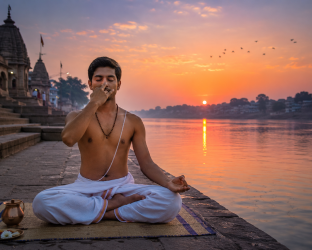
For thousands of years, Morning Sandhyavandanam has stood as one of the most revered spiritual practices in the Vedic tradition. Far more than a static ritual, it is a highly disciplined, multi-layered process designed to harmonize individual consciousness with the natural rhythms of the universe. Practiced during the sacred junctions (sandhyas) where night transitions into day, this comprehensive discipline combines prayer, breath control, mantra recitation, meditation, and water offerings to cultivate an unshakeable state of physical, mental, and spiritual balance.
As modern scientific exploration increasingly validates the intricate relationships between circadian rhythms, mindful awareness, and holistic well-being, practitioners are looking at this ancient practice with fresh eyes. By analyzing the underlying mechanisms of Morning Sandhyavandanam, we can begin to comprehend the profound physiological and subtle energy shifts it creates within the body and mind.
What is Morning Sandhyavandanam?
The word Sandhyavandanam literally translates to “salutation to the goddess of the twilight hours” or “meditation at the junctions.” While traditionally performed three times a day—at dawn, noon, and dusk—the morning observance holds a primary, unparalleled significance. It directly leverages the powerful environmental and biological transitions that occur as darkness gives way to light.
The structural flow of the ritual consists of several highly intentional components:
Achamanam: Purification of the internal and external body through the mindful sipping of water, accompanied by the recitation of divine names.
Pranayama: Regulated, rhythmic breath control that stabilizes the physical nervous system and directs vital energy.
Gayatri Mantra Japa: The systematic mental or vocal chanting of the sacred Gayatri Mantra, designed to awaken higher intellect.
Arghya Pradana: The rhythmic offering of water to the rising Sun, serving as a physical manifestation of gratitude and cosmic alignment.
Dhyana: Deep meditation and focused self-reflection to lock in inner clarity and set a conscious trajectory for the day ahead.
The singular goal of this sequence is to align the individual with Rta—the cosmic, universal order—while systematically stripping away mental clutter.
The Precision of Dawn in Vedic Thought and Science
In Vedic philosophy, the period preceding sunrise—specifically Brahma Muhurta (the “time of the creator,” occurring roughly 90 minutes before dawn)—is regarded as the most spiritually potent time of the day. Traditional texts explain that during this transition, environmental energies undergo a shift from Tamas (inertia and darkness) to Sattva (purity, light, and harmony). The atmosphere is naturally quiet, pollution levels are at their lowest, and the ambient noise of human activity has not yet begun. This creates a pristine sensory environment that makes it significantly easier for the mind to drop its typical defense mechanisms and enter a meditative state.
Modern chronobiology provides an extraordinary parallel to this ancient wisdom. The transition from night to day marks a massive shift in our internal endocrine and biological systems:
| Biological Marker | Nocturnal State (Night) | Dawn Transition (Brahma Muhurta) | diurnal State (Daytime) |
| Melatonin | Peak levels (induces deep sleep) | Sharp decline | Suppressed by daylight |
| Cortisol | Lowest levels | Cortisol Awakening Response (CAR) begins | Sharp rise to promote alertness |
| Autonomic Nervous System | Parasympathetic Dominance (Rest & Digest) | Biological Pivot Point | Sympathetic Dominance (Action & Focus) |
By performing Sandhyavandanam during this precise biological pivot point, the practitioner does not simply wake up; they intentionally steer their nervous system through this volatile awakening phase, transforming potential morning anxiety into grounded, mindful alertness.
Breathwork and Neuro-Respiratory Physiology
At the core of the ritual’s physiological efficacy is Pranayama (regulated breathing). The text correctly notes that traditional yogic teachings view the breath as the vehicle for prana—the fundamental life-force energy.
When evaluated through contemporary clinical physiology, the specific breath control patterns utilized during Sandhyavandanam—which involve conscious Puraka (inhalation), Kumbhaka (breath retention), and Rechaka (exhalation)—act as a profound hack for the human autonomic nervous system.
[Conscious, Slowed Breathing]
          │
          ▼
[Stimulates the Vagus Nerve]
          │
          ▼
[Triggers Acetylcholine Release]
          │
          ▼
[Lowers Heart Rate & Suppresses Cortisol]
          │
          ▼
[Restores Sympathovagal Balance]
This deliberate respiratory slowing shifts the body away from chronic, low-grade stress responses, radically improves oxygen saturation, and balances blood pH. Furthermore, the practice of breath retention (Kumbhaka) challenges and strengthens the respiratory muscles while inducing transient, safe states of mild hypercapnia (increased carbon dioxide levels in the blood), which is heavily documented to dial down brain hyperexcitability and induce a state of deep neurological calm.
The Neuro-Vibrational Power of the Gayatri Mantra
At the absolute spiritual heart of Sandhyavandanam is the intense chanting of the Gayatri Mantra:
This Vedic hymn is a profound petition directed toward Savitur, the divine solar consciousness, pleading for the illumination and awakening of our collective intellect (dhi). e
Beyond its rich philosophical meaning, the rhythmic and repetitive vocalization of the Sanskrit syllables yields observable neuro-acoustic impacts. Sanskrit is a highly structured, phonetic language where every sound is deliberately tied to specific tongue placements and throat contractions. Chanting these specific phonemes stimulates the reflex zones of the hard palate, which in turn modulates activity in the hypothalamus and pituitary glands—the master controllers of our endocrine health.
Furthermore, EEG studies on continuous mantra meditation reveal a rapid transition in brainwave architecture. The frantic beta waves characteristic of daily stress give way to highly synchronized alpha and theta waves. This precise shift corresponds behaviorally to what practitioners report: a sharp reduction in mental static, heightened cognitive capacity, and a deep emotional centering that establishes a resilient foundation for the day.
Arghya Pradana: Hydro-Solar Mindfulness
The physical act of Arghya Pradana—pouring water from a copper vessel as an offering to the rising Sun—is often viewed purely as a symbolic gesture of surrender, environmental gratitude, and alignment. However, when integrated into a dedicated morning routine, it serves a highly functional, sensory purpose.
                  ┌──────────────────────┐
                  │   Rising Sunlight    │
                  └──────────┬───────────┘
                             │ (Passes through)
                             ▼
                  ┌──────────────────────┐
                  │ Stream of Pure Water │
                  └──────────┬───────────┘
                             │ (Refracts light into)
                             ▼
                  ┌──────────────────────┐
                  │ Optic Pathways & SCN │
                  └──────────────────────┘
When a practitioner looks through the falling stream of water toward the horizon, the natural sunlight is filtered and refracted. Looking at this safe, low-angle light rays stimulates the photoreceptors in the retina. This photic information travels directly along the retinohypothalamic tract to the suprachiasmatic nucleus (SCN)—the brain’s master biological clock. This natural exposure suppresses any remaining melatonin production and optimizes the daily cortisol curve, ensuring optimal energy levels, better nighttime sleep quality, and highly focused attention spans.
Mapping the Experiential Shifts
While the precise movement of subtle energy (prana or nadis) remains a subject of inner experiential validation rather than outward laboratory measurement, the physical, psychological, and mental benefits reported by daily practitioners are highly tangible.
Enhanced Cognitive Clarity: The combination of quietude, repetitive vocalization, and oxygenating breathwork strips away mental clutter, dramatically improving daily memory retention, executive processing, and deep concentration.
Emotional Resilience: Initiating the morning with an uncompromising, deeply intentional spiritual structure creates an emotional buffer. Practitioners find themselves less reactive to sudden external stressors, exhibiting a profound sense of inner composure.
Deepened Environmental Connection: By tracking and paying homage to the movements of the Earth and Sun, practitioners build an organic, felt relationship with the biosphere, shedding the isolation and alienation common in hyper-digital modern lifestyles.
Pervasive Mindfulness: The granular focus required by the ritual—maintaining precise bodily posture, coordinating finger mudras, tracking breaths, and enunciating Sanskrit verses—acts as an immersive workout in mindfulness, seamlessly carrying over into conscious, deliberate living throughout the rest of the day.
Bridging Ancient Wisdom and Modern Action
The modern revitalization of Sandhyavandanam, particularly among younger, urban generations, highlights a profound shift toward holistic wellness. Today’s fast-paced, screen-dominated lifestyle has left many individuals biologically out of sync, chronically stressed, and spiritually disconnected.
While contemporary science may describe these changes using terms like “vagal nerve stimulation,” “circadian entrainment,” and “neuroplasticity,” Vedic philosophy has safely housed these exact physiological optimizations inside the sacred framework of Sandhyavandanam for millennia. You do not need to choose between a scientific worldview and an ancient spiritual lineage; they are simply two different languages describing the exact same human potential.
For those eager to discover how to seamlessly weave structured, ancient morning practices into a hectic, demanding corporate schedule, exploring contemporary adaptations is a fantastic logical next step. To learn how to build a practical, grounded routine that honors these traditions without requiring hours of isolation, check out the specialized insights available in the comprehensive guide on Simple Morning Hindu Rituals for Busy Professionals: A 2026 Guide to Prosperity.
Conclusion
Morning Sandhyavandanam is vastly superior to a routine religious obligation or an outdated relic of the past. It stands as a comprehensive, time-tested system of human optimization that integrates breath, sound vibration, focused intention, and environmental attunement at the most energetically volatile time of the day.
In a modern world designed to fracture our attention and disrupt our biology, this timeless Vedic discipline serves as a vital reminder: profound, systemic transformation always begins by claiming a few deliberate moments of absolute stillness at the break of dawn.
