

New Delhi. Friday, 12 June 2026
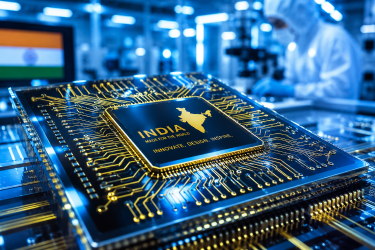
The dream of transforming India into a dominant global silicon hub has officially shifted from executive boardrooms and policy proposals directly onto the factory floor. While initial blueprints mapping out the country’s high-tech destiny focused heavily on gathering investor intent, the physical realities of the India Semiconductor Mission 2.0 have fundamentally reshaped the global electronics landscape.
India is no longer just planning a tech ecosystem; it is actively constructing, packaging, and preparing to print silicon at a massive scale, positioning itself as an indispensable pillar of the worldwide high-tech supply chain.
🏗️ Moving From Blueprints to Active Production Assets
A common oversight in general industry overviews is presenting a generic, single-region outlook—often overemphasizing Gujarat as the sole focal point or treating massive commercial operations as “distant future plans.” Under ISM 2.0, the timeline has advanced rapidly:
Commercial Production Has Commenced: Facilities managed by early movers like Micron Technology (in Sanand, Gujarat) and Kaynes Semicon have successfully completed construction and entered active commercial packaging and testing operations.
Multi-State Geographic Dispersal: While Gujarat’s Dholera and Sanand regions remain critical anchors, advanced packaging, design, and manufacturing modules have scaled rapidly across the country. Significant projects have broken ground or achieved strategic authorization in Assam (Tata’s ₹27,000 crore OSAT unit), Odisha (Bhubaneswar’s advanced 3D packaging site), Uttar Pradesh (the HCL-Foxconn venture in Jewar), and Rajasthan.
To explore how these heavy hardware expansions are altering macroeconomic landscapes and drawing global capital, read the deep-dive analysis on Why Global Investors Choose India: Structural Strengths Outweigh Global Headwinds.
🔬 The Four Phases of India’s Hardware Pipeline
To move beyond basic assembly and achieve true technological sovereignty, ISM 2.0 segments the industry standard workflow into a precise, interconnected pipeline:
🚀 Transitioning to Indigenous Chip Design and Edge AI
One of the most defining corrections ISM 2.0 introduces to the domestic market is balancing factory investments with native innovation. For decades, India hosted the world’s largest chip-design workforce without owning the final products. Today, domestic fabless chipmakers are breaking that cycle.
A prime example is Kerala-based semiconductor startup Netrasemi, which successfully completed the post-silicon validation for its flagship A2000 chip. Built on a highly efficient 12-nanometer (12nm) process node, this processor is engineered specifically for Edge AI applications—allowing devices like smart cameras, medical equipment, and drones to process complex data locally without relying on distant cloud networks.
For a complete technical breakdown of this milestone, check out From Blueprints to Silicon: How Netrasemi’s 12nm A2000 Chip Rewrites India’s Semiconductor Future.
⚡ The Symbiosis of Silicon and AI Infrastructure
Modern microchips do not exist in a vacuum. The expansion of domestic silicon packaging is designed specifically to feed hardware components directly into India’s soaring AI compute clusters.
This hardware push moves in absolute tandem with aggressive provincial infrastructure policies. For instance, massive enterprise investments and state-level initiatives are building high-performance data complexes that utilize custom liquid-cooling architectures and heavy power inputs to handle generative AI workloads.
To understand how local silicon deployment intersects with state-of-the-art server infrastructure, read the detailed report on Shaping the Tech Landscape: Inside Maharashtra’s New Ambitious AI and Data Centre Policy.
⚠️ Challenges on the Rocky Road to Global Leadership
While the momentum behind the India Semiconductor Mission 2.0 is historic, establishing an unshakeable ecosystem requires navigating intense structural challenges:
Pure Water and Power Grid Continuity: A typical commercial semiconductor fab consumes millions of gallons of water daily and demands absolute, uninterrupted clean electrical energy. A voltage fluctuation lasting even a fraction of a second can ruin an entire production batch of silicon wafers.
Extreme Capital Intensity: Moving into advanced nodes requires sustained capital injection. Upstream manufacturing equipment installation typically consumes roughly 65% of an entirely new facility’s capital layout, requiring deep coordination between state subsidies and private funding.
Ecosystem Takeaway: By addressing equipment manufacturing, raw specialty chemicals, and indigenous chip design simultaneously, ISM 2.0 ensures that a global shipping freeze or external supply chain disruption won’t stall India’s high-tech factories.
For a broader perspective on how India’s tech infrastructure shield operates during global market shifts, read the complete investigative coverage on Silicon Sovereign: How India’s Semiconductor Push is Flipping the Switch to Active Production.
