

New Delhi. Friday, 19 June 2026
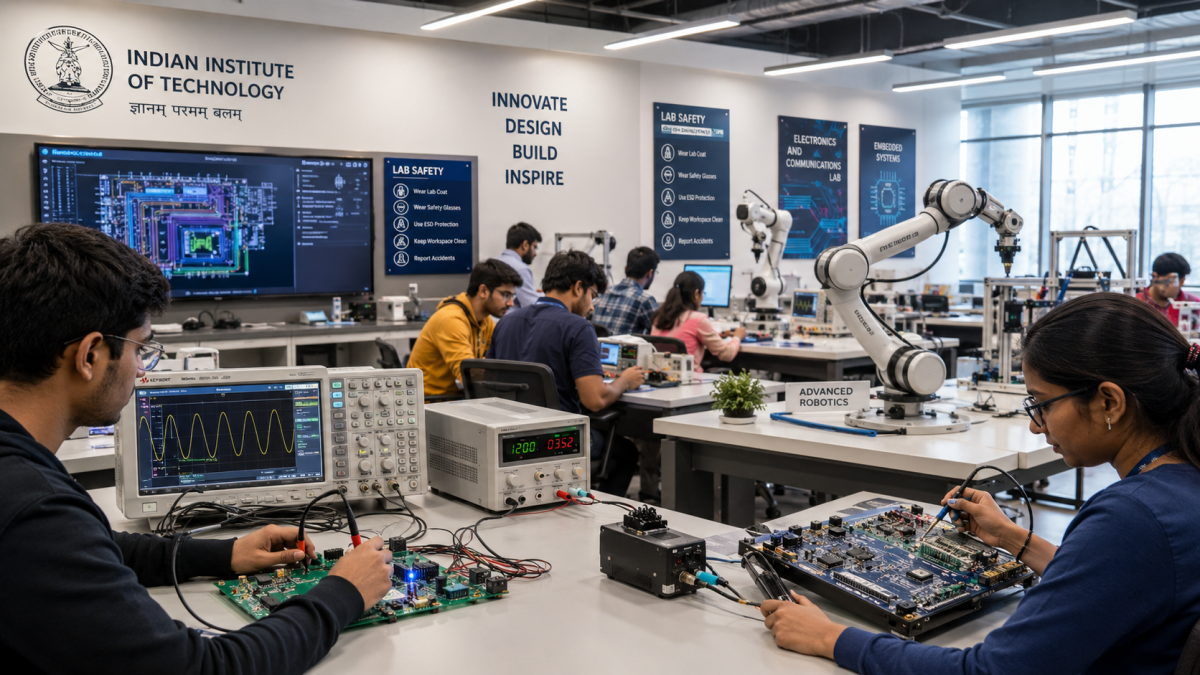
India’s higher education institutions are undergoing a profound structural evolution. No longer confined to traditional academic learning and textbook pedagogy, top-tier universities and engineering institutes are emerging as powerful deep-tech innovation hubs.
From artificial intelligence (AI) and semiconductor design to quantum computing, biotechnology, space technology, and advanced manufacturing, Indian campuses have shifted from theory to commercial application. Supported by aggressive government initiatives, robust industry partnerships, and university-led startup incubators, higher education is now the launchpad for the next generation of globally competitive technology companies.
Understanding the Deep-Tech Shift in Indian Academia
Deep-tech refers to technologies rooted in substantial scientific discoveries or tangible engineering innovations. Unlike traditional digital startups that build software applications or e-commerce platforms, deep-tech ventures require years of research and development (R&D), highly specialized laboratory infrastructure, and significant upfront capital investment.
Historically, India’s brightest academic minds published their breakthrough research exclusively in international journals, leaving the laboratory work short of commercial realization. Today, universities are heavily incentivized to commercialize their research, build robust intellectual property (IP) portfolios, and actively foster a collaborative ecosystem where students, faculty researchers, and industry leaders work side-by-side to solve intricate global challenges.
Government Initiatives Catalyzing Campus R&D
The bridge connecting laboratory breakthroughs to market-ready deep-tech ventures has been reinforced by a series of critical national programs. Key government frameworks driving this transformation include:
The National Research Foundation (NRF): Tailored to democratize and increase research funding across both central and state universities.
The IndiaAI Mission: Providing campuses with access to high-performance computing (HPC) environments to build indigenous AI models.
The Semiconductor Mission: Fostering a highly specialized workforce by funding electronic design automation (EDA) software and design labs.
Atal Innovation Mission & Startup India: Cultivating an entrepreneurial mindset from the undergraduate level upward.
Biotechnology Industry Research Assistance Council (BIRAC): Providing critical seed funding and infrastructure specifically for health-tech and biotech innovations.
Key Deep-Tech Sectors Flourishing on Indian Campuses
1. Artificial Intelligence and Machine Learning
AI research labs are expanding rapidly across Indian campuses. Academic institutions are setting up dedicated centers of excellence focused entirely on natural language processing (NLP), computer vision, generative AI, and domain-specific applications like agricultural AI and healthcare diagnostics. Strategic tie-ups with global tech giants allow these labs to tap into massive datasets and specialized cloud infrastructure, ensuring that ethical AI research keeps pace with global standards.
2. Semiconductor and VLSI Design Labs
With India positioning itself as a future global chip-making destination, engineering institutes are investing heavily in Very Large Scale Integration (VLSI) research programs, embedded systems development, and microelectronics. By training students on industry-standard chip design tools, universities are rapidly building a high-value talent pipeline capable of supporting upcoming domestic fabrication plants and advanced electronic architectures.
3. Robotics and Advanced Manufacturing
Driven by the modernization of manufacturing and global logistics, campus labs are breaking new ground in industrial robotics, autonomous drone technology, smart manufacturing (Industry 4.0), and human-machine interaction. These homegrown solutions are designed to directly optimize productivity in sectors ranging from precision agriculture to heavy infrastructure.
4. Space-Tech and Defense Innovation
India’s booming space economy has directly inspired students and researchers to target aerospace horizons. Campus teams are actively building nano-satellites, designing advanced space electronics, testing novel propulsion technologies, and writing remote sensing algorithms. Concurrently, defense-focused innovation grants are funneling resources into university labs specializing in strategic cybersecurity, secure quantum communications, and autonomous defense hardware.
The Power of Campus Incubators and Commercialization
The true engine of execution behind this movement is the rapid proliferation of university-managed startup incubators. Leading Indian institutions now routinely offer:
Structured startup mentoring and business development.
Early-stage seed funding and grant access.
State-of-the-art prototyping facilities and shared cleanrooms.
Dedicated Technology Transfer Offices (TTOs) for patent protection.
Direct networks linking student founders with venture capital firms.
Furthermore, forward-thinking faculty entrepreneurship policies now permit professors to co-found startups alongside their researchers, ensuring that cutting-edge institutional knowledge transitions smoothly from academic concept to commercial product.
+-------------------------------------------------------------------------+
|                  THE INDIAN CAMPUS INNOVATION PIPELINE                 |
|                                                                         |
|  [ Academic Research ] ---> [ IP & Patent TTO ] ---> [ Seed Incubator ]  |
|          |                         |                       |            |
|    Faculty & Students       Protected Tech Asset     Prototype & Funding|
|                                                                         |
|                                     V                                   |
|                        [ Market-Ready Deep-Tech Venture ]               |
+-------------------------------------------------------------------------+
Persistent Bottlenecks on the Horizon
While the upward trajectory is clear, sustaining long-term momentum requires addressing structural obstacles that continue to challenge the ecosystem:
Funding Disparities: Aggregate R&D spending as a percentage of GDP remains lower than that of leading global innovation ecosystems like the US or South Korea.
Protracted Timelines: Deep-tech product cycles often require 3 to 7 years to reach profitability, testing the patience of traditional Indian venture capital.
Infrastructure Gaps: Tier-1 institutions feature world-class labs, but smaller regional universities still struggle to secure top-tier specialized equipment.
Talent Retention: Preventing a “brain drain” of specialized AI and semiconductor researchers to high-paying commercial roles overseas remains an ongoing hurdle.
Frequently Asked Questions (FAQ)
What makes deep-tech startups different from regular tech startups?
Regular startups frequently build on existing technologies to offer digital services, apps, or software-as-a-service (SaaS) platforms, scaling rapidly with minimal R&D. Deep-tech startups are built around unique scientific breakthroughs or defense/engineering innovations. They require extensive laboratory testing, hold significant intellectual property, and face prolonged timelines before hitting the commercial market.
How are Indian universities helping student founders protect their ideas?
Most leading research institutes have established specialized Technology Transfer Offices (TTOs) and patent assistance programs. These offices provide legal counsel, assist student and faculty inventors with patent filings, map out licensing agreements, and ensure that the intellectual property remains legally sound before a startup pitches to private investors.
Which government programs support deep-tech research on campuses?
Key initiatives include the National Research Foundation (NRF) for broad research funding, the IndiaAI Mission for artificial intelligence, the Semiconductor Mission for chip design talent, and BIRAC for biotechnology and medical hardware incubation.
Disclaimer
This article is provided for informational and educational purposes only. The landscape of technological innovation, venture funding, and government policy framework is subject to frequent change. Readers are encouraged to verify specific program deadlines, eligibility criteria, and intellectual property guidelines directly with respective university incubation cells and official government portals.
Relevant Links
For localized perspectives, media coverage, and regional socioeconomic impact assessments regarding education and grassroots development in India, consider exploring the dedicated regional dashboards and sections available at Matribhumi Samachar English.
