

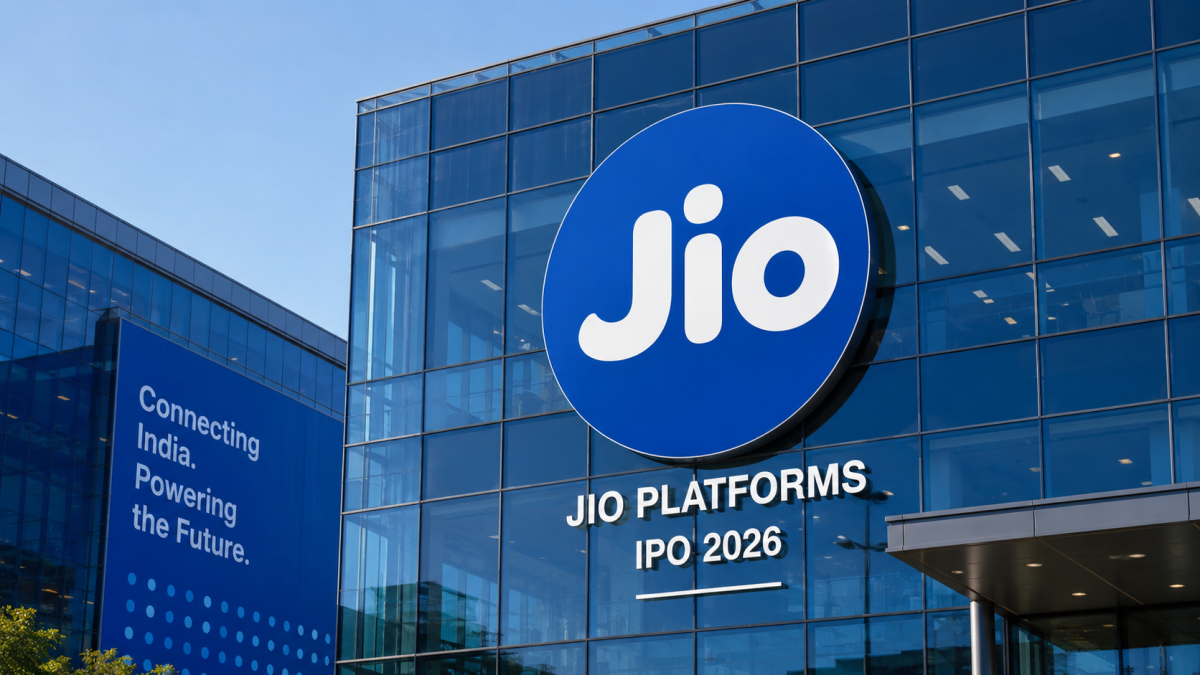
Mumbai. Updated on : Wednesday, 24 June 2026
India’s capital markets are preparing for what could become the biggest public offering in the country’s history. Jio Platforms, the digital and technology arm of Reliance Industries, has officially filed its Draft Red Herring Prospectus (DRHP) with the Securities and Exchange Board of India (SEBI), marking the beginning of its journey toward a public listing.
The IPO announcement was made during Reliance Industries’ Annual General Meeting (AGM), where Chairman Mukesh Ambani highlighted the company’s vision of building a globally competitive technology and digital services platform. The filing includes a fresh issue of up to 27 crore equity shares, with no Offer for Sale (OFS) component. This means the funds raised will flow directly into the company rather than existing shareholders selling their stake.
Why the Jio IPO Is Generating So Much Interest
Jio is no longer viewed solely as a telecom company. Over the last decade, it has evolved into a digital ecosystem spanning telecommunications, broadband, cloud computing, artificial intelligence, enterprise services, digital commerce, entertainment, and connected devices.
With more than 524 million subscribers, Jio has become India’s largest telecom and digital connectivity platform. The company is also investing heavily in next-generation technologies such as AI, cloud infrastructure, and digital services, positioning itself as a technology-led growth company.
Why Analysts Expect Significant Value Unlocking
One of the biggest talking points surrounding the IPO is the potential value unlock for Reliance Industries shareholders.
At present, Jio’s value is embedded within Reliance Industries, alongside businesses such as retail, energy, petrochemicals, media, and new energy initiatives. Many market participants believe investors are unable to accurately value Jio’s digital business because it remains part of a diversified conglomerate.
A separate listing could provide:
Independent Market Valuation
The stock market will be able to assign a dedicated valuation to Jio Platforms based on its own growth prospects, subscriber base, revenue generation, and technology initiatives.
Technology-Focused Multiples
Jio’s AI, cloud, digital services, and platform businesses could attract valuation multiples closer to technology firms rather than traditional telecom operators.
Improved Transparency
Public listing requirements will result in more detailed disclosures regarding revenues, profitability, capital expenditure, growth plans, and strategic investments.
Better Capital Access
A listed entity can raise funds more efficiently to support future expansion in AI, cloud computing, digital infrastructure, and emerging technologies.
What Could Jio Be Worth?
Various market estimates place Jio Platforms’ valuation between approximately $130 billion and $170 billion (around ₹11 lakh crore to ₹15 lakh crore).
Several reports suggest the company could seek to raise between ₹30,000 crore and ₹40,000 crore, potentially making it India’s largest-ever IPO.
If these valuation estimates hold, Jio would immediately rank among India’s most valuable listed companies.
Jio’s Five Strategic Growth Priorities
During the AGM and related disclosures, Reliance outlined several focus areas for Jio’s next phase of growth:
1. Expansion of Jio True 5G
The company continues to strengthen its nationwide 5G network and improve digital connectivity.
2. Growth of JioAirFiber
JioAirFiber is expected to play a major role in expanding high-speed internet access across India.
3. Artificial Intelligence Development
The company is investing in AI-driven products and services, including AI-powered enterprise and consumer applications.
4. Digital Services Ecosystem
Jio continues to expand its presence across cloud computing, enterprise solutions, and digital platforms.
5. Small Business Digitization
Products such as JioPC and digital business solutions are aimed at helping small and medium enterprises adopt modern technology.
Expected IPO Timeline
Following the DRHP filing, the IPO process will likely move through several stages:
- SEBI review of draft documents
- Regulatory observations and clarifications
- Filing of the Red Herring Prospectus (RHP)
- Price band announcement
- Anchor investor allocation
- Public subscription period
- Share allotment
- NSE and BSE listing
While official dates have not been announced, market participants expect further developments during the second half of FY27.
Risks Investors Should Consider
Despite strong investor interest, the DRHP highlights several important risks.
Spectrum Costs
Telecom operators require continuous investment in spectrum acquisition and renewal.
Regulatory Environment
The telecom industry remains highly regulated, creating compliance and policy-related risks.
Capital Intensive Operations
Network expansion and technology upgrades require substantial capital expenditure.
Competitive Pressure
The Indian telecom market remains highly competitive, with pricing and subscriber acquisition challenges.
Cybersecurity Risks
As a large digital platform handling massive volumes of user data, cybersecurity remains a critical operational concern.
Why the IPO Matters for India’s Digital Economy
The Jio IPO is more than just a stock market event. It reflects the growing maturity of India’s digital economy and investor confidence in large-scale technology businesses built within the country.
The listing could also provide a benchmark valuation for future Indian technology and digital infrastructure companies seeking public market access.
What the Jio IPO Means for Reliance Shareholders
For existing Reliance Industries investors, the Jio IPO could serve as a major catalyst for value creation. A successful listing would provide greater transparency into the digital business while potentially reducing the conglomerate discount often associated with diversified business groups.
The listing may also help investors better understand the contribution of telecom, AI, cloud computing, and digital services to Reliance’s future growth strategy.
Conclusion
The Jio IPO 2026 represents a landmark moment for Indian capital markets. With more than 524 million subscribers, expanding AI ambitions, a growing cloud business, nationwide 5G infrastructure, and strong backing from Reliance Industries, Jio is positioning itself as one of India’s most influential technology companies.
While valuation, regulatory approvals, and market conditions will ultimately determine the IPO’s success, the filing of the DRHP has already made Jio one of the most closely watched investment stories of 2026.
For investors seeking exposure to India’s digital transformation story, the Jio IPO is likely to remain one of the most important market events to watch over the coming months.
Key Highlights From the DRHP
According to the draft filing:
- IPO comprises a fresh issue of up to 27 crore equity shares.
- No Offer for Sale (OFS) has been proposed.
- Shares will have a face value of ₹10 each.
- The issue price will be determined through the book-building process.
- The company plans to use a significant portion of proceeds to repay or prepay debt at Reliance Jio Infocomm Ltd. (RJIL).
- Remaining proceeds will be used for general corporate purposes.
Frequently Asked Questions (FAQs)
When was the Jio IPO DRHP filed?
Jio Platforms filed its Draft Red Herring Prospectus (DRHP) with SEBI on June 19, 2026.
How many shares are being offered in the IPO?
The IPO consists of a fresh issue of up to 27 crore equity shares.
Will existing shareholders sell shares in the IPO?
No. The proposed issue currently does not include an Offer for Sale (OFS).
What will Jio use the IPO proceeds for?
A significant portion will be used to repay or prepay debt at Reliance Jio Infocomm Ltd., while the remaining funds will be used for general corporate purposes.
What is the expected valuation of Jio Platforms?
Market estimates currently place the valuation between approximately $130 billion and $170 billion.
Why is the Jio IPO important?
The IPO could unlock value for Reliance shareholders while giving investors direct exposure to one of India’s largest digital and technology platforms.
When is the Jio IPO expected to launch?
The exact launch date has not yet been announced, but the IPO is expected to progress through regulatory approvals before opening for public subscription.
Disclaimer
This article is for informational and educational purposes only and should not be considered investment advice. Investors should carefully read the final Red Herring Prospectus (RHP), evaluate risks, and consult a qualified financial advisor before making investment decisions.
🔗 Deepen Your Knowledge with Trusted Sources
To stay updated on the rapidly evolving technology market, explore these comprehensive technical breakdowns from Matribhumi Samachar:
Read the detailed breakdown of Google’s enterprise strategy in the Tech Realignment: Google Cloud Restructures Specialized Cyber Units to Fund AI Expansion article.
Discover how global giants are scaling up localized hardware inside the AirTrunk Prepares Massive ₹3 Lakh Crore ($30 Billion) Hyper-Scale AI Infrastructure Blitz in India by 2030 report.
