

Lucknow. Saturday, 20 June 2026
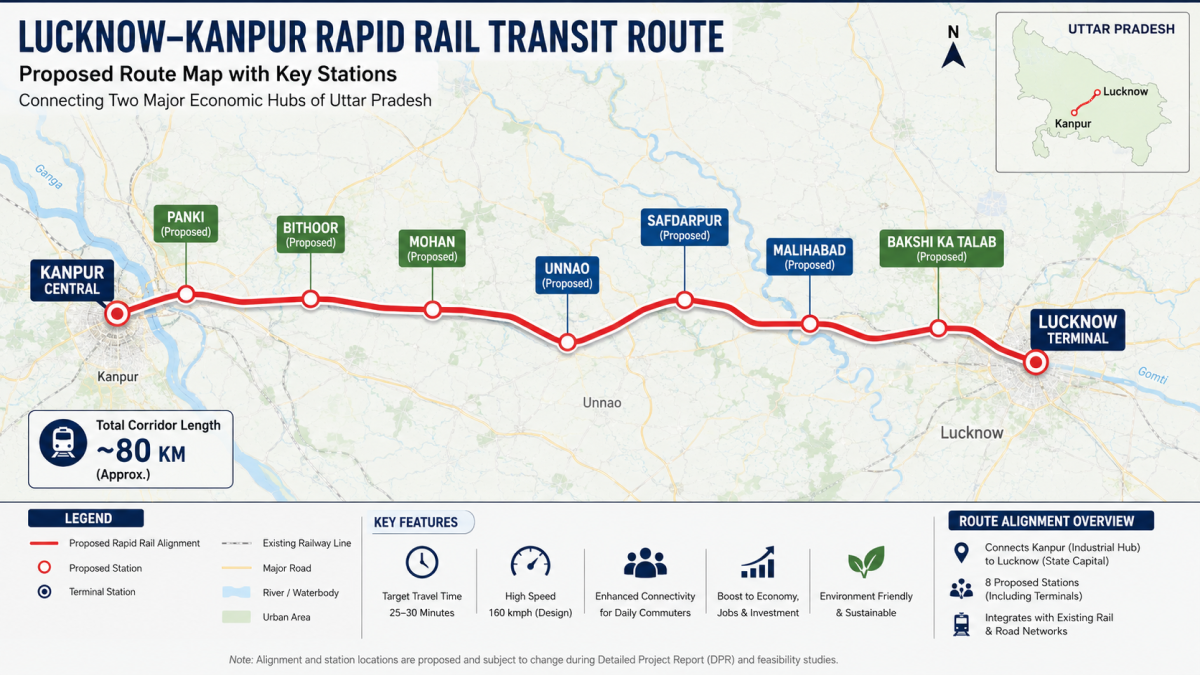
The economic landscape of North India is undergoing a monumental geographic and infrastructural shift. At the absolute heart of this regional metamorphosis is the proposed Lucknow-Kanpur Rapid Rail Transit System (RRTS). By drastically slashing commute times between Uttar Pradesh’s political capital and its primary industrial engine, this high-speed corridor is doing much more than laying down tracks—it is actively fusing two massive cities into a single, unified economic powerhouse.
As the state pushes toward a trillion-dollar economy goal, this regional connectivity network is serving as the central nervous system for new employment models, corporate expansions, and historic real estate shifts across central Uttar Pradesh.
The Strategic Blueprint: High-Speed Regional Transit
Currently, navigating the 80 kilometers separating Lucknow and Kanpur by congested highways or overloaded conventional rail networks takes well over two hours, draining productivity. The rapid rail system, modeled after the successful Namo Bharat network, aims to solve this systemic bottleneck by operating high-speed trains at design speeds up to 160–180 km/h.
Once fully operational, the project will cut commuting time between the two major hubs to just 40 minutes. This drastic reduction in transit time shifts the concept of intercity travel from a grueling weekly voyage to a seamless daily routine for work, education, and professional trade.
Fueling the State Capital Region (SCR) and Industrial Corridors
The Lucknow-Kanpur rapid rail does not exist in a policy vacuum. It directly complements the state’s broader urban growth vision, most notably the newly designated State Capital Region (SCR). The transit network acts as a core physical conveyor belt alongside mega-highway developments like the Lucknow–Kanpur Expressway (NE-6).
This massive infrastructure framework is specifically engineered to decentralize growth away from choked urban centers and distribute economic opportunity across adjacent districts like Unnao. By linking heavy industrial manufacturing zones directly with rapid passenger transit, the corridor maximizes supply chain efficiency and enables unparalleled labor mobility.
Key Economic Integration Point: Improved transit allows Kanpur’s extensive manufacturing, engineering, and leather industries to easily source skilled technological talent and professional managers directly from Lucknow’s academic pools.
Furthermore, this infrastructure reinforces the ongoing technology boom in the state, including the flagship Lucknow AI City Project and the specialized tech clusters driving innovations at premier research institutes like IIT Kanpur.
A Historic Real Estate and Employment Boom
Infrastructure projects of this scale generate an immediate economic multiplier effect. During both the construction and operational phases, the corridor acts as a major job creator for engineers, construction professionals, local contractors, and the retail ecosystems flanking the route.
For property markets, the impact is already profound. The micro-markets surrounding planned transit stations are evolving into modern urban growth nodes. Areas along the transit line are witnessing unprecedented spikes in demand for:
Mixed-Use Developments: Combining commercial complexes with transit access.
Affordable and Mid-Segment Residential Housing: Catering to professionals who choose to reside in less congested suburban zones while commuting effortlessly to major business hubs.
Corporate Office Spaces: Built outside traditional city centers to leverage cheaper land values while maintaining rapid connectivity.
This strategic alignment has officially established the Kanpur-Lucknow Corridor Real Estate Power Belt, drawing substantial institutional investments from national developers.
Environmental and Social Advantages
Shifting daily commuters away from private vehicles and onto a zero-emission, high-capacity electric rail network offers massive environmental dividends. The project aligns perfectly with sustainable development goals by reducing:
Traffic Congestion: Removing thousands of personal vehicles from the regional highway grid daily.
Carbon Emissions: Shifting the modal share toward clean mass transit to visibly improve urban air quality.
Fossil Fuel Dependency: Lowering overall fuel consumption patterns for regional transport.
On a social level, the corridor democratizes access to premier services. Students residing in Kanpur can commute daily to Lucknow’s elite universities, while patients gain instant, stress-free access to specialized medical facilities like SGPGI without the financial strain of temporary relocation.
Navigating the Execution Challenges
While the economic prospects are immense, the long-term viability of the Lucknow-Kanpur rapid rail rests on overcoming classic infrastructure headwinds:
Land Acquisition: Efficiently acquiring continuous parcels of land without displacing key rural communities or delaying timelines.
Financing and Capital Costs: Balancing multi-crore public-private investments while keeping fare structures highly subsidized and affordable for everyday commuters.
Inter-Agency Coordination: Ensuring flawless integration between the rapid rail stations, city metro networks, and regional bus terminals to guarantee true multi-modal transit.
Frequently Asked Questions (FAQs)
What is the primary objective of the proposed rapid rail corridor between Lucknow and Kanpur?
The primary goal is to establish a high-speed regional transit corridor that cuts commuting times down to just 40 minutes, creating a unified economic zone, boosting employment, improving labor mobility, and easing congestion on existing road networks.
How does this project impact local real estate markets?
The project acts as a massive catalyst for real estate, especially along the corridor transit lines and planned station nodes. It has driven sharp demand for affordable housing, commercial offices, and mixed-use transit-oriented developments across areas like Unnao and outer Lucknow.
Does the rapid rail connect with other major transport systems?
Yes, the master plan focuses heavily on multi-modal integration, connecting the rapid rail nodes seamlessly with the Lucknow and Kanpur Metro lines, local airport terminals, and major state highways to ensure a smooth passenger transfer experience.
Disclaimer: The information compiled in this article regarding the proposed Lucknow-Kanpur rapid rail corridor, real estate trends, and regional infrastructure projects is for general educational and awareness purposes only. Project alignments, station placements, estimated travel times, and policy timelines reflect active master plans and are subject to adjustments by relevant state development authorities and government executing agencies.
