

New Delhi. Saturday, 11 July 2026
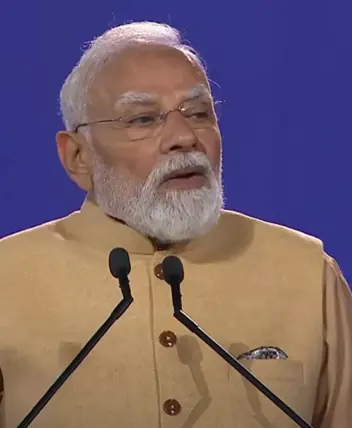
India has signalled its determination to lead the next era of wireless communication after Prime Minister Narendra Modi announced in Melbourne that the country is already working on Made-in-India 6G technology.
The announcement is more than a technology update—it reflects India’s ambition to become a global innovator rather than simply a consumer of next-generation telecom technologies. As countries worldwide race to define future communication standards, India aims to play a leading role in research, patents, manufacturing and global standard-setting.
Why PM Modi’s Melbourne Announcement Matters
India’s telecom journey has evolved rapidly over the past decade.
After achieving one of the world’s fastest 5G rollouts, the government’s focus is now shifting towards developing indigenous 6G technologies and contributing to international telecom standards.
Speaking in Melbourne, Prime Minister Modi highlighted that India’s innovation ecosystem now spans:
- Artificial Intelligence
- Semiconductor manufacturing
- Advanced telecom infrastructure
- Digital Public Infrastructure
- Startup innovation
- Next-generation wireless communication
His remarks reinforce India’s long-term vision of becoming a technology exporter instead of only adopting technologies developed elsewhere.
What Is 6G Technology?
6G represents the sixth generation of wireless communication technology and is expected to become commercially available around 2030.
Although global standards are still under development, experts expect 6G networks to provide revolutionary improvements over today’s 5G networks.
Expected capabilities include:
- Data speeds reaching terabits per second
- Near-zero communication latency
- AI-native wireless networks
- Satellite and terrestrial network integration
- Holographic communication
- Extended Reality (XR)
- Massive Internet of Things (IoT)
- Digital twins for industries
- Intelligent transportation systems
- Highly secure communications
Unlike previous mobile generations, artificial intelligence will be integrated directly into the network architecture, allowing networks to optimize themselves in real time.
Bharat 6G Vision: India’s Roadmap to Global Leadership
India’s Bharat 6G Vision seeks to position the country among the world’s leading contributors to 6G technologies by the end of this decade.
The initiative focuses on:
- Indigenous research and development
- Telecom innovation
- Global standard-setting
- Patent creation
- Startup participation
- Public-private partnerships
- Affordable and sustainable connectivity
The government’s long-term objective is to ensure India becomes one of the world’s leading innovators in next-generation wireless communication.
How 6G Could Transform India’s Economy
Artificial Intelligence
Future wireless networks will rely heavily on AI for traffic management, predictive maintenance, cybersecurity and intelligent automation.
AI-powered telecom networks could significantly improve service quality while reducing operational costs.
Semiconductor Manufacturing
Advanced communication infrastructure requires sophisticated chips, processors and radio equipment.
India’s semiconductor initiatives could receive a major boost as demand for telecom hardware increases.
Healthcare
6G may enable:
- Remote robotic surgeries
- AI-assisted diagnostics
- Real-time health monitoring
- Ultra-HD telemedicine
This could improve healthcare accessibility, particularly in rural and underserved regions.
Manufacturing
Smart factories powered by 6G could use:
- Autonomous robots
- Industrial IoT
- Digital twins
- Predictive maintenance
- Real-time production monitoring
These technologies can increase productivity while reducing downtime.
Smart Cities
Urban infrastructure could become significantly more efficient through:
- Intelligent traffic management
- Smart energy grids
- Connected public transport
- Automated emergency services
- Environmental monitoring
Education
6G may enable immersive classrooms using:
- Virtual Reality
- Augmented Reality
- AI tutors
- Real-time collaboration
- Holographic learning experiences
India’s Competitive Advantage
Several factors strengthen India’s position in the global 6G race:
- World’s second-largest telecom market
- Large engineering talent pool
- Strong software industry
- Expanding semiconductor ecosystem
- Vibrant startup ecosystem
- Government support for digital innovation
- Rapid digital infrastructure development
India is actively working to strengthen its presence in global telecom innovation and future wireless standards.
Challenges India Must Overcome
Despite significant progress, several challenges remain.
These include:
- Higher investment in telecom R&D
- Advanced semiconductor fabrication
- Increased patent generation
- Skilled workforce development
- Cybersecurity preparedness
- Stronger academia-industry collaboration
- International technology partnerships
Successfully addressing these issues will determine whether India can become a true global leader in 6G.
What Will 6G Mean for Consumers?
Although commercial deployment is expected around 2030, consumers could eventually experience:
- Instant cloud computing
- AI-powered digital assistants
- Immersive gaming
- Holographic video calls
- Autonomous vehicles
- Smarter homes
- Better rural connectivity
- Faster internet with extremely low latency
Many of these innovations will become possible because AI and communication technologies will work together more closely than ever before.
Global Competition Is Intensifying
India is not the only country preparing for 6G.
Major economies including the United States, China, Japan, South Korea and European nations are investing heavily in research, patents and standards development.
The next few years will determine which countries shape the technologies that power global communication during the 2030s.
Future Outlook
Prime Minister Narendra Modi’s Melbourne announcement demonstrates that India intends to become a creator of next-generation technologies rather than merely an adopter.
If current initiatives continue successfully, India could emerge as one of the world’s leading centres for telecom innovation, semiconductor manufacturing, AI-driven networking and digital infrastructure.
While commercial 6G services remain several years away, the investments being made today will shape India’s technological leadership for decades to come.
Frequently Asked Questions (FAQs)
What is India’s 6G Vision?
India’s 6G Vision is the government’s long-term strategy to make the country a global leader in 6G research, innovation, manufacturing and international telecom standards by 2030.
Why did PM Modi mention 6G in Melbourne?
Prime Minister Narendra Modi highlighted India’s progress in next-generation technologies and reaffirmed the country’s commitment to developing Made-in-India 6G solutions during his address in Melbourne.
When will 6G launch in India?
Commercial 6G deployment is expected around 2030, although research, testing and standardization activities are already underway.
How is 6G different from 5G?
6G is expected to deliver significantly faster speeds, AI-native networking, lower latency, satellite integration, holographic communication and smarter wireless infrastructure.
Which industries will benefit from 6G?
Healthcare, manufacturing, artificial intelligence, education, transportation, smart cities, agriculture and industrial automation are expected to benefit significantly.
Disclaimer
This article is intended for informational purposes only. It is based on publicly available information and official statements regarding India’s 6G initiatives. The commercial rollout timeline, technical specifications and policy decisions related to 6G may evolve as research, industry standards and government initiatives progress.
For further tracking of industrial updates and analytical insights regarding technological infrastructure developments, read more on India’s Bold Leap: How the Bharat 6G Vision is Transforming Global Telecommunications by 2030.
