

Mumbai. Tuesday, 14 July 2026
The architecture of the global digital economy is undergoing a foundational shift. High-speed terrestrial networks are no longer working in isolation. Instead, a unified digital fabric is emerging—one that seamlessly fuses orbital satellite communications (SatCom) with hyper-density, AI-native data infrastructure on the ground. Just as roads, rails, and power grids defined the industrial age, a comprehensive broadband roadmap is now the ultimate measure of a nation’s economic resilience and technological sovereignty.
As governments and enterprises accelerate their digital transformation, broadband connectivity has transitioned from a basic communications utility into an essential pillar of national infrastructure. From supporting artificial intelligence (AI) data hubs to bridging the deep-seated urban-rural divide, high-speed networks serve as the primary engine for Industry 4.0, cloud computing, telemedicine, online education, and the deployment of smart cities.
Why Broadband Infrastructure Matters
Nationwide fiber and wireless networks do far more than just keep people connected; they act as the launchpad for future economic growth:
Catalyzing Economic Growth & Tech Investment: Modern networks draw global manufacturing and technology investments. Countries prioritizing infrastructure are naturally positioned as global technology and innovation hubs.
Fueling the AI & Data Revolution: Advanced AI-driven industries and next-generation hyperscale data centers require continuous data streams that only robust broadband backbones can support.
Transforming Healthcare and Education: High-speed connections ensure that remote villages have real-time access to advanced medical consultants via telemedicine and interactive digital learning tools.
Strengthening Sovereignty and Security: End-to-end control over physical telecom networks safeguards critical national data, fortifies cyber defenses, and cements digital public infrastructure.
Enabling Future Wireless Ecosystems: The massive bandwidth provided by fiber-backed deployments paves a direct path for scaling 5G networks, Open RAN ecosystems, and future 6G platforms.
The Key Pillars of a Modern Broadband Strategy
Building a future-proof roadmap requires balancing massive, foundational structures with agile, localized delivery systems:
1. The National Fiber Backbone
Optical fiber remains the most reliable, highly scalable medium for long-term network growth. A robust national grid aims to link state capitals, industrial hubs, district headquarters, research campuses, and rural community zones to ensure data flows smoothly across the entire map.
2. Diverse Last-Mile Solutions
Reaching the final consumer demands a flexible mix of technologies tailored to regional topographies:
Fiber-to-the-Home (FTTH): The gold standard for ultra-low latency and raw speed in high-density urban zones.
Fixed Wireless Access (FWA): An agile, highly efficient alternative that delivers fiber-like speeds wirelessly to homes and small commercial areas.
Satellite & Community Wi-Fi: Critical safety nets that supply continuous, robust coverage to geographically isolated pockets, mountain ranges, or coastal areas.
3. Advanced Mobile Architecture
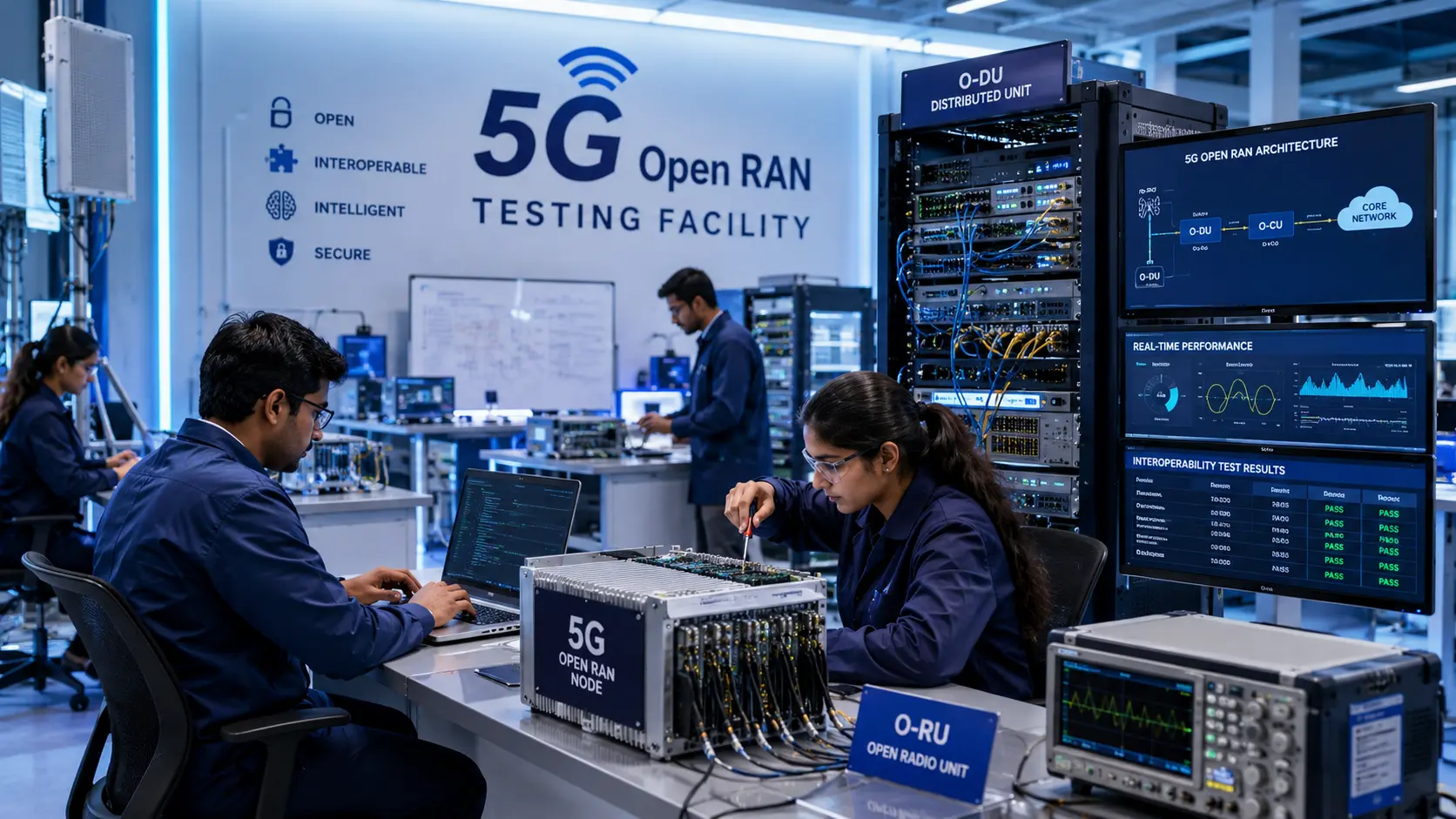
Expanding cellular networks goes beyond planting standard towers. Modern strategies focus heavily on densification through small-cell deployment, optimization of highly efficient spectrum allocations, and the integration of open-standard systems. For instance, testing hubs like the 5G Open RAN Testing Lab at C-DOT show how structural engineering shifts are allowing multi-vendor telecom hardware to lower overall deployment costs significantly.
4. Hyper-Density Data Center Links
The modern AI era requires seamless, low-latency transit corridors between hyperscale storage environments, Edge nodes, and local Internet Exchange Points (IXPs). Fast data loops keep AI workloads operating in real time without bottlenecking localized services.
Emerging Tech: Next-Gen Network Management
As networks grow in complexity, manual management becomes impossible. Tomorrow’s roadmaps increasingly rely on cutting-edge innovations:
AI-Driven Network Automation: Intelligent systems now run predictive maintenance algorithms, optimize data routing dynamically on the fly, and flags security threats before they affect the end user.
LEO Satellites: Low Earth Orbit (LEO) arrays form a resilient celestial fallback layer, complementing terrestrial fiber grids to guarantee uninterrupted connectivity during climate crises or natural disasters.
Edge Compute Nodes: Processing data closer to the user reduces heavy transit strain on the core network, paving the way for autonomous robotics, spatial computing, and automated industrial manufacturing.
Policy Solutions for Common Implementation Obstacles
Building nationwide networks isn’t cheap or easy. Capital expenditures remain high, and regulatory delays can slow down deployments. Leading telecom roadmaps suggest structural policy interventions to fast-track buildouts:
Streamlined Right of Way (RoW): Introducing single-window digital clearance platforms prevents prolonged regulatory hold-ups for laying cable or setting up towers.
Common Utility Ducts: Enforcing policies where new highways, railways, and urban developments include pre-laid fiber conduits dramatically slashes excavation expenses down the road.
Infrastructure Sharing: Mandating passive asset sharing among active telecom operators reduces parallel capital expenditures, lowering entry barriers for regional providers.
Targeted Subsidies: Utilizing structural universal service funds helps absorb installation costs in areas that lack immediate commercial viability, ensuring equitable access.
The Road Ahead: Scaling the Digital Horizon
Broadband has permanently crossed the threshold from a simple utility to the absolute bedrock of the modern economic framework. Developing a balanced, long-term strategic plan—one that integrates dense fiber backbones, advanced wireless topologies, satellite catchments, and automated security protocols—is the ultimate formula for unlocking true digital inclusion. Nations that aggressively prioritize and de-risk their physical telecommunication infrastructure will continue to outpace the competition, remaining perfectly positioned for the next wave of global digital breakthroughs.
For deeper insights into how modern national digital policies are evolving, check out the comprehensive overview on Connecting India: Accessibility, Affordability, and Connectivity for a New Digital Era.
Frequently Asked Questions (FAQ)
Q1: Why is optical fiber favored over wireless systems for a national backbone?
A: Wireless networks excel at mobility and last-mile reach, but fiber offers unmatched, virtually unlimited bandwidth capacity and immunity to electromagnetic interference, making it the only truly scalable choice for long-term backbone architecture.
Q2: What is the main benefit of Open RAN in a broadband roadmap?
A: Open Radio Access Network (Open RAN) architecture breaks vendor lock-in by using open, standardized interfaces. This allows operators to mix and match hardware and software from different providers, driving down deployment costs and fostering network innovation.
Q3: How do LEO satellites complement terrestrial fiber networks?
A: LEO satellite constellations do not replace fiber; instead, they act as an essential fallback layer. They bring high-speed internet to remote, rugged, or disaster-prone geographies where laying physical fiber optic cable is physically or economically impossible.
Disclaimer:
The views and analytical breakdowns expressed in this article are intended for educational and informational purposes only. Infrastructure development timelines, policy structures, and technology metrics vary by region and are subject to ongoing regulatory updates from local telecommunications authorities.
