

Mumbai | Wednesday, 15 July 2026
The Government of India is finalizing a comprehensive and highly anticipated set of policy measures engineered to overhaul and fortify the nation’s Micro, Small, and Medium Enterprises (MSME) manufacturing ecosystem. Aimed at drastically improving the competitiveness of small-scale factories, accelerating advanced technology adoption, and lowering regulatory barriers, the initiative serves as a core pillar in India’s strategic pursuit to become an undisputed global manufacturing hub.
This upcoming policy framework arrives on the heels of an exhaustive, nationwide public consultation process. The Ministry of MSME systematically evaluated nearly 2,000 diverse recommendations submitted by grassroot entrepreneurs, leading industry associations, tech startups, exporters, and industrial experts, ensuring the new guidelines directly address practical, on-the-ground challenges.
Injecting Muscle into India’s Industrial Backbone
Manufacturing MSMEs form the literal spine of the Indian industrial economy. They produce crucial components and high-quality finished goods for high-value sectors including automobiles, electronics, pharmaceuticals, textiles, defence equipment, specialized engineering, and fast-moving consumer goods (FMCG).
Despite their importance—accounting for nearly one-third of India’s Gross Domestic Product (GDP)—many small factories have long grappled with systemic growth barriers. Rising input and production costs, lack of easy collateral-free working capital, an over-reliance on legacy machinery, and the administrative weight of multi-layered regulatory compliances have historically stymied their ability to scale.
The upcoming economic package is explicitly designed to dismantle these exact operational bottlenecks, offering targeted structural interventions.
7 Strategic Pillars of the New MSME Framework
The upcoming reforms prioritize seven cross-cutting thematic areas designed to modernize factory floors and broaden market reach:
Democratic Access to Capital: Expanding affordable credit lines, introducing simplified working capital loans, and deploying innovative cash-flow-based lending systems that look at real-time sales ledger data rather than rigid brick-and-mortar collateral.
Accelerated Digital Transformation: Direct financial and technical subsidies helping small units migrate their basic operations onto secure, cloud-based enterprise systems.
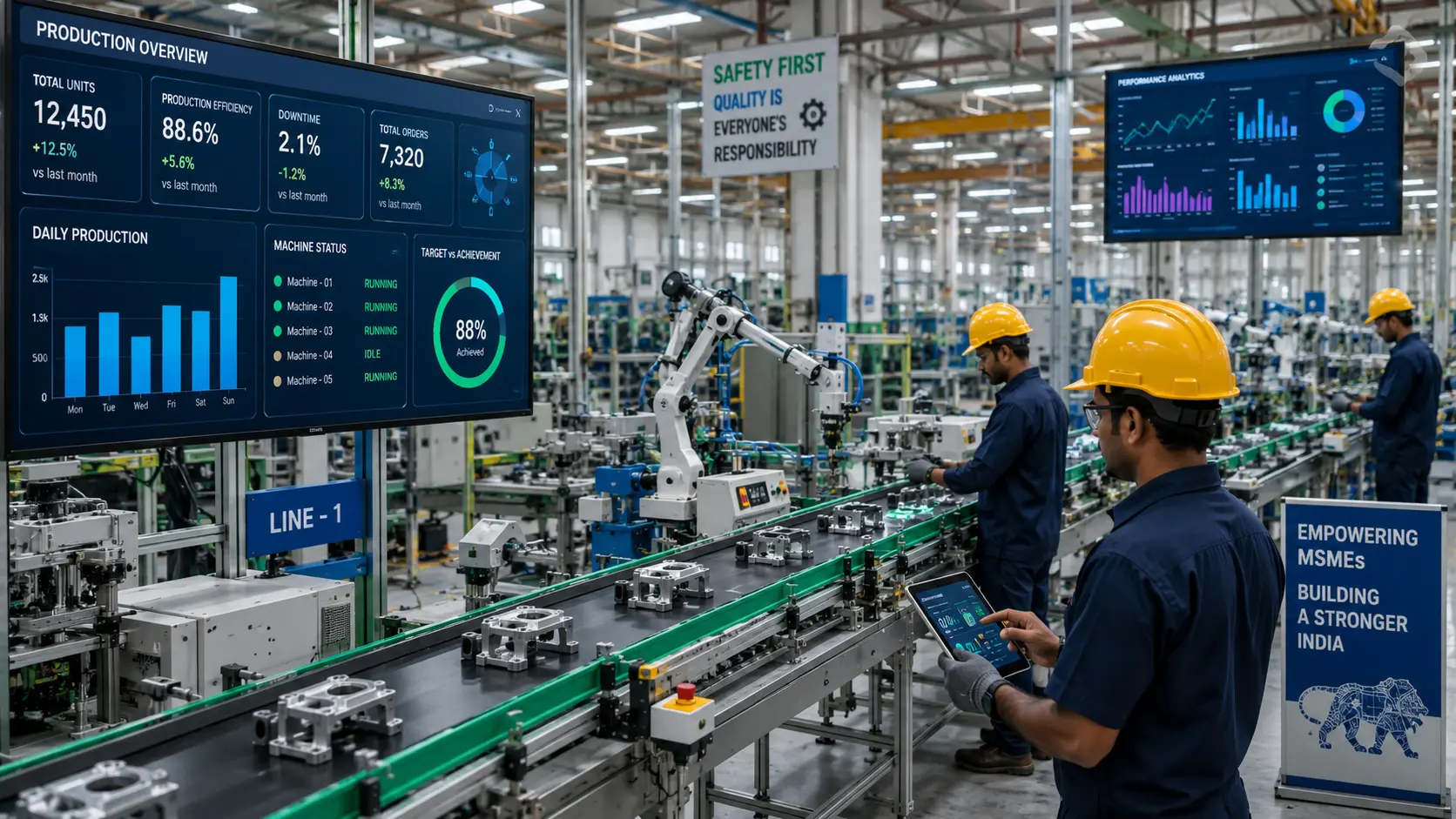
Industry 4.0 & Smart Manufacturing: Direct incentives for installing automation systems, Industrial Internet of Things (IIoT) sensors, robotics, and predictive maintenance technologies to optimize machine uptime.
Regulatory Easing & Compliance Reduction: Streamlining business approvals, reducing recurring renewal cycles, and consolidating digital filing systems to significantly cut down on administrative overhead.
Global Supply Chain Integration: Enhancing specialized export promotion schemes, easing cross-border logistics friction, and helping micro-manufacturers meet strict international standards.
Innovation and Global Certifications: Extending grants for indigenous Research & Development (R&D), product prototyping, and subsidizing the cost of acquiring prestigious international quality certifications (such as ISO and CE markings).
Amplified Market Access: Strengthening mandate rules for public procurement platforms like the Government e-Marketplace (GeM) and smoothing the integration of small factories onto prominent B2B e-commerce networks.
Driving the Next Phase via Industry 4.0
A central tenet of this policy evolution is the systemic push toward deep tech. Rather than viewing advanced technologies as the exclusive playground of large conglomerates, the government is actively nudging small scale enterprises to adopt Artificial Intelligence (AI), data analytics, and robotics.
By utilizing data-driven operations, small manufacturers can significantly reduce raw material wastage, predict machine failures before they cause costly production shutdowns, and match the high precision standards demanded by international buyers. Ultimately, this structural upgrade ensures that smaller firms can go toe-to-toe with global competitors on both cost and quality.
Fueling the ‘Viksit Bharat’ and ‘Make in India’ Visions
The upcoming MSME reforms are intricately woven into India’s macro-economic blueprints. Strengthening local production ecosystems directly advances the Viksit Bharat vision of a developed nation, while giving fresh momentum to the Make in India, Digital India, and Startup India campaigns.
By building resilient domestic supply chains, India aims to reduce its structural import dependencies on critical sub-components, generate millions of highly skilled industrial jobs, and aggressively scale its manufacturing exports. As the Ministry of MSME puts the finishing touches on this policy package, the industrial sector stands on the precipice of a high-tech manufacturing renaissance.
Frequently Asked Questions (FAQs)
Why is the government introducing a new policy specifically for manufacturing MSMEs?
While MSMEs contribute to about a third of India’s GDP, many face production inefficiencies due to outdated technology, high credit costs, and complex compliance structures. The new policy specifically targets these bottlenecks to make small manufacturers globally competitive and structurally sound.
What role does technology play in the upcoming MSME policy measures?
Technology adoption is a primary pillar of the upcoming framework. It introduces dedicated support and incentives for small units to implement Industry 4.0 technologies—such as AI, robotics, IIoT sensors, and cloud systems—to lower production costs and raise product quality.
How will the new policy help small businesses access global export markets?
The framework focuses on reducing cross-border trade friction, easing export compliance, and providing technical and financial assistance so that MSMEs can achieve international quality benchmarks and easily integrate into global supply networks.
Disclaimer
The information provided in this article is based on ongoing policy formulation, public consultation highlights, and official statements released by the Ministry of MSME, Government of India. The final, specific provisions, fiscal allocations, and implementation dates may vary depending on the official executive gazette notification issued by the government.
