

New Delhi. Thursday, 16 July 2026
India’s technology landscape has officially graduated from software outsourcing into a transformative phase of deep-tech creation. The federal government and private sectors are simultaneously running high-ticket capital injections across chip manufacturing, artificial intelligence (AI), cloud infrastructure, and electronic systems. Rather than operating in isolated silos, a sequence of coordinated mega-policy rollouts—led by the India Semiconductor Mission 2.0 (Semicon 2.0), a revamped ₹62,500 crore smartphone component scheme, and sweeping Google AI regional partnerships—indicates that India is strategically engineering an interdependent, end-to-end tech supercycle.
This interconnected framework is built to insulate the domestic digital economy from volatile global supply shocks, accelerate value addition, and establish the nation as a premier global hub for advanced hardware and next-generation software intelligence.
The Core Pillars of India’s Tech Revolution
1. Semicon 2.0: Anchoring the Hardware Layer
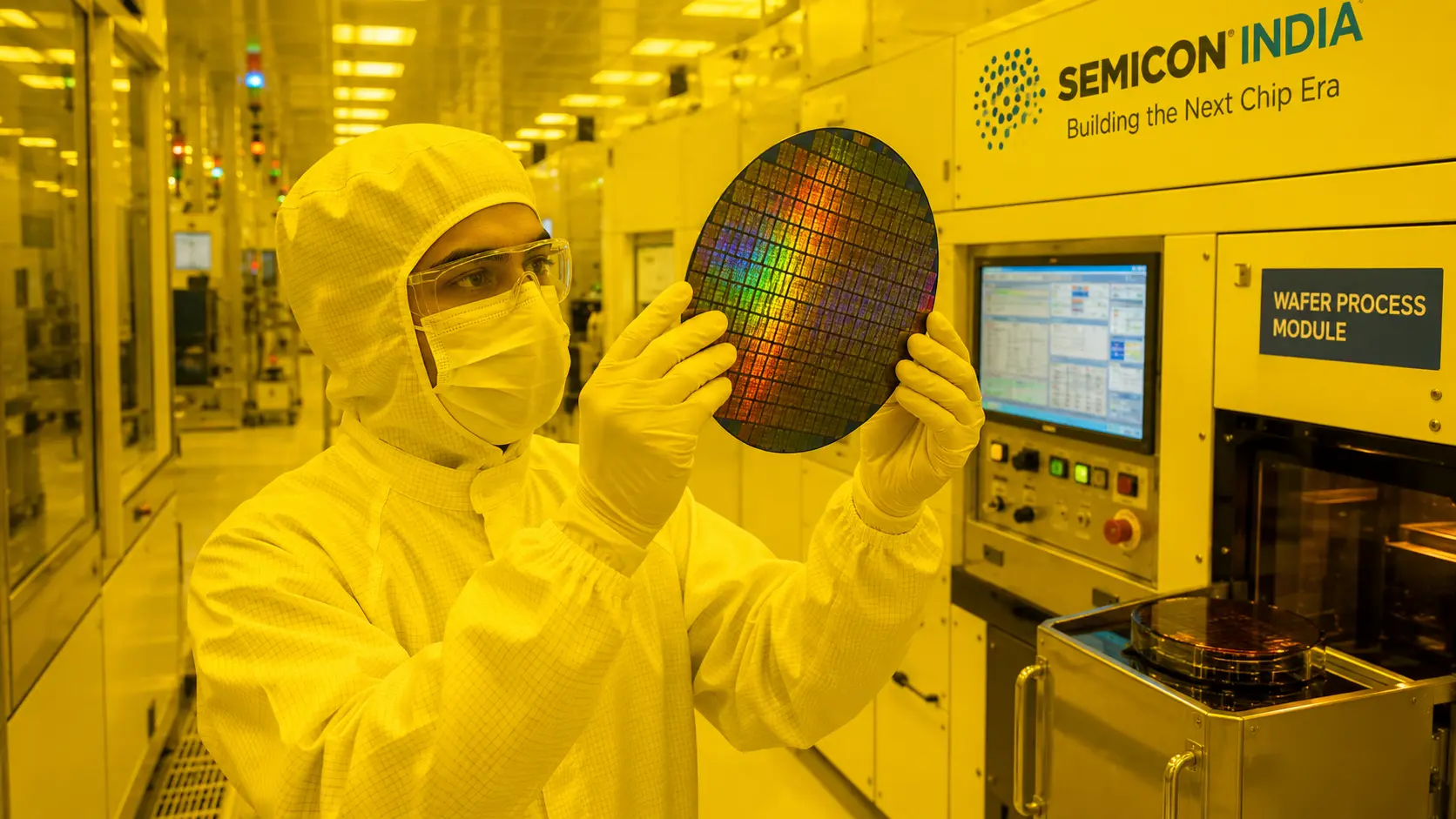
The foundational bedrock of this massive transition is the India Semiconductor Mission 2.0, backed by an aggressive public outlay of ₹1.27 lakh crore. While early industrial policy targets concentrated primarily on basic testing and assembly, Semicon 2.0 focuses explicitly on deepening the entire midstream and upstream supply chain.
The mission provides major capital subsidies and infrastructure support across several specialized domains:
Advanced Semiconductor Fabrication Plants (Fabs): Establishing commercial-grade foundries to etch silicon wafers locally.
ATMP & OSAT Facilities: Expanding Assembly, Testing, Marking, and Packaging infrastructures to turn raw wafers into ready-to-use microchips.
Compound Semiconductors: Building specialized manufacturing hubs for silicon carbide and gallium nitride chips, which are heavily required in high-power electric vehicles (EVs) and clean-energy systems.
Design & Upstream Material Ecosystems: Funding native Fabless startups to develop indigenous Intellectual Property (IP), alongside backing domestic supply chains for rare chemical gases and critical materials.
2. Moving Beyond Assembly in Electronics
To create immediate, high-volume consumer demand for locally designed and packaged silicon, the government has injected a ₹62,500 crore mobile phone and electronics component scheme.
Historically, the landmark “Make in India” initiative turned the nation into one of the world’s most prolific smartphone assembly centers. The objective now shifts from simple manual assembly to complex components. The financial architecture incentivizes the domestic production of high-value sub-assemblies, including camera modules, display panels, printed circuit board assemblies (PCBAs), and multi-layered semiconductor packaging. By boosting local value addition, the framework seeks to reduce component import bills and ramp up global export numbers.
3. Democratizing AI: The Google-State Partnerships
Hardware means nothing without an intelligent software layer to consume it. The recent expansive deployment of artificial intelligence inside public frameworks highlights a deliberate effort to decentralize deep tech.
A prime example is the recent strategic partnership between Google and the state government of Tripura. This framework shifts focus away from traditional mega-cities like Bengaluru or Hyderabad to build regional technology networks. Key facets of these localized AI partnerships include:
AI-Powered Citizen Services: Translating localized datasets into multi-lingual public assistants for real-time welfare processing.
Cloud-Based Governance & Hyper-Density Data Infrastructure: Utilizing advanced cloud fabrics to optimize public transport, healthcare distribution, and structural agricultural modeling.
Workforce Upskilling: Training thousands of state government workers, educators, and technical students in machine learning pipelines, ensuring a sustainable localized talent flow.
The Convergence Flywheel: Why Coordinated Scaling Matters
The individual components of this layout are distinct, but their execution is hyper-synchronized. They function as a self-sustaining industrial flywheel:
[Semicon 2.0 (Silicon Fabs)] ──> Feeds Material ──> [Electronics & Component PLI]
            ▲                                                  │
    Demands Advanced                                    Generates Massive
    Computing Nodes                                     Data & Compute Needs
            │                                                  ▼
[Cloud Infrastructure Platforms] ◄── Supports Systems ─── [AI Governance Pacts]
Advanced electronic components manufactured under the ₹62,500 crore initiative require dedicated microcontrollers and power management chips, creating an instant domestic market for the fabs backed by Semicon 2.0. Simultaneously, wide-scale AI deployments across different Indian states create a massive surge in hyper-density, AI-native data centers. These data infrastructures require high-performance AI chips and high-efficiency power architectures, further pulling demand straight through the local semiconductor value chain.
Key Challenges Facing the High-Tech Transition
Despite the policy momentum, structural bottlenecks require sustained intervention from both private enterprises and state governments to secure long-term global cost competitiveness:
The Rare Earth and Critical Mineral Bottleneck: Fabs, advanced sensors, and permanent magnet components rely heavily on midstream processing of critical raw materials. Securing these raw materials requires active international trade frameworks, such as the India Australia CECA 2026, which ensures a strategic pipeline for rare earth minerals and lithium.
Ultra-Reliable Infrastructure Requirements: Semiconductor cleanrooms and massive cloud data centers demand zero-fluctuation, uninterrupted power grids and vast amounts of ultra-pure water. Even a momentary micro-second drop in electrical current can ruin an entire batch of high-tech silicon wafers.
The Deep-Tech Workforce Gap: While India has an abundance of generic software developers, there is a stark shortage of specialized VLSI design engineers, lithography experts, and material scientists. Academic and technical institutions must rapidly adjust to build this specific technical talent pool.
Cross-Industry Supply Links: Sectors like the defense drone ecosystem are heavily reliant on high-end microcontrollers and guidance systems. The speed at which local fabs can supply specialized microchips will directly dictate how fast India can achieve true structural self-reliance across critical defense and automotive platforms.
Frequently Asked Questions (FAQ)
Q1: What makes India Semiconductor Mission 2.0 different from the first version?
Semicon 1.0 focused primarily on establishing basic awareness, drawing initial global players, and setting up testing/packaging units. Semicon 2.0 deepens this strategy by putting larger capital outlays toward true upstream wafer fabrication, compound semiconductor units, and native design ecosystems to build local intellectual property.
Q2: How do Google’s state-level partnerships help smaller regional areas?
Partnerships like the one in Tripura move AI deployment out of major tier-1 tech cities. They build regional digital public infrastructure, localize language datasets for digital governance, and upskill local workforces, which directly democratizes high-paying tech opportunities across the country.
Q3: Why is component manufacturing more important than phone assembly?
Simple device assembly adds minimal value (typically under 10-15%) to the overall product lifecycle, leaving the supply chain vulnerable to import shocks. Component manufacturing covers high-value internal parts like circuit boards, camera systems, and micro-displays, keeping the economic profits, high-value jobs, and supply chain control inside the domestic market.
Q4: How does the India Australia CECA pact impact this tech shift?
Advanced electronics and semiconductor systems require a steady supply of critical minerals and rare earth elements. Trade agreements like the CECA enable streamlined sourcing of vital elements like cobalt, lithium, and rare earths from resource-rich nations like Australia, removing dependency on volatile single-source countries.
Disclaimer
The analytical insights and structural overviews compiled in this report are for informational and educational purposes only. Sector outlays, program allocations, and international corporate partnerships reflect the documented policy states and official announcements as of mid-2026. Readers should consult official government portals and individual institutional disclosures for real-time adjustments to specific financial applications, timeline extensions, or scheme guidelines.
