

New Delhi. Tuesday, 21 July 2026
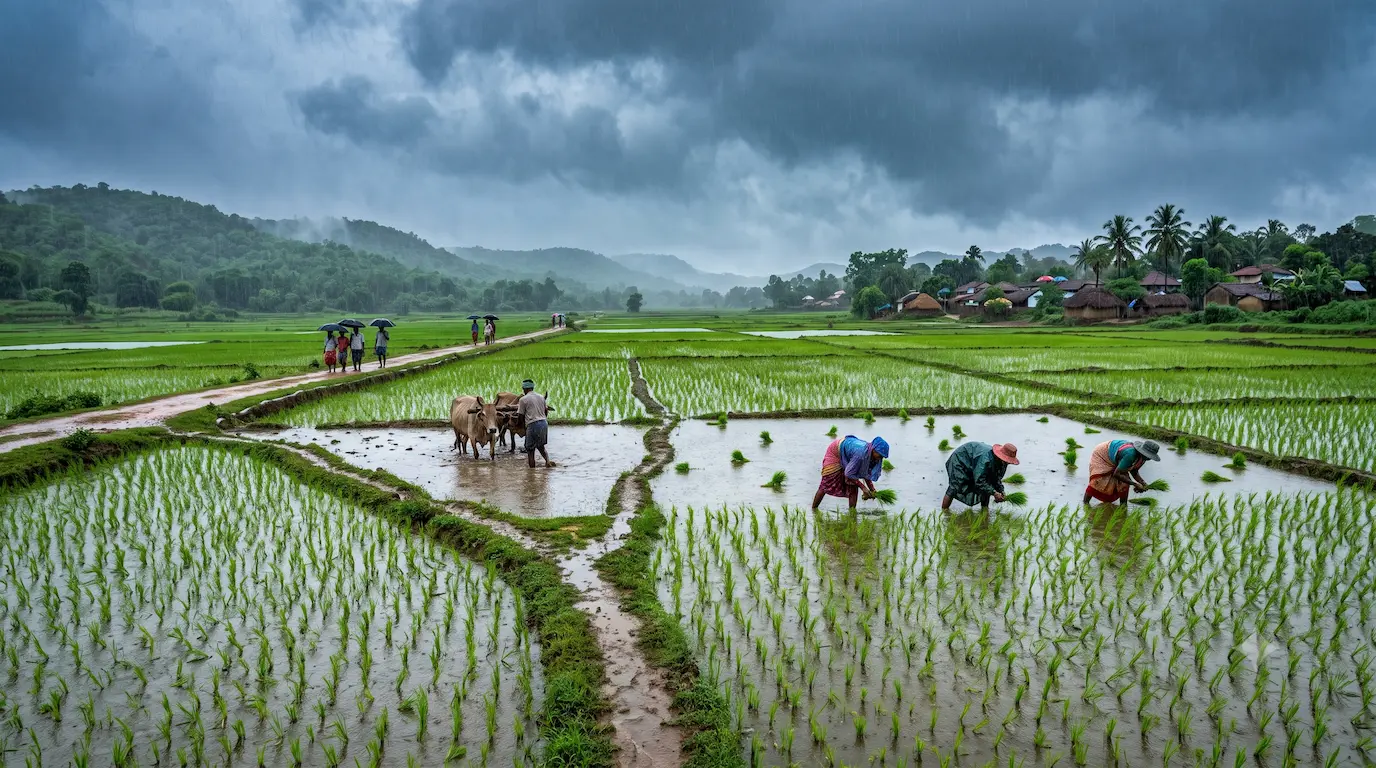
After an initial period of uneven distribution and localized deficits across several regions, the India Meteorological Department (IMD) has confirmed a major revival of the Southwest Monsoon in July 2026. Active monsoon conditions are bringing heavy to extremely heavy rainfall spells across vast swathes of northern, central, eastern, and northeastern India.
While this surge in precipitation brings critical relief to rain-fed farmlands and fills depleting reservoirs, it simultaneously escalates the risk of localized flooding, landslides in hilly terrains, and transportation bottlenecks.
Stay updated with real-time news on Matribhumi Samachar Weather Updates and read deeper macro coverage on Matribhumi Samachar India News.
1. Agriculture: Essential Relief vs. Crop Over-Saturation
Nearly half of India’s cultivated farmland relies directly on seasonal rainfall. The current active spell offers both significant benefits and crucial challenges:
The Positive Drivers
Soil Moisture Recovery: Improved soil water retention across key growing belts for paddy, soybean, maize, cotton, and pulses.
Rabi Season Security: Elevated reservoir inflows ensure vital irrigation reserves for the upcoming winter sowing season.
Aquifer Recharge: Replenishment of groundwater levels following early-season rainfall gaps.
The Downside Risks
Waterlogging Damage: Prolonged standing water in low-lying fields poses risks of root rot to young paddy and vegetable crops.
Disease Vulnerability: High atmospheric humidity creates conditions for fungal infections and pest outbreaks.
Soil Erosion: Intense downpours risk topsoil degradation, particularly across vulnerable hilly agricultural tracks.
2. Supply Chain & Logistics Pressure Points
Freight networks across the country face heightened operational friction as heavy rainfall spreads across major logistics corridors:
Highway Inundation & Closures: Flooding across key arterial roads temporarily slows long-haul trucking routes.
Landslide Risks in Northern Belts: Mountain corridors in Uttarakhand and Himachal Pradesh face frequent blockages, affecting cargo movement.
Just-In-Time (JIT) Inventory Shortages: Sector hubs relying on fast-turnaround inventory—such as automotive assembly, electronics, and pharmaceuticals—may experience short-term supply delays.
For detailed market insights, visit Matribhumi Samachar Economy and track key agricultural sector reports on Matribhumi Samachar Agriculture.
3. Inflation & Food Price Dynamics
Food price trends over the coming weeks are expected to follow a two-tier pattern:
| Timeframe | Market Trend | Key Underlying Factors |
| Short-Term (Spikes) | Transitory Volatility | Transit delays, inundation of vegetable belts, higher spoilage of perishables |
| Medium-Term (Cooling) | Price Stabilization | Boosted grain yields, healthy reservoir storage, expanded Rabi sowing potential |
Frequently Asked Questions (FAQ)
What is the IMD forecast for the Southwest Monsoon in late July 2026?
The IMD forecasts active monsoon conditions with heavy to extremely heavy rainfall across Northern, Eastern, and Northeastern states, alongside a gradual revival in central and western belts.
Which crops benefit most from the active July monsoon spell?
Water-intensive crops like paddy, along with soybean, maize, cotton, and pulses, benefit significantly from improved soil moisture and reservoir replenishment.
How does heavy monsoon rainfall impact food inflation?
While short-term transport disruptions and crop inundation can cause temporary vegetable price spikes, well-distributed rainfall stabilizes grain output and keeps overall food inflation moderate over the medium term.
Disclaimer
This article is for informational purposes based on current weather reports, IMD bulletins, and economic assessments as of July 2026. Readers and business planners are advised to check official weather alerts and local administration guidelines for regional safety and operational planning.
