

Mumbai. Wednesday, 22 July 2026
India is quietly staging one of the most significant industrial transformations of the century. As nations worldwide scramble to build resilient, low-carbon supply chains, India is stepping into the spotlight not just as a consumer of clean energy, but as a major global hub for manufacturing green technologies.
Supported by decisive government incentives, growing private investments, and a fast-maturing engineering ecosystem, the country’s multi-pronged strategy is simple: reduce global carbon emissions while reinforcing domestic industry, creating high-value jobs, and driving exports.
What Exactly is Green Manufacturing?
At its core, green manufacturing refers to industrial practices that drastically lower environmental footprints. It is a two-way strategy:
How we produce: Utilizing renewable energy in factories, improving energy efficiency, minimizing hazardous waste, and recycling raw materials.
What we produce: Building zero-emission products like solar modules, lithium-ion and advanced batteries, electric vehicles (EVs), green hydrogen electrolysers, and eco-friendly textiles.
5 Major Sectors Driving India’s Green Industrial Revolution
                         ┌───────────────────────────────┐
                         │   INDIA'S GREEN SECTORS       │
                         └───────────────┬───────────────┘
                                         │
    ┌────────────────────┬───────────────┼───────────────┬────────────────────┐
    ▼                    ▼               ▼               ▼                    ▼
┌───────────┐      ┌───────────┐   ┌───────────┐   ┌───────────┐       ┌────────────┐
│ Solar PV  │      │ Advanced  │   │ EV Supply │   │ Green     │       │ Sustainable│
│ Cells     │      │ Batteries │   │ Ecosystem │   │ Hydrogen  │       │ Textiles   │
└───────────┘      └───────────┘   └───────────┘   └───────────┘       └────────────┘
1. Solar Photovoltaic (PV) Manufacturing
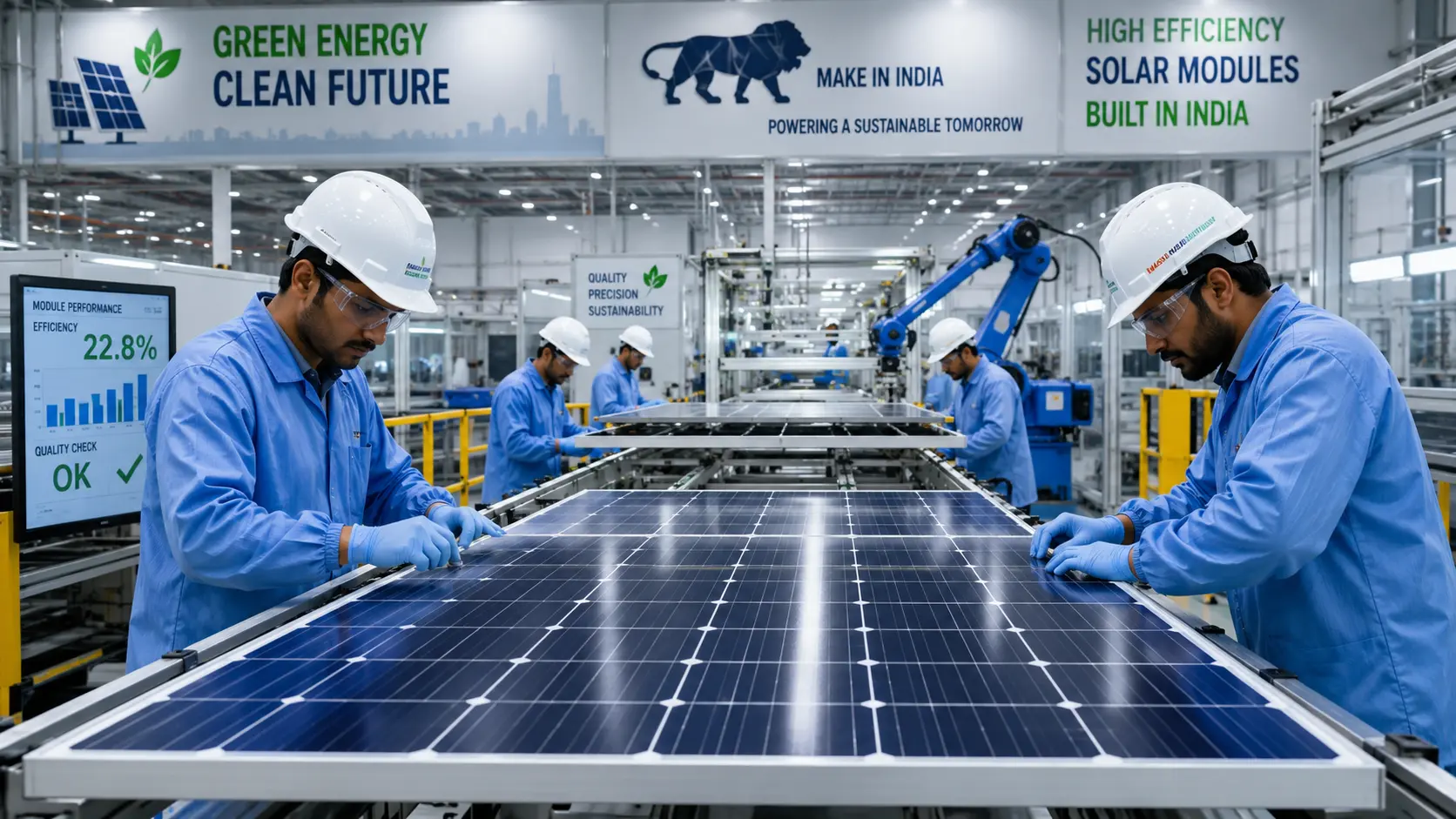
India is rapidly expanding its domestic manufacturing capacity across the entire solar value chain — moving away from component assembly to fully integrated production of solar cells, PV modules, solar glass, and high-efficiency inverters. Import-substitution policies and local content requirements have spurred massive domestic facility builds.
2. Advanced Battery Manufacturing
Energy storage is the backbone of the clean energy transition. Under the Advanced Chemistry Cell (ACC) Production Linked Incentive (PLI) scheme, India has opened fresh bidding for grid-scale battery manufacturing capacity, driving accelerated private CapEx into battery chemistry and cell production.
3. Electric Vehicle (EV) Ecosystem
The automotive sector is undergoing a rapid transition. Investments are pouring into localized EV components, high-torque electric motors, power electronics, fast-charging networks, and closed-loop battery recycling. Micro, Small, and Medium Enterprises (MSMEs) are pivoting quickly to supply auto majors with specialized green components.
4. Green Hydrogen Equipment
Positioning itself for the next frontier, India is channeling capital into electrolyser manufacturing, cryogenic hydrogen storage, fuel cells, and industrial decarbonization tools. Green hydrogen is slated to become a flagship export commodity over the coming decade.
5. Sustainable & Technical Textiles
Textile leaders are cutting carbon footprints by integrating recycled fibers, closed-loop water treatment, and low-emission dyeing processes. Recent global textile summits in India have unlocked substantial investment commitments dedicated to sustainable fabrics.
Strong Policy Backing: The PLI Effect
India’s green expansion relies heavily on deliberate, long-term policy support:
Production Linked Incentive (PLI) Schemes across solar, battery, auto, and green tech.
Make in India & Semiconductor Initiatives to secure critical electronic components.
National Critical Minerals Mission aimed at sourcing and processing raw materials domestically.
Dedicated Green Industrial Parks equipped with high-capacity renewable grid hookups.
Key Milestone: The PLI schemes have already attracted over ₹2.4 lakh crore in realized investments, generating more than 14 lakh direct and indirect jobs across manufacturing hubs.
Why Global Multinationals Are Turning to India
Global companies seeking to derisk supply chains under “China + 1” strategies find India increasingly attractive due to several structural edges:
Massive Home Market: Huge domestic demand for power, transport, and consumer goods.
Cost Competitiveness: Favorable labor, engineering, and manufacturing overhead costs.
Skilled Talent Pool: A deep bench of specialized STEM graduates and technical labor.
Expanding Renewable Grid: Rapidly growing solar and wind capacity providing clean power directly to industrial zones.
Strategic Trade Deals: Broadening Free Trade Agreements (FTAs) with key export destinations.
Overcoming Key Roadblocks
While momentum is high, sustainable long-term growth requires solving crucial industrial challenges:
Critical Mineral Imports: High reliance on foreign supplies of lithium, cobalt, nickel, and rare earths.
Capital Intensity: High upfront CapEx demands robust financing mechanisms, especially for smaller MSMEs.
R&D & Tech Transfer: Need for deeper domestic intellectual property in next-gen chemistries and materials.
The 2047 Horizon: A $4.1 Trillion Green Economy
By 2047 — marking India’s centenary of independence — the country’s green transition across energy, bio-economy, and circular manufacturing is projected to:
Unlock US$1.1 trillion in annual market value.
Attract over US$4.1 trillion in cumulative investments.
Create more than 48 million green jobs.
Green manufacturing is no longer just an environmental initiative — it has become India’s primary industrial growth engine for the decades ahead.
Related Clean Tech Coverage on Matribhumi Samachar
Explore more about India’s Latest Policy Updates on Matribhumi Samachar.
Frequently Asked Questions (FAQ)
Q1: What makes a manufacturing process “green”?
A manufacturing process is considered green if it actively reduces carbon emissions, utilizes renewable energy, implements energy and resource efficiency, recycles raw materials, or builds products that assist environmental decarbonization.
Q2: How does the PLI Scheme support green manufacturing in India?
The Production Linked Incentive (PLI) scheme offers financial incentives to companies based on incremental sales from products manufactured in domestic units. It lowers capital cost hurdles for high-tech sectors like solar PVs, ACC batteries, advanced automotive components, and specialized textiles.
Q3: Why is green hydrogen important for India’s export market?
Green hydrogen produced via renewable energy offers zero emissions. As global economies penalize carbon-intensive goods through mechanisms like carbon border taxes, Indian-made green hydrogen and electrolysers offer high-value export opportunities to Europe and Asia.
Disclaimer
This article is published for informational and educational purposes only. Projections and investment figures are based on official government disclosures and reputable industry analyses. Readers and prospective investors are advised to perform independent due diligence before making financial or strategic business decisions.
