

New Delhi. Thursday, 23 July 2026
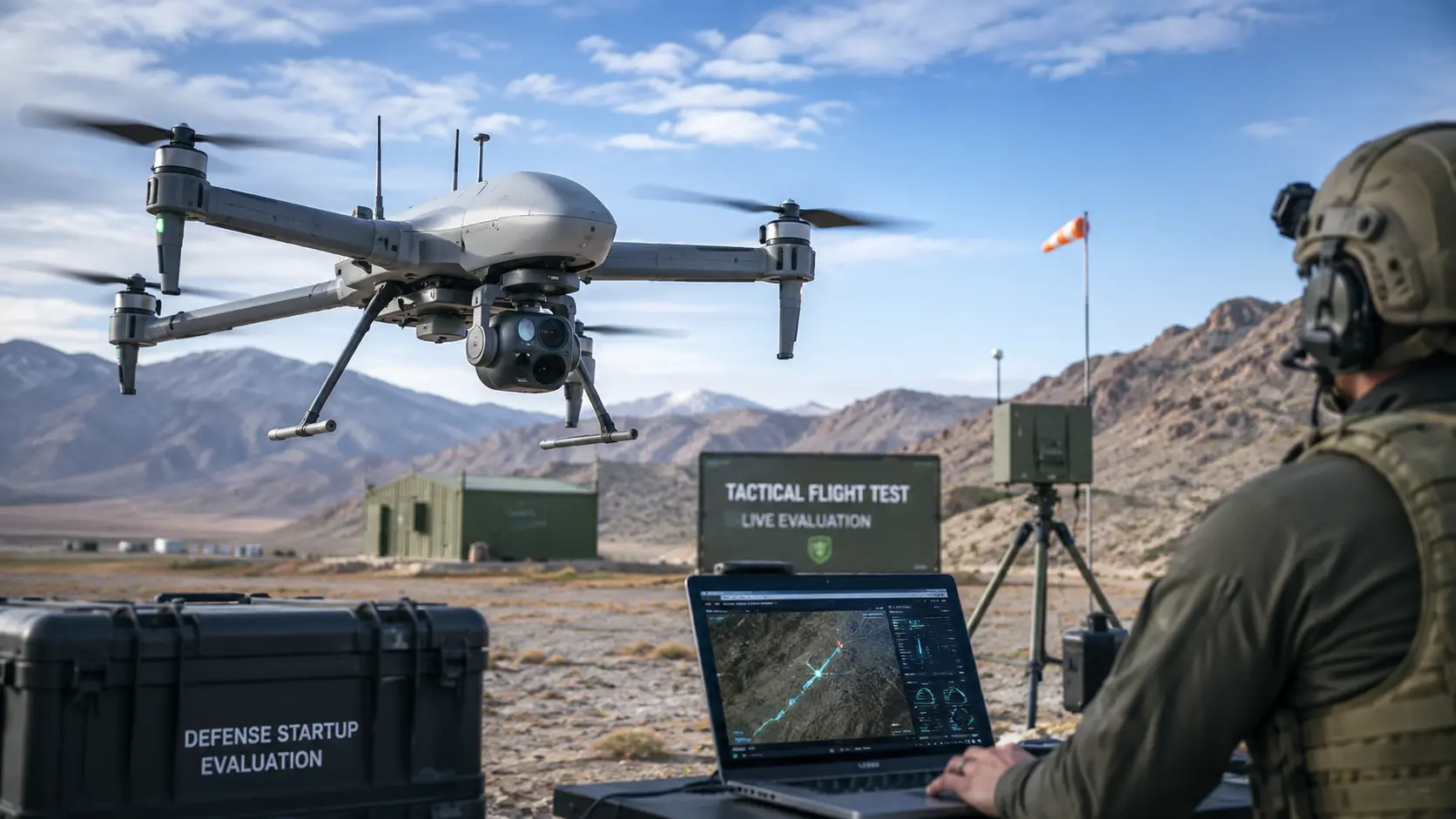
European defense is moving beyond traditional defense giants. Driven by high-tech warfare seen in modern conflicts, Germany is aggressively backing agile defense startups. For India—aiming to reach ₹50,000 crore in annual defense exports—this software-driven model offers a clear roadmap for scaling indigenous defense tech.
The Pivot: Why Germany is Banking on Defense Startups
For decades, Europe’s national security relied heavily on massive contractors specializing in legacy platforms like tanks, submarines, and fighter jets. Today, that legacy structure is shifting rapidly.
TRADITIONAL DEFENSE PROCUREMENT
[10 to 20 Year Development Cycle] ──> Heavy Hardware Focus ──> High Capital Costs

MODERN DEFENSE STARTUP MODEL
[12 to 36 Month Innovation Cycle] ──> Software & AI Focus ──> High Agility & Upgradability
Modern combat relies heavily on accessible, highly effective technology: FPV (First-Person View) drones, AI-based targeting software, satellite communications, electronic warfare, and autonomous surveillance. While legacy defense procurement takes 10 to 20 years to produce a new platform, defense startups innovate within 12 to 36 months.
To accelerate military modernization, reduce foreign reliance, and build resilient supply chains, Germany has begun funding defense tech startups directly.
High-Investment Defense Technologies
Germany’s investment strategy focuses heavily on emerging technological domains:
Artificial Intelligence: AI-assisted decision systems, logistics optimization, and automated battlefield analytics.
Autonomous Drones: Swarm robotics, loitering munitions, and GPS-denied navigation.
Cybersecurity & EW: Infrastructure defense, signal intelligence, and electromagnetic spectrum dominance.
Space & Quantum: Satellite communications, Earth observation, quantum sensing, and unhackable encryption.
Modern Defense Hardware vs. Software Innovation
| Dimension | Legacy Defense Giants | Modern Defense Startups |
| Primary Focus | Heavy physical hardware (Tanks, Ships, Jets) | Software, AI models, drone OS, sensors |
| Development Cycle | 10 to 20 years | 12 to 36 months |
| Upgradability | High-cost physical overhauls | Continuous over-the-air (OTA) updates |
| Market Orientation | Strictly military procurement | Dual-use (Commercial + Defense markets) |
Key Lessons for India’s Defense Ecosystem
India possesses over 100,000 startups and a expanding defense budget. Adopting key elements of Germany’s model can help streamline indigenous manufacturing and support long-term export goals:
Expanding Fast-Track Procurement: India’s lengthy procurement and certification cycles often stall young companies. Expanding initiatives like Draft DAP 2026 with guaranteed startup quotas and rapid prototype testing can bridge the transition from lab to field.
Establishing Co-Funded Defense VC Funds: Building dedicated defense venture capital funds with public-private equity will help startups scale past early-stage grants like iDEX & TDF.
Scaling Dual-Use Technologies: Encouraging startups in AI, microelectronics, space, and cybersecurity to target both commercial and defense clients creates financial stability and reduces single-buyer reliance.
Deepening DPSU & Startup Integration: Rather than treating startups as competitors, Defence Public Sector Undertakings (DPSUs) and major private prime contractors should integrate startup-developed software, sensors, and subsystems into larger platforms.
Frequently Asked Questions (FAQ)
1. Why is Germany shifting its defense procurement strategy toward startups?
Germany is investing in startups to shorten procurement timelines from decades to months, accelerate AI and autonomous systems integration, and build sovereign European defense technologies.
2. What are dual-use defense technologies?
Dual-use technologies are innovations that serve both commercial and military purposes, such as autonomous navigation, satellite imaging, cybersecurity systems, and AI models.
3. How can Indian defense startups contribute to the ₹50,000 crore export target?
Startups can offer affordable, software-defined solutions like tactical drones, battlefield communication platforms, AI surveillance, and electronic warfare software to global markets. These solutions require less heavy capital investment than traditional platform manufacturing.
Disclaimer
This article is prepared for informational and analytical purposes only. It does not constitute financial advice, defense procurement guidelines, or official policy recommendations. Readers should consult official ministry releases and verified trade documentation for specific defense procurement guidelines.
