

New Delhi. Thursday, 23 July 2026
India is undergoing a sweeping structural overhaul of its freight and transport networks. By developing dedicated freight corridors, industrial zones, multimodal transport hubs, and modern port connectivity, the nation is actively resolving longstanding supply chain bottlenecks. These strategic initiatives are driving down transportation costs, elevating supply chain reliability, and positioning Indian manufacturers as formidable players in international trade.
Why Logistics Infrastructure Matters for Export Growth
Logistics expenses have historically consumed a substantial portion of business capital in India. Persistent transit delays, port congestion, and fragmented freight networks previously eroded the price competitiveness of Indian goods abroad.
Modern logistics corridors directly address these structural inefficiencies by providing:
Accelerated Cargo Movement: Segregating freight traffic ensures predictable scheduling and faster transit times.
Cost Reduction: Lower fuel consumption, optimized routing, and higher load capacities reduce total freight costs.
Multimodal Integration: Smooth transitions between road, rail, air, and sea eliminate handling delays.
Supply Chain Efficiency: Faster cargo turnarounds allow manufacturers to run leaner inventory models, cutting warehousing overheads.
Defining Modern Logistics Corridors
Logistics corridors are high-capacity, integrated transport networks designed to link inland industrial clusters directly with trade gateways like sea ports and international airports.
[Manufacturing Hubs] ---> [Dedicated Freight / Expressways] ---> [MMLPs / ICDs] ---> [Ports / Airports]
Core Components of the Ecosystem:
Dedicated Freight Rail Networks: High-speed rail lines engineered exclusively for heavy freight.
Access-Controlled Expressways: Multi-lane highways minimizing last-mile bottlenecks.
Multi-Modal Logistics Parks (MMLPs) & ICDs: Centralized hubs for cargo aggregation, customized handling, and seamless modal shifts.
Smart Warehousing & Port Terminals: Digitized inventory nodes paired with mechanized container handling.
Dedicated Freight Corridors (DFCs): The Rail Backbone
The Dedicated Freight Corridor program represents one of India’s most significant infrastructure commitments to freight efficiency.
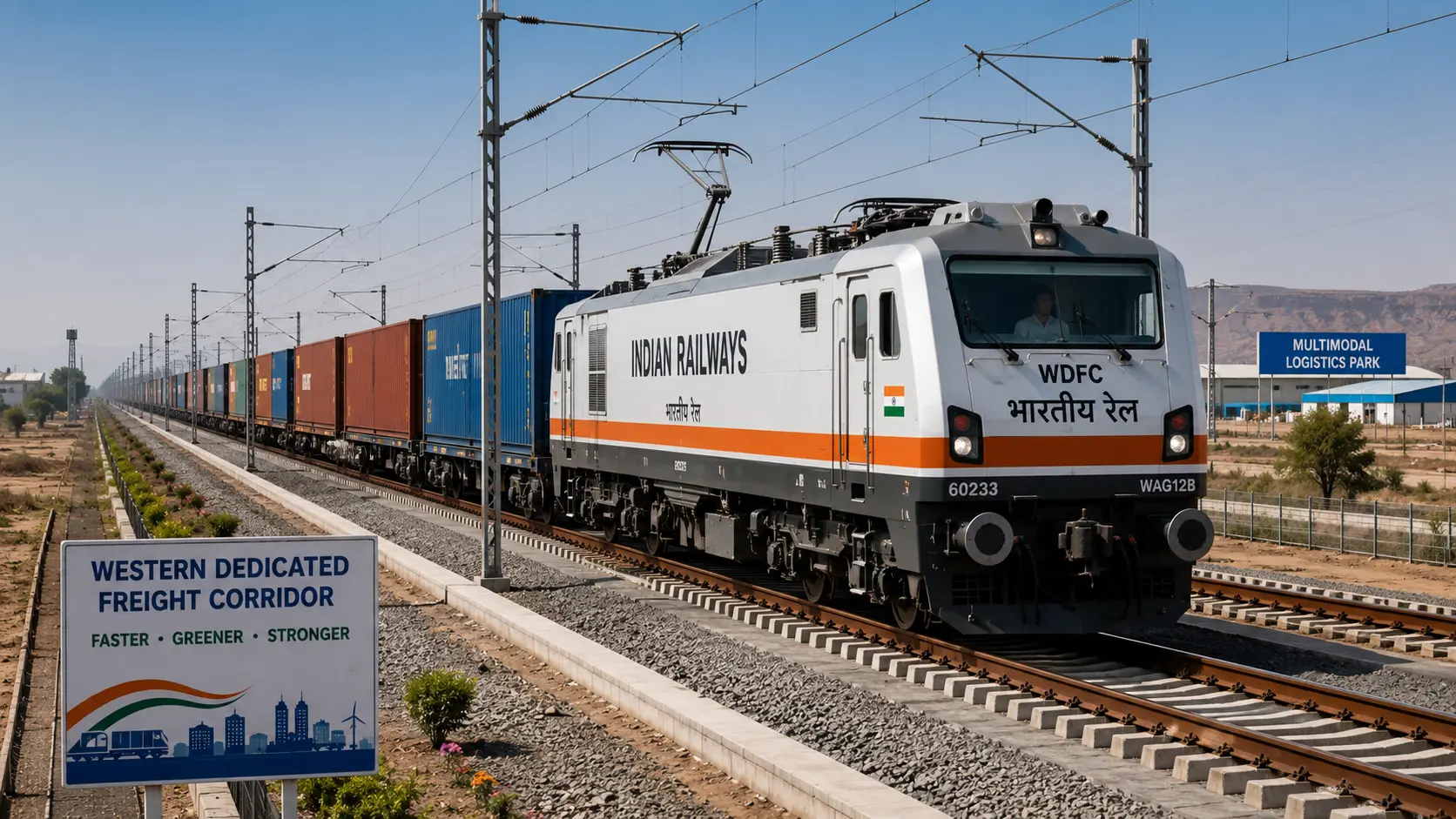
1. Western Dedicated Freight Corridor (WDFC)
The Western DFC connects the industrial centers of Northern India directly to major deep-water ports along the western coastline.
Key Advantages: Rapid container movement, reduced congestion on passenger rail tracks, and lower per-ton shipping costs.
Primary Beneficiaries: Automobile manufacturing, electronics assembly, textiles, industrial chemicals, and heavy engineering.
2. Eastern Dedicated Freight Corridor (EDFC)
The Eastern DFC is optimized for moving bulk industrial inputs and raw materials, including coal, steel, cement, and commercial fertilizers. By shifting heavy bulk freight onto dedicated tracks, it decongests passenger rail routes while improving industrial supply chains across Eastern and Central India.
PM Gati Shakti: Unified National Planning
The PM Gati Shakti National Master Plan breaks down traditional administrative silos across various infrastructure ministries. By using advanced Geographic Information System (GIS) mapping and centralized digital monitoring, the platform enables synchronized project execution, prevents inter-agency delays, and eliminates logistical chokepoints before they disrupt trade flows.
Industrial Corridors & Multimodal Logistics Parks
To create integrated export ecosystems, India is expanding specialized industrial corridors, including:
Delhi–Mumbai Industrial Corridor (DMIC)
Chennai–Bengaluru Industrial Corridor (CBIC)
Bengaluru–Mumbai Economic Corridor (BMEC)
Amritsar–Kolkata Industrial Corridor (AKIC)
Visakhapatnam–Chennai Industrial Corridor (VCIC)
Working alongside these corridors, Multi-Modal Logistics Parks (MMLPs) allow freight to transition seamlessly between road, rail, inland waterways, and air freight links. This integration drastically reduces cargo handling expenses, enhances inventory management, and improves overall export readiness.
Expressway Networks and Port Connectivity
Key expressways—such as the Delhi–Mumbai Expressway, Mumbai–Nagpur Expressway, and Bengaluru–Chennai Expressway—are dramatically shaving transit hours between interior manufacturing hubs and coastal ports. Concurrently, deep-water ports are undergoing modernization featuring:
Expanded container terminal capacities.
Digital customs clearance and paperless documentation.
Direct rail-to-berth connectivity to minimize vessel turnaround times.
Digital Transformation in Supply Chain Operations
Physical infrastructure is reinforced by a modern digital architecture:
Real-Time Tracking: GPS fleet tracking and RFID-based container monitoring ensure end-to-end supply chain visibility.
Smart Route Optimization: AI tools optimize delivery paths, reducing transit time and fuel consumption.
Unified Platforms: Digital freight marketplaces accelerate cargo matching and eliminate administrative friction.
Key Export Sectors Benefiting from Logistics Reform
| Sector | Core Logistics Requirement | Operational Benefit |
| Electronics | Time-sensitive, highly predictable transport | Reduced transit times and leaner inventory holding costs |
| Automobiles | High-capacity, safe component transport | Lower handling overheads and streamlined vehicle shipping |
| Textiles | Low-cost, direct port access | Faster order fulfillment and enhanced global price competitiveness |
| Pharmaceuticals | Strict temperature and climate control | Compliant cold-chain transit ensuring global product integrity |
| Heavy Engineering | High-load freight capabilities | Cost-effective bulk transport via dedicated rail and port facilities |
Challenges to Address
Despite clear progress, several operational hurdles remain:
Resolving last-mile connectivity gaps between main arterial corridors and localized industrial estates.
Mitigating urban freight traffic congestion around major metro areas.
Accelerating land acquisition processes and expanding skilled workforce availability in advanced supply chain management.
Strategic Outlook
As investment continues to flow into dedicated freight tracks, expressways, digitized customs procedures, and smart logistics parks, India is rapidly strengthening its position in global trade networks. By persistently lowering logistics overheads, these corridors serve as a primary engine driving the nation’s vision of becoming an export-led manufacturing leader.
Frequently Asked Questions (FAQ)
What is the primary objective of India’s logistics corridors?
Logistics corridors aim to integrate key manufacturing regions with gateways like ports and airports using high-speed rail, expressways, and logistics parks. This reduces transport costs, improves supply chain reliability, and boosts export competitiveness.
How does the PM Gati Shakti Master Plan improve logistics planning?
PM Gati Shakti uses a GIS-based digital engine to coordinate planning across multiple government ministries. This ensures synchronized construction, prevents project overlaps, and eliminates procedural delays in infrastructure development.
Which industries benefit most from Dedicated Freight Corridors (DFCs)?
DFCs benefit a wide range of industries: the Western DFC caters heavily to electronics, automobile, and textile exporters, while the Eastern DFC primarily supports bulk commodities like coal, steel, cement, and fertilizers.
External Resources & Media Coverage
Read insightful business and economic coverage on Matribhumi Samachar English.
Explore national news and policy updates directly via Matribhumi Samachar National Section.
Disclaimer: The information provided in this article is for educational and informational purposes only. Infrastructure developments, project timelines, and policy frameworks are subject to updates by relevant government authorities and administrative bodies.
