
New Delhi.
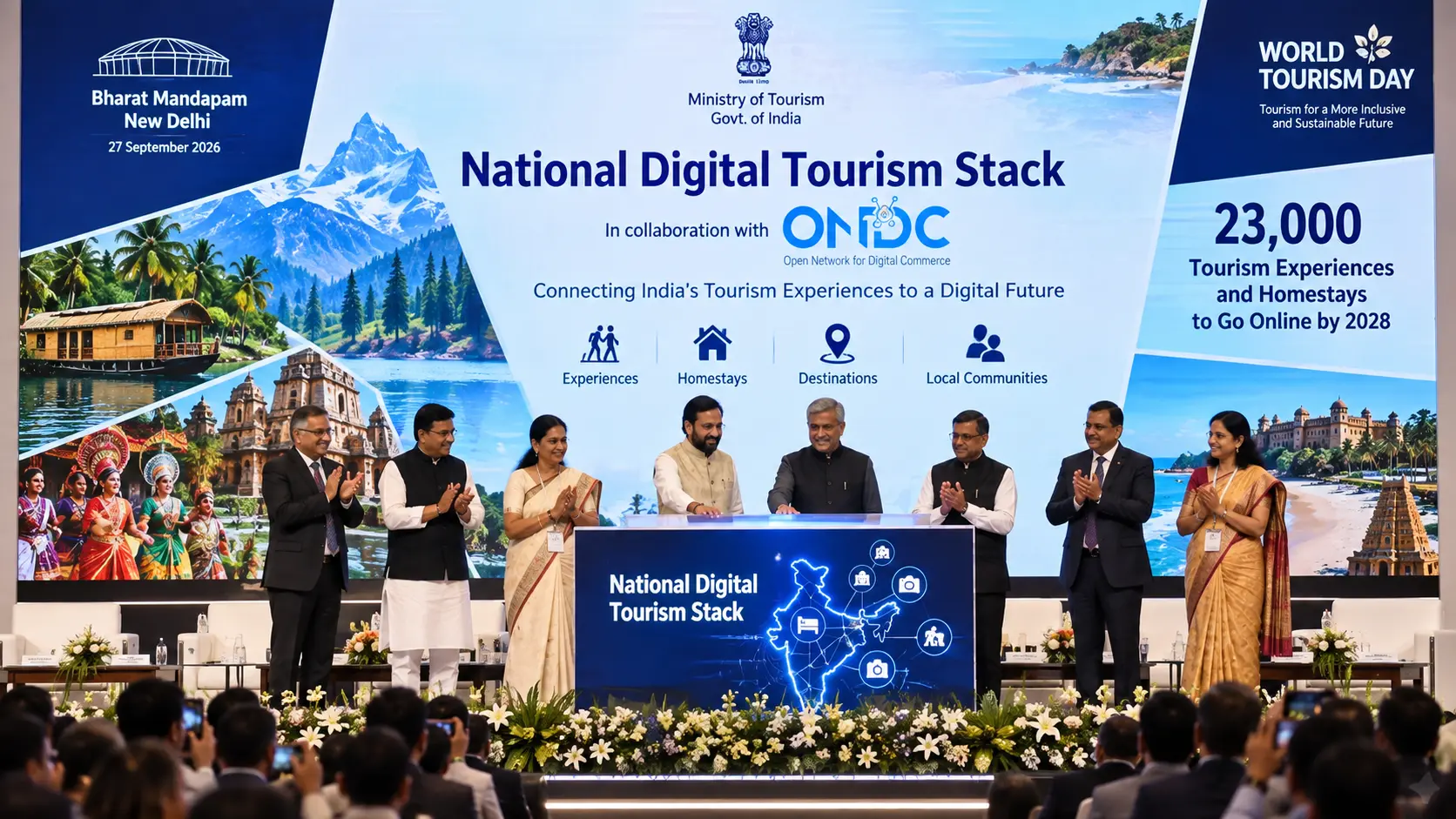
In a landmark step toward uniting India’s vast and fragmented travel landscape, the Ministry of Tourism, in collaboration with the Open Network for Digital Commerce (ONDC), has officially launched the National Digital Tourism Stack (NDTS). Unveiled during the World Tourism Day celebrations on September 27, 2026, at Bharat Mandapam, New Delhi, this open digital infrastructure aims to bring 23,000 local tourism experiences and homestays online by the end of 2028.
What Is the National Digital Tourism Stack (NDTS)?
The National Digital Tourism Stack is designed as a foundational Digital Public Infrastructure (DPI) layer that connects tourism operators, cultural experience hosts, homestay owners, and transport providers through a single open network.
Currently, travelers must hop between dozens of independent travel aggregators, local operator portals, and transport apps to build a trip itinerary. NDTS addresses this friction by unbundling travel services—enabling any service provider registered on an ONDC-enabled seller application to be instantly discoverable across any participating consumer platform.
Onboarding Targets & Service Breakdown
The initiative sets ambitious goals to bring hyper-local and offbeat tourism offerings onto the digital grid:
| Service Category | Target Onboarding (By End of 2028) | Primary Focus Areas |
| Tourism Experiences | 14,000 listings | Guided heritage walks, local craft workshops, adventure activities, and village tours. |
| Homestays & Stays | 9,000 listings | Locally operated accommodations, eco-lodges, rural stays, and mountain cottages. |
| Total Ecosystem Integration | 23,000 listings | Nationwide coverage across 28 States and 8 Union Territories. |
Phased Implementation Roadmap
The deployment of NDTS will unfold in three distinct stages over the coming years:
[ Oct – Dec 2026 ] [ Jan – Jun 2027 ] [ Jul 2027 – Dec 2028 ]
Digital Infrastructure & Pilot Phase Rollout Scale-Up & Full Target
Stakeholder Alignment (First Onboardings Live) (23,000 Listings Total)
- October–December 2026 (Preparation Phase): Setting up digital network protocols, establishing state-level verification frameworks, and coordinating with technology partners.
- January–June 2027 (Pilot Phase): Live deployment of the initial batch of vetted homestays and curated regional tours in select destinations.
- By End of 2028 (Full Completion): Onboarding all 23,000 targeted providers across mountain, coastal, heritage, and pilgrimage destinations.
Strategic Impact on Small Tourism Businesses
For homestay owners, local artisans, and independent guides, NDTS lowers the digital barrier to entry. Key benefits include:
- Interoperable Visibility: Small businesses list once on a seller platform and become bookable across major travel applications using ONDC architecture.
- Integrated Travel Packages: Enables seamless bundling of accommodation, transit, meals, and activities from different local vendors.
- Support for Offbeat Destinations: Spreads tourist footfall away from congested hubs directly to rural and lesser-known regions.
Complementary Policy Initiatives
Alongside NDTS, the Ministry launched the Dekho Apna Desh Campaign 2.0 (National Mission for Alternative Destinations) to direct traveler interest toward undiscovered regions. Industry partnerships and MoUs were signed with key stakeholders including Airbnb, FlixBus, Glance, MakeMyTrip, and the Eicher Group Foundation to drive skilling, transit integration, and sustainable mountain tourism.
Explore further coverage and updates on domestic development news at Matribhumi Samachar.
Frequently Asked Questions (FAQ)
What is the main objective of the National Digital Tourism Stack?
The main goal is to build an open digital infrastructure that unifies India’s fragmented tourism industry, making 23,000 local experiences and homestays easily discoverable and bookable online through the ONDC network by 2028.
When will the first NDTS services become bookable for travelers?
The pilot phase is scheduled to go live between January and June 2027, introducing the first batch of verified homestays and local experiences.
How does ONDC help local homestay owners?
ONDC eliminates the need for small homestays to sign exclusive, high-commission deals with individual booking platforms. By listing on any single ONDC-compliant seller app, their stay becomes visible across all buyer apps connected to the open network.
Disclaimer
This article is for informational purposes based on official announcements made by the Ministry of Tourism and ONDC during World Tourism Day 2026. Implementation timelines, platform integrations, and onboarding figures are subject to government updates and platform readiness.
