

Kathmandu.
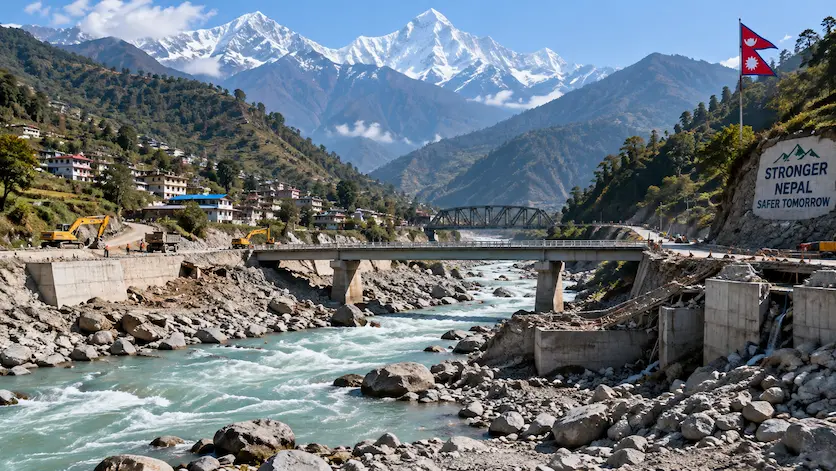
Following catastrophic flash floods across northern and central Nepal, India and Nepal have moved into a transformative phase of strategic economic cooperation, rebuilding damaged power projects, restoring transit corridors, and strengthening disaster resilience.
               ┌────────────────────────────────────────────────────────┐
               │    INDIA-NEPAL BILATERAL RECOVERY & TRADE FRAMEWORK    │
               └───────────────────────────┬────────────────────────────┘
                                           │
         ┌─────────────────────────────────┼─────────────────────────────────┐
         ▼                                 ▼                                 ▼
┌─────────────────────────┐       ┌─────────────────────────┐       ┌─────────────────────────┐
│     ENERGY SECURITY     │       │ PHYSICAL INFRASTRUCTURE │       │ TRADE & DISASTER RELIEF │
│ • 654 MW Export Approved│       │ • Highway & Bridge Repairs│     │ • Supply Chain Restored │
│ • Transmission Restored │       │ • Resilient Engineering │       │ • Technical Teams Sent  │
└─────────────────────────┘       └─────────────────────────┘       └─────────────────────────┘
Emergency Power Support and Energy Stabilization
The deluge severely impacted major hydropower facilities along the Trishuli and Bhotekoshi basins, stripping nearly 10% of Nepal’s domestic generation capacity. To keep Nepal’s national grid stable, India’s Ministry of Power approved immediate emergency electricity exports of up to 654 MW:
- Muzaffarpur–Dhalkebar 400 kV Double-Circuit Line: Supplying up to 600 MW.
- Tanakpur–Mahendranagar 132 kV Line: Transmitting an additional 54 MW.
- Operational Schedule: Scheduled for 18 hours daily to bridge the deficit while damaged turbines undergo restoration.
Rebuilding Transport Links and Transit Corridors
The flooding disrupted more than 69 kilometers of critical highway networks and border bridges, hampering essential trade.
- Supply Chain Continuity: Joint technical teams are rapidly restoring access to key customs checkpoints to ensure uninterrupted flow of food, fuel, and essential commercial shipments.
- Bridge Reconstruction: India has mobilized modular Bailey bridges along with specialist technical corps to restore destroyed river crossings.
Financial Recovery and Resilient Engineering
Nepal’s official assessment estimates total post-flood reconstruction needs at $4.7 billion to $5.2 billion. Future infrastructure design in the fragile Himalayan region will incorporate multi-hazard risk modeling, reinforced embankments, and early-warning hydro-meteorological sensors to withstand future climate shocks.
External Links & Related Portals
- Read domestic updates via our National Section on Matribhumi Samachar.
Frequently Asked Questions (FAQ)
What is the primary focus of the post-flood India-Nepal partnership?
The primary focus spans immediate energy supply, restoring damaged road and bridge networks, rebuilding hydropower plants, and setting up disaster-resilient infrastructure.
How much electricity is India supplying to Nepal after the flood?
India approved emergency exports of up to 654 MW of electricity to compensate for damaged generation plants.
What is the estimated total financial need for Nepal’s reconstruction?
Nepal’s Rapid Damage and Needs Assessment estimates total reconstruction requirements between $4.7 billion and $5.2 billion.
Disclaimer
This article is for informational purposes based on official announcements, damage assessments, and news bulletins as of September 2026. Economic estimates and infrastructure project schedules are subject to ongoing government review and bilateral adjustments.
