
New Delhi.
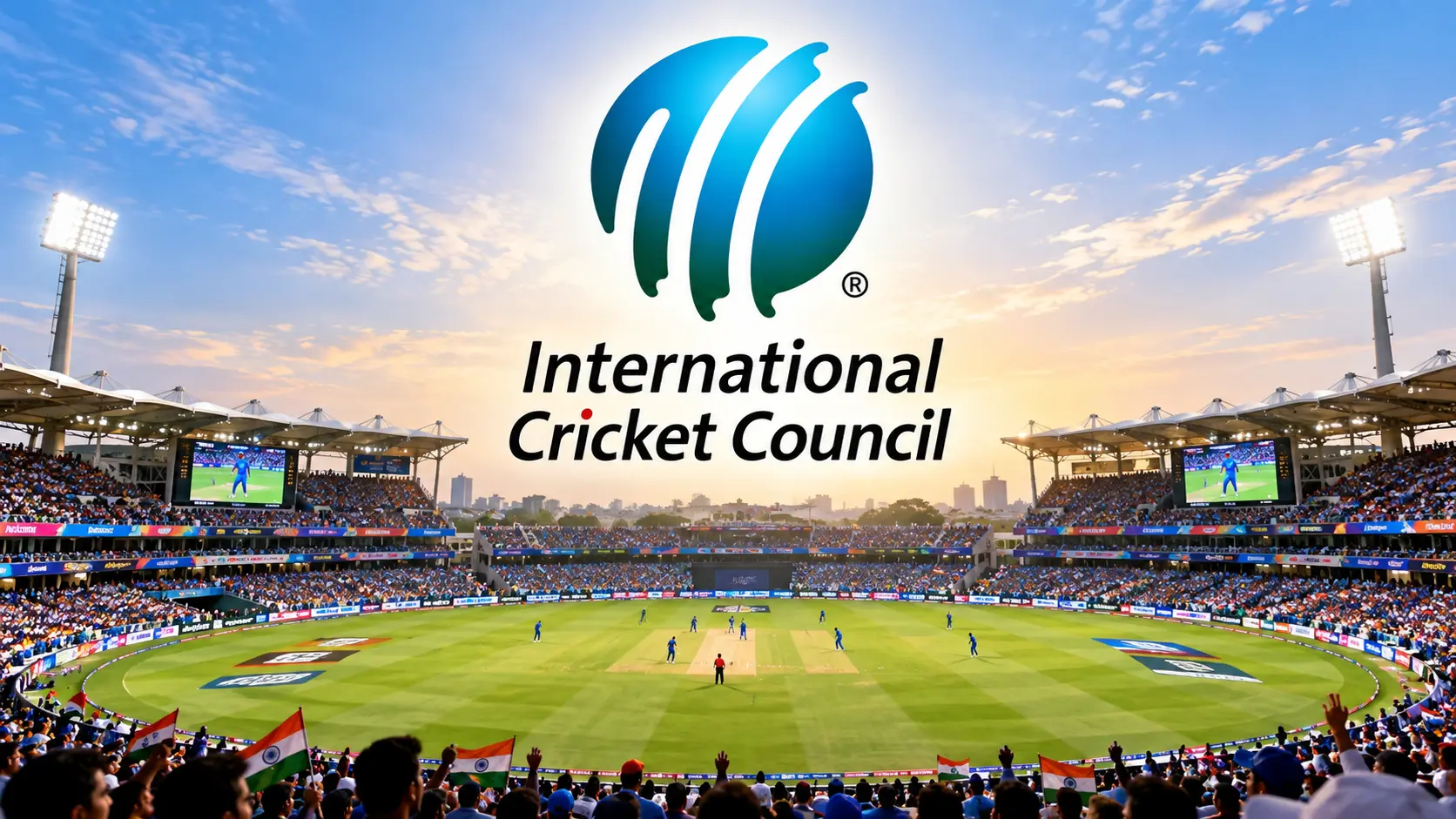
The International Cricket Council (ICC) serves as the ultimate global governing body for the sport of cricket. From setting uniform playing rules and maintaining player rankings to managing flagship tournaments like the ICC World Cup and T20 World Cup, the ICC ensures standard regulation, integrity, and global development across member nations.
What is the International Cricket Council (ICC)?
The ICC is responsible for standardizing playing rules, organizing international championships, ensuring player discipline, and expanding cricket to emerging markets.
- Founded: June 15, 1909 (originally established as the Imperial Cricket Conference).
- Evolution: Renamed the International Cricket Conference in 1965, before adopting its current name, the International Cricket Council, in 1989.
- Headquarters: Dubai, United Arab Emirates (relocated from Lord’s, London, in 2005).
Governance & Leadership Structure
The administrative structure of the ICC is categorized into key decision-making bodies:
- ICC Board: The primary executive body that decides organizational strategy, financial allocation, and commercial agreements.
- ICC Chair: The presiding leader providing strategic guidance and policy governance across member boards.
- Chief Executive Officer (CEO): Responsible for executing board decisions and handling daily operational administration.
- ICC Membership Base:
- Full Members: National cricket boards representing nations with Test status (e.g., India, Australia, England).
- Associate Members: Governing bodies in regions actively expanding and developing the sport (e.g., USA, Nepal, Netherlands).
5. Specialized Committees: Dedicated panels handling finance, playing conditions, anti-doping, anti-corruption, and umpire
performance review.
Key Functions of the ICC
+————————————-+
| International Cricket Council (ICC) |
+————————————-+
|
+——————————-+——————————-+
| | |
+————–+ +—————+ +—————+
| Global Event | | Integrity & | | World Cricket |
| Organization | | Standardizing | | Development |
+————–+ +—————+ +—————+
| • World Cups | • Playing Rules | • Grassroots |
| • T20 World Cups | • Player Rankings | • Women’s Game|
| • Champions Trophy | • Anti-Corruption Unit | • Youth Level |
+————–+ +—————+ +—————+
Tournament Management
The ICC plans, broadcasts, and executes premier international competitions across formats:
- ICC Cricket World Cup (50-over)
- ICC Men’s & Women’s T20 World Cups
- ICC World Test Championship (WTC)
- ICC Champions Trophy
- ICC Under-19 World Cups
Rankings & Playing Regulations
- Rankings: Updates weekly international rankings for teams, batters, bowlers, and all-rounders across Test, ODI, and T20I formats.
- Playing Conditions: Establishes precise field restrictions, match durations, technology integration (DRS, ball-tracking), and safety standards.
Integrity, Discipline, & Officiating
- Anti-Corruption Unit (ACU): Detects and prevents match-fixing, spot-fixing, and illegal betting approaches.
- Anti-Doping Framework: Ensures compliance with international sports anti-doping codes.
- Elite Panel of Umpires & Referees: Appoints and evaluates match officials for unbiased international fixture management.
Global Growth & Women’s Cricket
Allocates commercial revenue generated from world tournaments to build cricket infrastructure, fund development programs, and expand youth and women’s cricket globally.
Difference Between the ICC and National Cricket Boards
A common misconception is that the ICC directly controls local leagues or domestic cricket boards. In practice:
- ICC: Oversees global governance, international series regulations, world tournaments, and global ranking metrics.
- National Boards (e.g., BCCI, ECB, Cricket Australia): Manage domestic cricket competitions (such as the IPL, Big Bash, or County Championship), select national squads, and maintain local stadiums.
Frequently Asked Questions (FAQ)
Where is the ICC headquartered?
The International Cricket Council is headquartered in Dubai, United Arab Emirates.
What is the difference between Full Members and Associate Members of the ICC?
Full Members are nations with official Test status that compete in all international cricket formats. Associate Members are developing cricket nations competing in qualifying events to earn status and participate in global tournaments.
Does the ICC run domestic leagues like the IPL?
No. Domestic leagues are managed by respective national cricket boards (e.g., the BCCI runs the Indian Premier League). The ICC establishes global sanctioning guidelines and international scheduling windows.
Relevant Resource & External Links
- Read more updates on Matribhumi Samachar.
Disclaimer
This article is provided for informational and educational purposes. All organizational names, tournament titles, and trademarks referenced belong to their respective owners, including the International Cricket Council (ICC).
