

New Delhi.
Test cricket remains the traditional bedrock of international sports. Designed to systematically evaluate a team’s batting depth, bowling versatility, fielding persistence, and tactical intelligence over an extended period, it represents the ultimate operational test for international athletes. Unlike fast-paced limited-overs formats such as One Day Internationals (ODIs) and Twenty20 (T20) matches, a single Test match unfolds across up to five days, giving both participating teams up to two innings each to demonstrate dominance.
The Fundamental Framework of a Test Match
Test status is granted strictly to qualified international cricket teams under the governance of the International Cricket Council (ICC). In this format, innings are not governed by fixed over limits; instead, play continues until a team is entirely dismissed, a captain declares the innings complete, or the match runs out of scheduled time.
Core Match Elements
- Team Structure: 2 teams featuring 11 players each.
- Duration: Scheduled for up to 5 consecutive days.
- Innings: Up to 2 innings per team.
- Daily Schedule: Minimum of 6 hours of scheduled play per day, divided into 3 equal sessions (Morning, Afternoon, and Evening) with breaks for lunch and tea.
- Over Constraints: No compulsory ceiling on overs batted per innings.
How Test Match Gameplay Mechanics Function
The game commences with a coin toss. The winning captain decides whether to bat or field first depending on pitch quality, weather conditions, and atmospheric overhead moisture.
Hypothetical Match Progression
Innings 1: Team A bats first and sets a total score of 400 runs.
Innings 2: Team B bats next and is dismissed for 300 runs (Trailing by 100 runs).
Innings 3: Team A bats again, scoring 250 runs before declaring or getting dismissed.
Innings 4: Team B is set a target of 351 runs to win the match.
- Outcome A: If Team B scores 351 runs before losing all 10 wickets, Team B wins.
- Outcome B: If Team A bowl out Team B before they reach 351 runs, Team A wins.
- Strategic Tactical Rules: Follow-On and Declarations
The Follow-On Provision
To prevent matches from stalling and enforce physical pressure, the follow-on rule allows the team batting first to force the second team to bat immediately for their second innings if they lag significantly behind after the first innings.
In standard five-day Test matches, if the team batting second trails by 200 runs or more after their first innings, the leading captain can enforce the follow-on.
Innings Declarations
A captain possesses the tactical authority to voluntarily terminate their team’s active batting innings. This declaration balances four strategic factors:
- Setting an unreachable run target for opponents.
- Allocating sufficient remaining time for bowlers to take 10 wickets.
- Preventing avoidable fatigue or wicket loss.
- Managing changing pitch conditions and remaining daylight.
Match Outcomes: Win, Draw, and Tie
+———–+——————————————————————————————+
| Result | Tactical Condition required |
+———–+——————————————————————————————+
| Win | A team scores more cumulative runs and completes necessary dismissals/chase targets. |
| Draw | Allotted 5 days elapse before either team secures complete dismissal or target criteria. |
| Tie | Both teams complete all innings with identical cumulative run totals (extremely rare). |
+———–+——————————————————————————————+
Pitch Dynamics and Daily Match Sessions
The natural clay and turf pitch deteriorates continually over five days:
- Days 1–2: Pitch favors pace bowlers due to natural moisture or offers ideal, flat conditions for early batting.
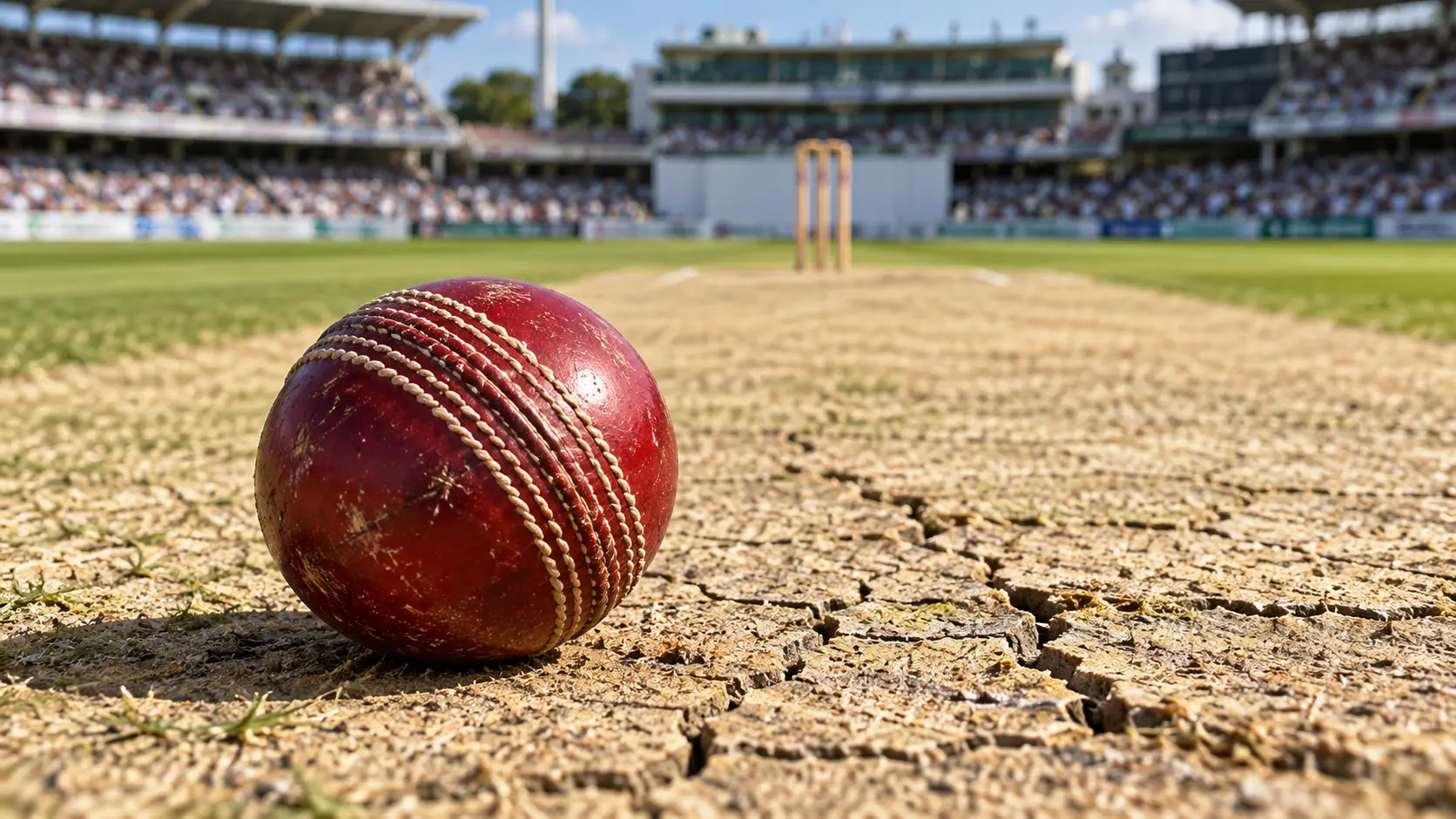
- Days 3–5: Pitch develops wear, dust, cracks, and uneven bounce, making spin bowling far more lethal and fourth-innings run chases notoriously complex.
Context in Modern Sports: ICC World Test Championship
To maintain context and high stakes across bilateral international series, the ICC World Test Championship (WTC) structures Test cricket into structured point-based cycles. International series yield points that determine rankings, driving the top-performing nations toward a biennial neutral-venue final match.
Frequently Asked Questions (FAQ)
Q1: Why are players required to wear white clothing in Test matches?
A: White clothing absorbs less heat during multi-day sun exposure and provides contrast against the traditional red leather cricket ball used in standard daylight Test matches.
Q2: What is the difference between a Draw and a Tie in Test cricket?
A: A Draw occurs when playing time expires before all required innings or dismissals are completed, regardless of run leads. A Tie occurs only when both teams complete their full quota of innings with exact matching run totals.
Q3: How many overs are bowled in a single day of Test cricket?
A: Standard regulations mandate a minimum target of 90 overs per day, subject to weather interruptions and light conditions.
Disclaimer
This article is published for informational and educational purposes only. Match rules, playing conditions, and World Test Championship point allocations are subject to official guidelines published by the International Cricket Council (ICC).
Related Coverage & Internal Links
- Explore sports analysis and international tournament coverage on Matribhumi Samachar Sports.
- Read in-depth articles on international governance and athletic benchmarks at Matribhumi Samachar English.
