 Matribhumi Samachar English


New Delhi. Saturday, 9 May 2026
Shravan, the fifth month of the Hindu lunar calendar, is widely regarded as the most auspicious period for spiritual seekers. As the monsoon rains revitalize the parched earth, devotees of Lord Shiva embark on a month-long journey of fasting, prayer, and introspection. This period is not merely a religious observance but a cosmic window believed to be highly conducive to “Moksha” (liberation) and mental purification.
1. The Cosmic Connection: Why Shiva Rules Shravan
The spiritual potency of Shravan is rooted in the Puranic legend of Samudra Manthan (the churning of the ocean). When the lethal poison Halahala emerged, threatening to annihilate existence, Lord Shiva consumed it to protect the universe.
-
The Symbolism: Shiva holding the poison in his throat (becoming Neelkanth) symbolizes the mastery over worldly negativity.
-
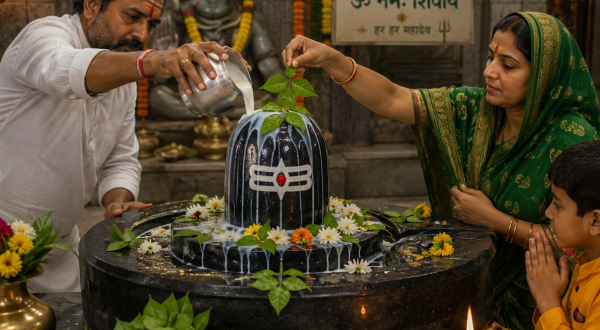
The Practice: Devotees perform Abhishekam (pouring water or milk) on the Shiva Lingam to offer a “cooling effect” to the deity, which internally translates to cooling the “fires” of greed, anger, and lust within the devotee.
2. The Science of Shravan Somvar (Mondays)
Mondays in Shravan are high-energy days. In Vedic astrology, the Moon governs the mind (Chandrama Manaso Jataha). Since Shiva wears the crescent moon, worshipping him on these days is believed to grant unparalleled mental discipline.
Key Rituals Include:
-
Maha Mrityunjaya Mantra: Chanting this is said to enhance longevity and conquer fear.
-
The “Sattvic” Shift: Many observe a strict vegetarian diet or partial fasts (falahar), which aligns with the biological need to eat light during the humid monsoon when digestion slows down.
3. Nature’s Role: The Monsoon as a Purifier
Shravan marks the peak of the monsoon in India. Spiritually, rain represents the descent of divine grace.
-
Water Element: Shravan is dominated by the element of water (Varuna), which is essential for purification rituals.
-
Environmental Rebirth: The lush greenery reflects the “green shoots” of spiritual growth that occur when one commits to a month of discipline (Vrat).
4. The Kanwar Yatra: A Test of Endurance
The Kanwar Yatra is perhaps the most visible display of Shravan’s power. Millions of pilgrims (Kanwariyas) travel hundreds of kilometers on foot to fetch Ganga water. This is not just a physical journey but a form of Tapasya (penance), designed to break the ego and build unwavering focus.
5. Modern Insights and Possible Corrections
While Shravan is steeped in tradition, modern spiritualists offer nuances to common practices:
-
Beyond Ritualism: It is often misunderstood that simply pouring milk on a Lingam grants boons. Ancient texts emphasize that the Bhav (intent) and the subsequent charity to the needy are what truly complete the ritual.
-
Environmental Consciousness: There is a growing movement to use “Eco-friendly Shravan” practices, such as using organic flowers and ensuring milk is not wasted but distributed to the underprivileged after symbolic offerings.
Spiritual Summary
Shravan is a bridge between the material and the divine. By adopting simplicity, practicing Shravanam (listening to divine truths), and maintaining physical purity, a seeker can reset their spiritual compass for the rest of the year.
Explore More on Matribhumi Samachar (English)
To dive deeper into the traditions and the latest 2026 spiritual updates, visit these curated resources from matribhumisamachar.com/en:
The Spiritual Heart of India: Why Visiting Kashi Vishwanath is Auspicious
Discover why the month of Shravan is the peak time for visiting Varanasi and the Kashi Vishwanath Corridor.
Disclaimer
The spiritual significance and mythological narratives mentioned are based on traditional Hindu scriptures (such as the Shiva Purana). Interpretations may vary across different regions, sects, and individual belief systems.