 Matribhumi Samachar English


Mumbai. Saturday, 20 June 2026
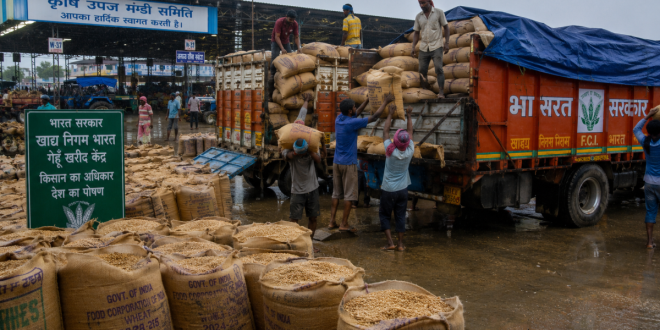
India’s wholesale agricultural commodity markets are bracing for an active and high-stakes week ahead. As the southwest monsoon advances across key producing belts, traders, agri-processors, and farmers are closely monitoring a complex matrix of shifting crop arrivals, aggressive government procurement milestones, and resilient domestic demand.
Market experts indicate that a seasonal reduction in daily wholesale market (mandi) arrivals, paired with steady consumer demand, is creating a solid floor for prices across major food staples. While certain commodities are set to trade within narrow ranges, essential items like wheat, tur, and urad are showing strong signs of underlying price firmness.
1. Wheat Prices Poised for Stable to Positive Gains
The domestic wheat market enters the week with a distinctly stable-to-positive bias. The primary driver remains the heavy footprint of government procurement operations, which have successfully absorbed significant volumes from the open market. This systemic mopping up of the rabi harvest has naturally thinned out the supplies available to private trading centers.
Simultaneously, demand side indicators remain robust. Flour mills, commercial food-processing entities, and bulk institutional buyers are maintaining a steady purchasing rhythm to secure their inventories for the coming quarters.
Core Factors Driving Wheat Strength:
-
Strong Government Procurement: Heavy state buying continues to limit immediate open-market availability.
-
Declining Mandi Arrivals: As the peak harvesting season recedes, the volume of grain entering wholesale yards is tapering off.
-
Resilient Industrial Demand: Continuous buying orders from flour mills and the broader food industry.
-
Monsoon Logistical Vulnerabilities: Potential weather-related transport disruptions that could temporarily choke local supply lines.
Market Note: While the central government retains the policy leverage to intervene via open market stock releases if prices surge rapidly, current underlying conditions heavily point to modest, steady gains over the next seven days.
2. Pulse Markets: Tur and Urad Lead the Bullish Charge
The pulse sector presents a varied landscape this week, defined heavily by domestic supply tight spots and dependency on import arrivals.
Tur (Arhar): The Market Outperformer
Among all major pulses, Tur (Arhar) is projected to lead the price charts with a highly bullish outlook. Severe domestic supply concerns, coupled with unrelenting retail consumption, are driving up sentiments across key trading hubs. Traders are keeping a vigilant eye on import shipments, which currently lack the volume necessary to put downward pressure on local pricing structures.
-
Expected Trend: Bullish
-
Potential Gain: 2% to 4%
Urad: Tight Supplies Maintain Upward Bias
Urad continues to reap the benefits of limited domestic stock availability and rigid consumption patterns. Active buying interest radiating from Southern Indian markets is acting as a major tailwind, keeping the market sentiment highly positive. Furthermore, extended reliance on tightly managed import pipelines ensures that supply conditions will remain squeezed in the short term.
-
Expected Trend: Bullish
-
Potential Gain: 1% to 3%
Chana (Gram): Steady Growth on Industrial Demand
The Chana market is expected to trend with a mild upward bias. Sustained procurement requests from besan (gram flour) manufacturers are anchoring the market. Interestingly, sentiment is also being bolstered by farmers intentionally holding back portions of their stock in anticipation of better pricing windows down the road. While government buffer stocks exist to cap extreme spikes, the immediate path of least resistance is upward.
-
Expected Trend: Mildly Bullish
-
Potential Gain: 1% to 2%
Moong and Masoor: Stability Prevails
In contrast to the bullishness of Tur and Urad, Moong and Masoor offer a more stable outlook:
-
Moong: Expected to remain stable to slightly positive. While current supply lines are comfortable enough to prevent a massive price rally, any sudden sowing delays caused by uneven monsoon distribution could quickly trigger an upside.
-
Masoor: Expected to trade in a narrow, neutral range. A healthy balance of comfortable domestic carryover stocks and fluid import availability is effectively neutralizing volatility.
Summary Table: Weekly Price Outlook at a Glance
| Commodity | Expected Trend | Target Price Vector | Primary Market Drivers |
| Wheat | Stable to Slightly Bullish | Modest Upside | Heavy procurement, declining post-harvest arrivals. |
| Chana | Mildly Bullish | 1% to 2% Gain | Strong industrial besan demand, stock holding by farmers. |
| Tur (Arhar) | Bullish | 2% to 4% Gain | Tight domestic stock, high retail demand, thin import volumes. |
| Urad | Bullish | 1% to 3% Gain | Structural supply shortages, high Southern regional demand. |
| Moong | Stable to Positive | Neutral to Slight Upside | Adequate immediate supply; dependent on monsoon sowing. |
| Masoor | Neutral | Range-bound | Robust domestic buffer balanced by steady import flows. |
Essential Watchpoints for Farmers and Traders
To maximize trading margins and protect supply chains this week, market participants must anchor their strategies around four critical variables:
-
Monsoon Advance Dynamics: The spatial and temporal distribution of the southwest monsoon will dictate Kharif crop sowing sentiment.
-
Mandi Inflow Velocity: Daily monitor the rate of arrival drops in major wholesale markets to time procurement perfectly.
-
Policy & Interventions: Stay alert for potential government stock liquidations or updates on farming frameworks, such as the digital tracking infrastructure rolling out across states like Uttar Pradesh. To understand how modernized governance is altering the trade landscape, read about the mandatory registration updates on Matribhumi Samachar English.
-
Import Custom Clearances: Keep tabs on the volume of pulses clearing Indian ports, as these act as immediate price dampeners.
Frequently Asked Questions (FAQ)
Why are wheat prices rising despite the conclusion of the harvest season?
Wheat prices are firming up because a large portion of the harvest has been absorbed by direct government procurement operations, lowering the supply available to private players. Combined with steady demand from flour mills, this reduced open-market volume pushes prices upward.
Which agricultural commodity is expected to gain the most this week?
Tur (Arhar) is projected to be the strongest performer this week, with expected bullish gains between 2% and 4% due to severe domestic supply constraints and insufficient import volumes.
How will the southwest monsoon affect commodity prices?
The monsoon impacts prices in two ways: in the short term, heavy rains can cause logistical and transport delays that temporarily spike spot prices; in the medium term, the progress of rainfall directly influences Kharif sowing patterns and future production estimates.
Why is Masoor trading differently than other pulses like Tur?
Unlike Tur and Urad, which face acute local shortages, Masoor currently benefits from a very comfortable domestic supply coupled with consistent, smooth import inflows, keeping its prices stable and range-bound.
Disclaimer
The agricultural commodity market forecasts, price predictions, and analysis provided in this article are for informational and educational purposes only. Commodity trading involves significant market risk. Farmers, traders, and investors must perform their own independent research or consult with certified market analysts before making any financial or trading decisions. The author and publisher are not liable for any financial losses arising from actions taken based on this content.